Teens Busted After Flaunting $3.1 Million Crypto Heist on Social Media

Digital bragging rights just led to real-world handcuffs.
The Social Media Slip-Up
Forget complex blockchain forensics—sometimes criminals do the detective work for you. A crew of teenagers allegedly pulled off a multi-million dollar cryptocurrency theft, only to torpedo their own operation by posting evidence online. The digital trail wasn't in the code; it was in their feeds.
When Flashiness Meets Forensics
The $3.1 million haul vanished from its digital vault. Authorities, however, didn't start with tracing transactions. They started with a social media deep dive. Posts flaunting sudden, unexplained wealth—luxury items, stacks of cash, cryptic boasts about 'making it'—painted a target. The online persona became the primary evidence, linking digital pseudonyms to real-world identities faster than you can say 'private key.'
The Security Paradox
This case highlights a bizarre tension in crypto security. Institutions spend fortunes on penetration testing and smart contract audits, yet human error—especially the youthful urge to show off—remains the most predictable vulnerability. It's the ultimate irony: bypassing cryptographic security with a boastful tweet. A reminder that the most robust encryption can still fall to the oldest sin: pride.
One cynical finance veteran noted, 'Finally, a crypto story where the 'disruption' is to the criminals' freedom, not the regulatory framework.' The teens learned the hard way: in the digital age, your greatest asset might be your ability to keep quiet about your assets.
Social media posts expose the burglary
Shortly after leaving the scene, the teenagers posted videos on Snapchat from inside the stolen vehicle. The footage showed them driving away, vaping, and boasting about their actions. In another recording, one of the attackers recorded the victim during the forced transfer of crypto, while CCTV cameras later captured a suspect fleeing the street.
However, the victim had already notified the police that the BMW was stolen. As a result, automatic number plate recognition cameras picked up the car on the M1 in Northamptonshire less than three hours after the burglary. Police units in different regions were alerted, closing the net on the suspects.
Soon after, officers found the vehicle. During the pursuit, Faris Hassan tried to escape from the police and reached a speed of around 100mph. One of the officers made a hard stop on the M6 in Warwickshire, ending the pursuit. Moments before the stop, one of the teenagers could be heard shouting that the police were behind them.
Court sentences close a fast-moving case
At Sheffield Crown Court, Hassan, who is now 18, Mikyle Bethune, also 18, and a 17-year-old accomplice were sentenced to a total of 16 years in youth detention. The convictions were for aggravated burglary and related offences.
Importantly, the stolen cryptocurrency was traced and recovered within 72 hours. It was returned to the victim two weeks later. Detective Constable Jonathan Leung, who led the case, said the suspects believed the exposure they received on social media WOULD help them build an audience. Instead, it added to the evidence. He added that support from the Met’s Economic Crime Command and cooperation between police forces ensured that the crime did not go unnoticed.
Rising crypto crime sets a wider context
While this case did not take long, broader data indicate that crypto-related crime is growing. According to Chainalysis, scam losses on the blockchain have reached at least $14 billion in 2025. That number already tops early 2024 estimates, which were later revised upward. Based on past trends, total losses in 2025 could reach over $17 billion as more illicit wallets are discovered.
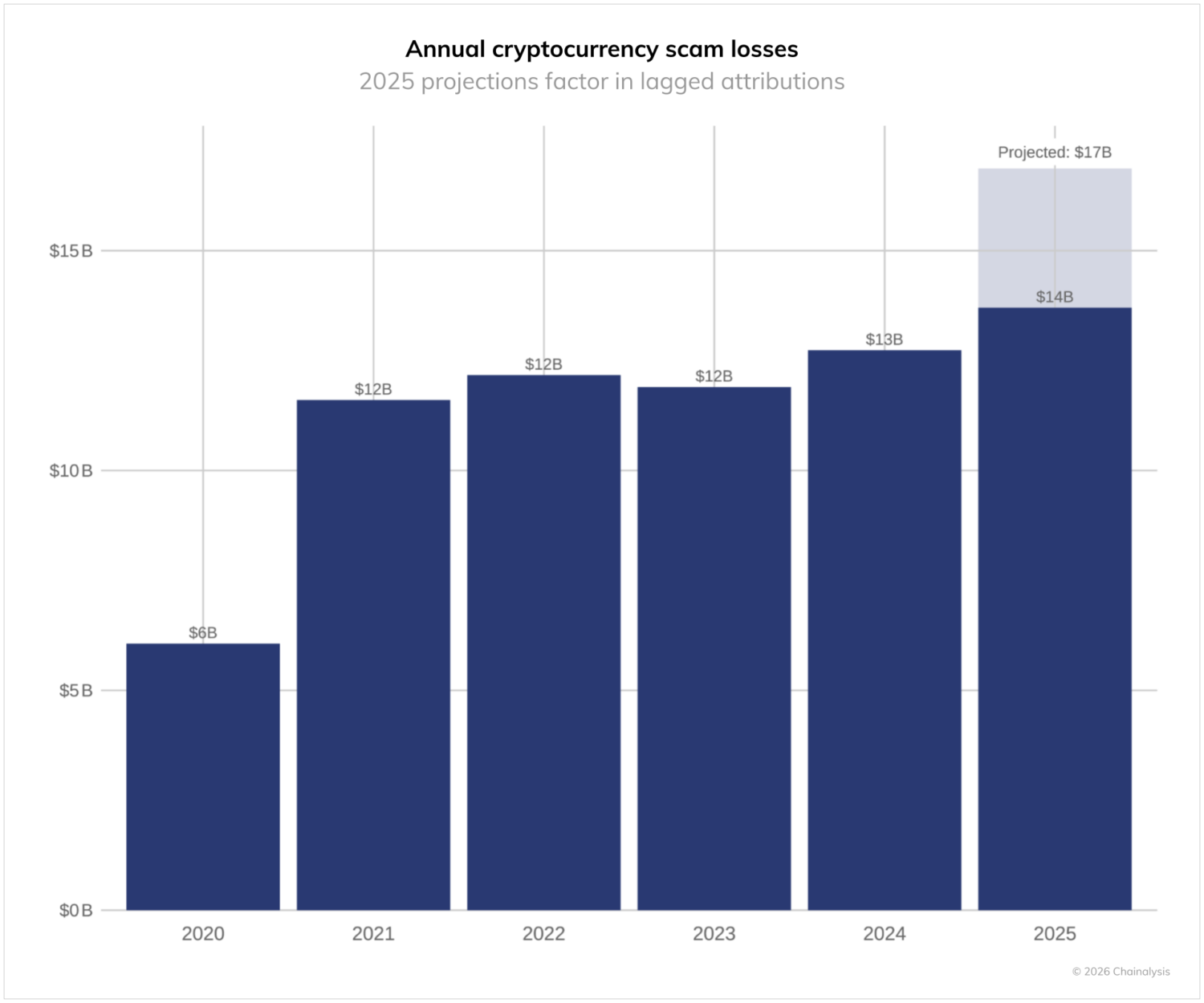
In addition, scammers are collecting larger sums at a time. Average scam payments have increased from $782 in 2024 to $2,764 in 2025, a 253% year-over-year increase. Consequently, total inflows increased even though transaction counts did not. Impersonation scams had the highest growth rate. Inflows associated with these schemes increased by over 1,400% from the previous year, and average payment sizes increased by more than 600%.
Get seen where it counts. Advertise in Cryptopolitan Research and reach crypto’s sharpest investors and builders.
