LiquidChain (LIQUID) is on the verge of crossing the $1 million threshold in its ongoing presale, signaling strong market appetite for its ambitious Layer 3 blockchain solution. The project's core mission—to seamlessly integrate Bitcoin, Ethereum, and Solana liquidity into a single, high-speed execution environment—strikes directly at one of crypto's most persistent challenges: fragmented capital across major chains. By proposing a unified coordination layer, LiquidChain aims to eliminate the need for cumbersome multi-chain workflows and bridge dependencies, potentially unlocking unprecedented efficiency for decentralized applications and trading. This development places the project at the forefront of the critical interoperability race, a key battleground for the next generation of crypto infrastructure.
Why Liquid Fragmentation Remains a Core Market Problem
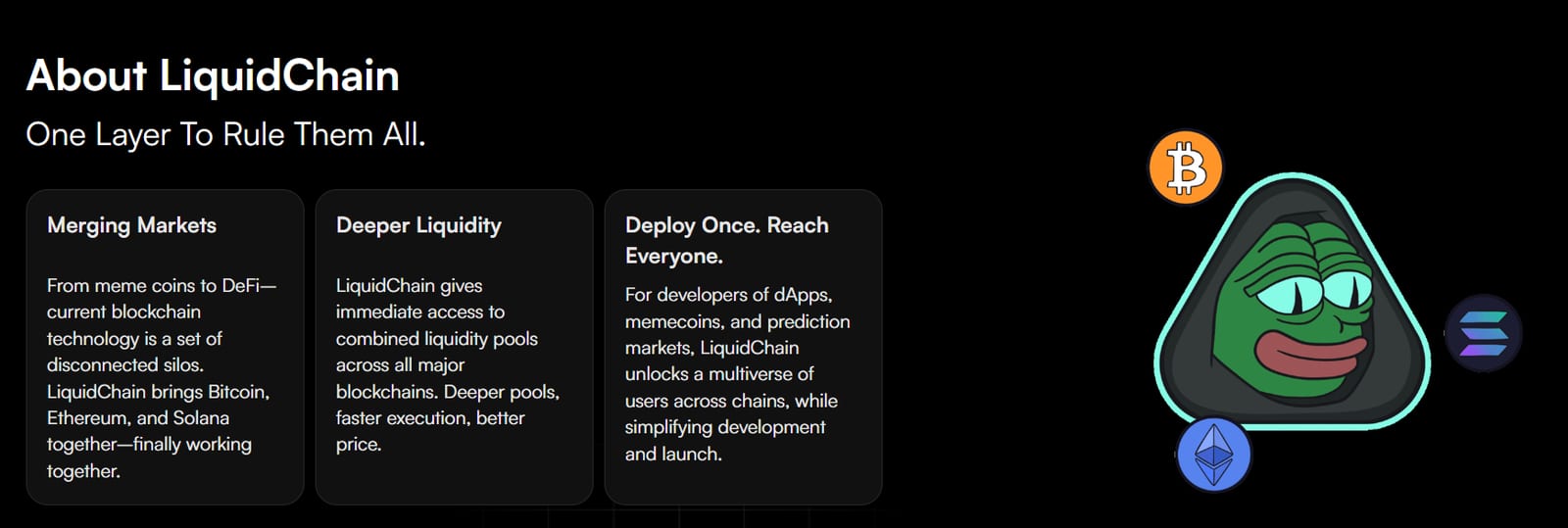
Fragmented liquidity remains one of crypto’s biggest structural constraints. Bitcoin still holds the largest share of market value, Ethereum remains the center of DeFi total value locked, and Solana has become a major venue for high-speed applications. In practice, users often have to choose between these ecosystems or accept the added complexity of moving assets between them.
LiquidChain’s proposed answer is a single execution and liquidity layer that aggregates the strengths of those three networks. For traders, that could mean deeper liquidity and tighter spreads. For developers, it creates the prospect of building applications that combine Bitcoin-backed settlement, Ethereum tooling, and Solana performance in one environment.
The architecture is designed to avoid wrapped tokens in many cases and reduce dependence on centralized intermediaries. Transactions are handled on the Layer 3, with finality anchored back to underlying chains where required. The intended result is native interaction between BTC, ETH and SOL liquidity with lower costs, less slippage and fewer bridge-related risks.
Quiet moves. Higher layers.
LiquidChain L3. ⟁https://t.co/vqvBcdSQYC pic.twitter.com/SWWlwqlmUV
— LiquidChain (@getliquidchain) April 3, 2026
LiquidChain says this setup can support native cross-chain lending, borrowing, perpetual trading, and yield farming that draw liquidity from Bitcoin, Ethereum, and Solana liquidity pools simultaneously. It also points to more advanced strategies, including BTC-backed ETH derivatives and Solana-speed leveraged positions, as examples of what broader composability could enable.
The project has emphasized that Layer 3 is intended to preserve the security and decentralization characteristics of the underlying chains rather than dilute them.
LIQUID Token Utility and Supply Structure
At the center of the network is the native LiquidChain token, $LIQUID. The token is intended to cover gas fees on the Layer 3, support staking tied to network security and rewards, and enable governance as the platform develops.
According to the project’s website, the current expected ROI on staked tokens is 1665%. LiquidChain says that staking is designed to reward early holders and support network stability as the ecosystem grows.
The token has a fixed total supply of 11,800,000,100 $LIQUID, with no additional minting after deployment. On allocation, 35% is assigned to development and ecosystem growth, while 32.5% is earmarked for LiquidLabs for global marketing, media and community-building across Tier 1 regions.
Another 15% is reserved for the AquaVault treasury for partnerships and community activations, 10% is allocated to staking rewards and user incentives, and 7.5% is set aside for exchange listings and ecosystem growth.
With the presale nearing $1 million, the token is still being offered at an early-stage price before exchange launch.

Layer 3 Access, Payments and Audit Details
Participants can join the presale through the official LiquidChain website, where $LIQUID can be purchased using SOL, ETH, USDT and other supported cryptocurrencies and payment methods.
The project advises users to transact through secure wallets. It also says early buyers can access staking opportunities during the initial rollout phase.
On security, LiquidChain says its smart contracts have been audited, including a review by SpyWolf that found no malicious logic, no hidden minting functions and no high-severity vulnerabilities in the core token contract.
Be part of the LiquidChain community on Telegram and X (Twitter) for the latest updates, developer announcements, and ecosystem news.



Log in to Reply
Log in to comment your thoughtsComments