
BTCC Deposit Bonus & Campaign in 2026
As of April 2026, the BTCC Crypto Bonus is still one of…
2026-04-08
A mysterious trader turned $10,000 into $450,000 on Polymarket just hours before the Iran-US ceasefire announcement, sparking fresh insider trading allegations in prediction markets. The massive bet, placed at an average of 2.8 cents, came from three previously inactive wallets with no prior on-chain history, raising serious questions about information integrity in decentralized finance. The news triggered a sharp Bitcoin spike toward $71,000 as crypto markets absorbed the geopolitical development.
 (@BabaCryptonath) April 8, 2026
Blockchain analytics firm Lookonchain flagged three newly created wallets that collectively profited $484,575 betting “yes” on the “US x Iran ceasefire by April 7” market, with entry probabilities ranging from just 2.9% to 10.3%. The wallets were created and funded on Tuesday with no prior on-chain activity before placing their bets.
Individual profits broke down as $200,525, $158,600, and $125,450. One trader’s first transaction hit the market at 1:59 pm UTC on Tuesday, just 8.5 hours before Trump confirmed the deal on Truth Social at 10:32 pm UTC. The other two entered at 10:01 am UTC Tuesday and 8:50 pm UTC Monday, respectively.
This isn’t the first time suspicious Polymarket accounts have surfaced around geopolitical outcomes. Anonymous wallets previously netted roughly $400,000 on US-Venezuela events under similar circumstances.
WOW!
Yesterday, a new account on Polymarket made a massive bet that Maduro would be out of office by January 31st.
Today, the United States carried out strikes on Venezuela and captured Maduro.
The trader has now made over $400K.
Insider or just got lucky? pic.twitter.com/4g3os3eUE2
The ceasefire market logged $60 million in 24-hour volume and $162.6 million total, signaling genuine crowd interest, but the timing on these three wallets cuts too clean to ignore.
Polymarket’s Iran-related markets reached $90 million in volume over 48 hours (April 6–8), with the ceasefire contract alone generating $57 million in that window. The “US x Iran ceasefire by April 7” market settled at 100¢, full probability, after the two-week ceasefire was confirmed, paying out at maximum. A parallel market, “US x Iran ceasefire before Oil hits $120?”, also resolved at 100¢ “Yes.”
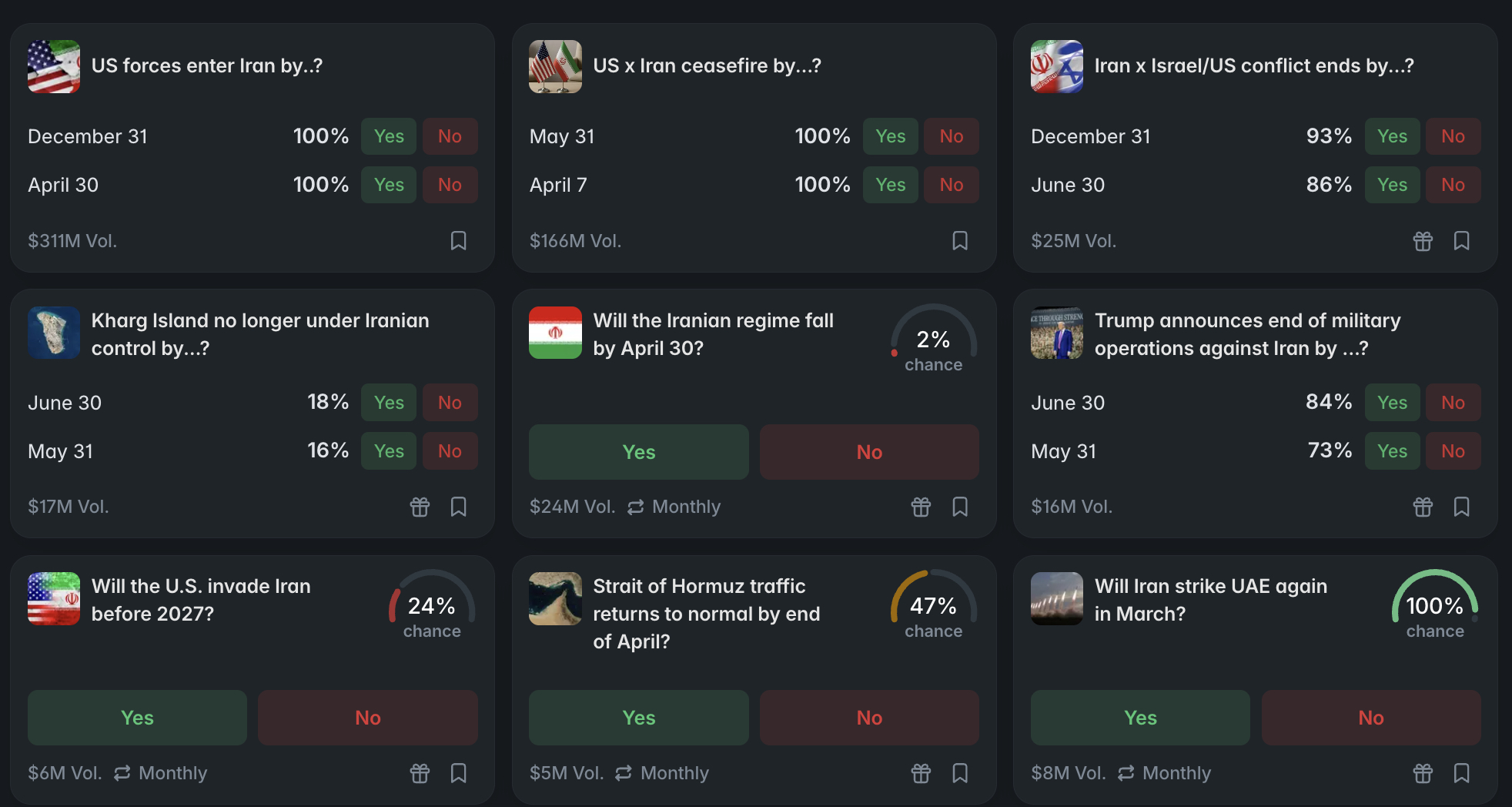
The platform has already faced political heat, pulling “rescue mission” markets amid bipartisan backlash, labeling war-related prediction contracts “dystopian.”
Geopolitical shocks don’t just move prediction markets. They fragment liquidity, and traders rotate simultaneously between Bitcoin, Ethereum, and Solana positions, and most infrastructure still can’t handle that cleanly. That’s a structural problem LiquidChain is specifically built to solve.
LiquidChain is a Layer 3 infrastructure project that fuses Bitcoin, Ethereum, and Solana liquidity into a single execution environment as a Unified Liquidity Layer.
The Order grows. The Order evolves. ⟁ https://t.co/vqvBcdSQYC pic.twitter.com/stB6CDGAVD
Developers deploy once and access all three ecosystems. The architecture also includes Single-Step Execution and Verifiable Settlement, targeting the latency and fragmentation that multi-chain traders experience under volatile conditions, exactly the kind April 7 produced.
The project has raised more thanat a current presale price of low. LiquidChain has drawn attention alongside Bitcoin ETF inflows as institutional appetite for multi-chain DeFi infrastructure grows. Not to forget, the project offers more thanfor early buyers.





Log in to Reply
Log in to comment your thoughtsComments