Geopolitical Shockwave: How Iran Conflict & Oil Volatility Could Postpone the Crypto Bull Run

Markets hold their breath as a Middle East flashpoint sends tremors through both traditional and digital asset classes. The sudden spike in geopolitical risk isn't just a headline—it's a direct threat to the liquidity and risk appetite that fuel crypto's major rallies.
The Flight to Safety Playbook
When conflict erupts, capital follows a predictable, ancient script. Investors ditch risk for perceived havens: the dollar, treasuries, gold. This classic flight to safety sucks liquidity from speculative assets first. Crypto, still wearing the 'high-risk' tag in many institutional portfolios, often finds itself at the front of the selling queue when fear spikes.
Oil's Double-Edged Sword
Rocketing oil prices act as a global tax, squeezing consumer wallets and corporate margins. That pressure forces central banks into a brutal corner—fight inflation from energy shocks or support growth? Their resulting hawkish tilt makes borrowing costlier, starving the system of the cheap money that has historically propelled crypto to new all-time highs. It's the worst kind of macro setup.
The Institutional Pause Button
Picture the scene: an asset manager's investment committee, finally warming to Bitcoin allocation, now hits pause. 'Let's see how this Iran situation plays out,' becomes the mantra. That delayed entry from big money—the kind needed to catapult markets into a true bull phase—creates a formidable headwind. Progress isn't canceled, just painfully deferred.
Not a Cancellation, But a Delay
Make no mistake, this isn't a crypto obituary. The underlying thesis—digital, decentralized assets as a hedge against monetary debasement—gains strength from exactly this kind of fiscal turmoil long-term. But in the short term? Markets hate uncertainty more than they love potential. The path to the next bull run just got rockier, longer, and dependent on a de-escalation few can predict.
So, while the crypto faithful preach 'HODL' through the noise, the smart money is recalculating timelines—proving once again that in global finance, the only free lunch is the one you're promised by a guy on YouTube selling a trading course.
Bitcoin Crypto Volatility Spikes as Iran War Jitters Trigger $128M Liquidations
The first crypto reaction to the Iran war was chaos, not clarity. CoinGlass data shows more than $128 million in liquidations in just 4 hours after reports of the IRGC’s “Operation True Promise 4.” Nearly 80% were longs. Leverage traders were leaning the wrong way and got wiped fast.
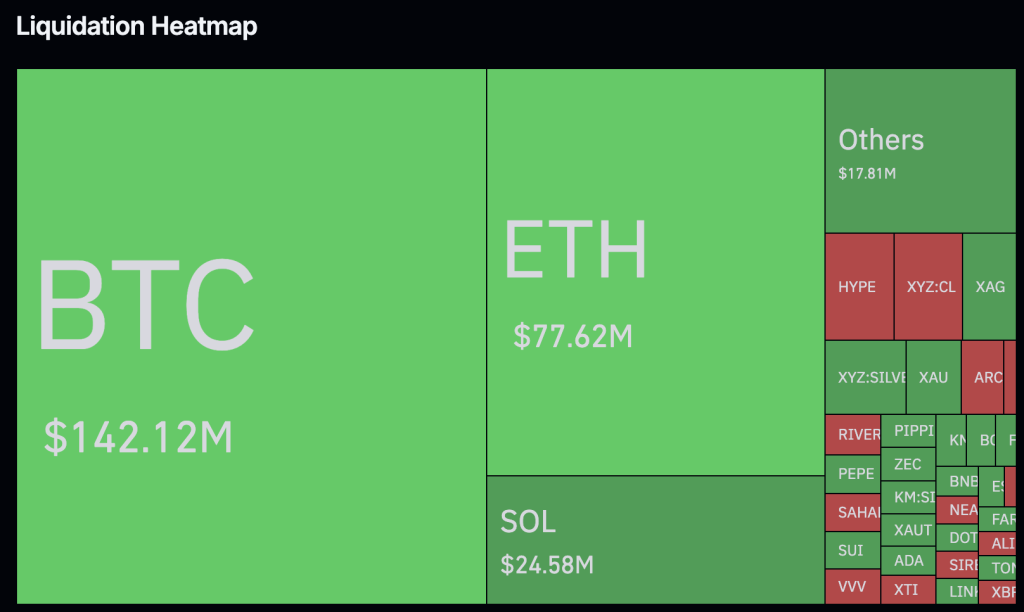
Bitcoin initially dropped toward $63,000 on the headlines, then bounced as more details came out. But the rebound feels mechanical, not confident. Open Interest has cooled sharply, which tells you desks are cutting risk, not aggressively buying dips.
This is classic panic behavior. Sell first. Reassess later.
Equities are showing the same pattern. The S&P 500 has seen outflows, and Bitcoin’s correlation with tech remains tight during stress events. Whatever the digital gold narrative says, in moments like this BTC trades like a high-beta risk asset, not a safe haven.
Oil Price Surge Threatens to Derail Fed Pivot Plans
The real risk to crypto might not be the headlines; it could be oil. If the Strait of Hormuz is disrupted, up to 21 million barrels per day could be affected. That is around 20% of the global supply. Even partial disruptions historically trigger instant price spikes.
If crude holds above $100, inflation comes back fast. That traps the Federal Reserve. Rate cuts get delayed. Liquidity stays tight. And crypto suffers in a higher-for-longer environment.

Some analysts are floating extreme downside scenarios again. While most institutional desks still see $58,000 to $60,000 as Bitcoin’s key support zone, that floor depends heavily on the Fed not turning more hawkish.
There is a counter-force: capital flight. Stablecoin demand in parts of the Middle East has jumped as local currencies wobble. Bitcoin and USDT become escape valves. But retail flows from crisis regions rarely offset large institutional outflows driven by macro tightening.
Altcoins are already showing the strain. Without fresh liquidity, ethereum and the broader sector struggle to sustain rallies. If yields on the U.S. 10-year push back toward 5% on energy-driven inflation, risk assets likely stay capped.
