First Token Listing? Don’t Get Burned: The 2026 Exchange Selection Playbook

Your token's debut isn't just a launch—it's a make-or-break moment for liquidity, credibility, and long-term survival. Picking the wrong exchange can sink a project before it ever finds its sea legs.
Liquidity or Ghost Town?
Real volume separates thriving markets from digital graveyards. Scrutinize order book depth and 24-hour trade flows—not just the vanity metrics on the homepage. A shiny listing on a deserted platform is a one-way ticket to obscurity.
The Compliance Gauntlet
Regulatory landscapes shift like sand. Does the exchange hold licenses in key jurisdictions (think FSA, MiCA-ready)? A platform's compliance framework is your first line of defense against future enforcement actions that could freeze your assets overnight.
Fee Structures: The Devil's in the Details
Upfront listing costs are just the tip of the iceberg. Map the entire fee topology: maker/taker schedules, withdrawal penalties, and promotional package fine print. Some exchanges are masters at hiding profit extraction in the operational fog.
Security Posture: Non-Negotiable
Demand transparency on cold storage ratios, insurance funds, and audit history. The crypto world is littered with projects that trusted the wrong custodian—don't let yours become a cautionary tale for the next bull run's newcomers.
Community & Reach: Your Built-In Launchpad
An exchange's user base is your instant audience. Evaluate their marketing muscle, retail trader engagement, and institutional pipelines. A partner that can amplify your narrative is worth far more than a slight discount on listing fees.
Choose like your project's future depends on it—because it does. The right exchange partnership doesn't just list your token; it fuels its ascent. The wrong one turns your technical whitepaper into expensive kindling. After all, in modern finance, sometimes the most innovative technology just needs a better salesperson.
Why the First Listing Plays a Critical Role
Crypto is crowded, with thousands of new tokens launching every year, and attention is spread thin. Investors often look at which exchange a new token first appears on.
Many founders run into a problem. Top exchanges offer more visibility and liquidity, but they usually want to see some traction, an active community, and trading history first. Early-stage teams often find it hard to get listed on these platforms right away.
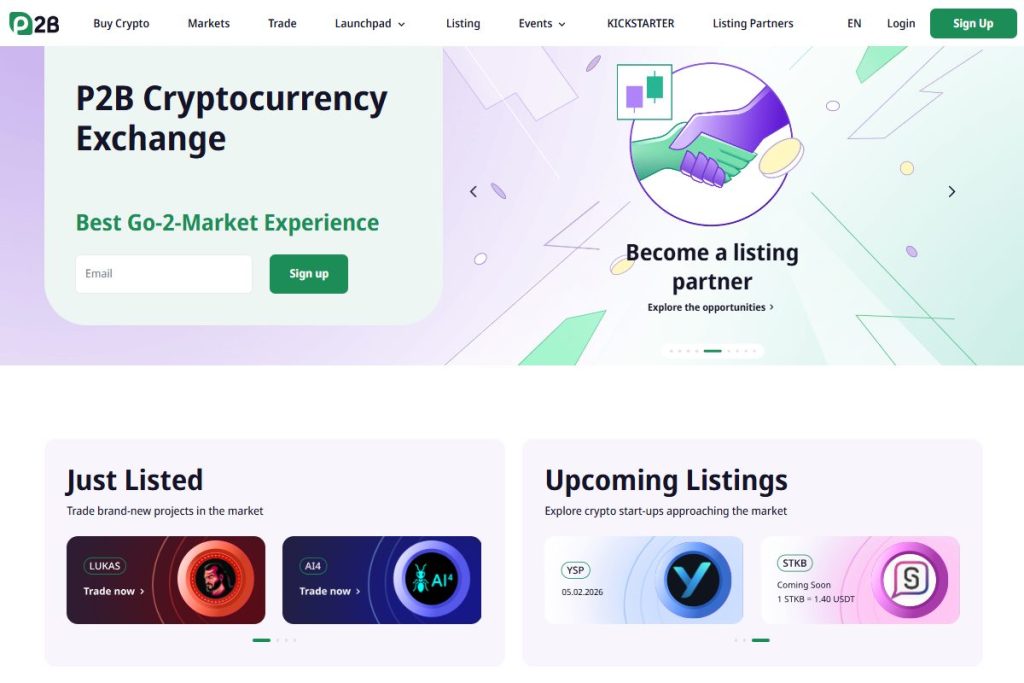
That’s why some projects turn to exchanges that focus on early growth. These platforms have requirements and processes that better fit startups working to build their presence, P2B says.
Practical Criteria When Evaluating an Exchange
Founders today focus more on long-term sustainability than on how quickly they can list or how many chains an exchange supports. The exchange’s track record is important, as it shapes how people see your project at launch. Platforms with a solid history and strong security offer a more stable place for early trading.
Market positioning and liquidity depth are also key. Exchanges with active trading and a wide range of users help projects reach more investors. Platforms with strong ties to regulated markets, like the EU, are often better for teams aiming for long-term growth. Early-stage teams juggle product development, tokenomics, community building, and fundraising. Exchanges that simplify onboarding and offer coordinated services allow founders to focus on execution instead of logistics.
A Model-Oriented Toward Early-Stage Projects
Exchanges like P2B are designed to help projects launch their first token, the team says. They often have flexible onboarding terms, especially for liquidity, which can be a big challenge for startups with small budgets.
These platforms may let teams adjust service options based on their stage of development. This flexibility helps projects that are still working on their market strategy or building a community. Many projects start on mid-tier exchanges and MOVE to bigger ones as they grow. This shows that the first listing is often a starting point, not the end goal.
Launching a token means handling fundraising, marketing, setting up liquidity, and technical work all at once. If these parts aren’t coordinated, things can get out of sync and make it harder to enter the market.
To help with this, some exchanges offer bundled services that include listing, fundraising tools like IEOs, marketing, and liquidity support. For early-stage teams, this setup makes it easier to coordinate and lowers the risk of missing key steps.
Cost matters too. Full launch support on big platforms is often too expensive for Pre-Seed or Seed-stage teams. Some exchanges offer lower-priced packages, so startups can follow a full go-to-market plan without using up resources needed for future growth.
For many founders, the first listing is about preparing, not growing quickly. Building a trading record, showing community activity, and keeping liquidity are things bigger exchanges look for later. Creating a controlled environment for these early signs can help you reach a wider market later. While no exchange can guarantee you’ll move to Tier-1 venues, a well-managed first listing makes your project readier for future chances.
Conclusion
In a crowded market, your first exchange choice shapes your project’s early path. Founders now value stability, flexibility, and strong support more than before.
Early-stage teams often look at exchanges like P2B because they focus on helping new projects enter the market, offer flexible services, and have experience with startups, the team says. If you’re planning your first listing, comparing these platforms with your long-term goals can help you build a more structured and sustainable go-to-market plan.
