AI Amnesia Exposes the Blockchain’s Next Frontier: The Unforgettable Ledger

Forgetful AI just handed blockchain its biggest opportunity yet.
### The Memory Hole Problem
Modern AI models have a critical flaw—they can't remember. Each query exists in a vacuum, forcing systems to rebuild context from scratch with every interaction. It's like hiring a brilliant analyst who forgets your name, your project, and the entire market history after every single meeting. For finance, that's not just inefficient; it's a multi-billion-dollar liability.
### Enter the Immutable Ledger
This is where blockchain cuts through the noise. Its core function—creating a permanent, tamper-proof record—is the exact antidote to AI's amnesia. Imagine smart contracts that don't just execute but remember. Decentralized networks acting as collective, unforgetting memory banks for machine learning models. We're talking about AI agents that learn from immutable historical data, track decisions across time, and provide audit trails so clear even a skeptical regulator would nod in approval.
### Beyond Cryptocurrency
The frontier isn't another memecoin. It's verifiable compute. It's proof-of-history for AI training data. Projects are already emerging that anchor AI processes on-chain, turning every inference and decision into a recorded event. This bypasses the 'black box' problem and injects much-needed trust into autonomous systems. Suddenly, you can prove why your trading algorithm made a specific move—not just to your investors, but to the FSA.
### The Cynical Take
Of course, Wall Street will try to slap a 'Web5 AI Blockchain Cloud' label on it, roll out a token, and hype it to the moon before the tech even works. Some VC will inevitably call it 'the synapse for the global brain' in a desperate pitch deck. But beneath the buzzword bingo lies a genuine tectonic shift: using blockchain's greatest strength to fix AI's greatest weakness.
The machines are getting smarter. Now, they just need to learn how to remember. And the ledger that powered a financial revolution might just be the memory chip they've been missing.
Every AI Conversation Resets to Zero, and the Cost is Staggering
AI models collectively approach Google’s 13.7 billion daily search queries, with the gap narrowing each month.
Yet unlike search queries, which generate persistent, indexable results, AI conversations produce no lasting computational artifacts. When users switch from ChatGPT to Claude, conversation histories remain locked in platform-specific servers, creating measurable inefficiencies in knowledge transfer.
This architectural limitation directly impacts everybody’s bottom line. Workers spend on average 3-4 hours weekly re-establishing context, and enterprises maintain redundant AI subscriptions.
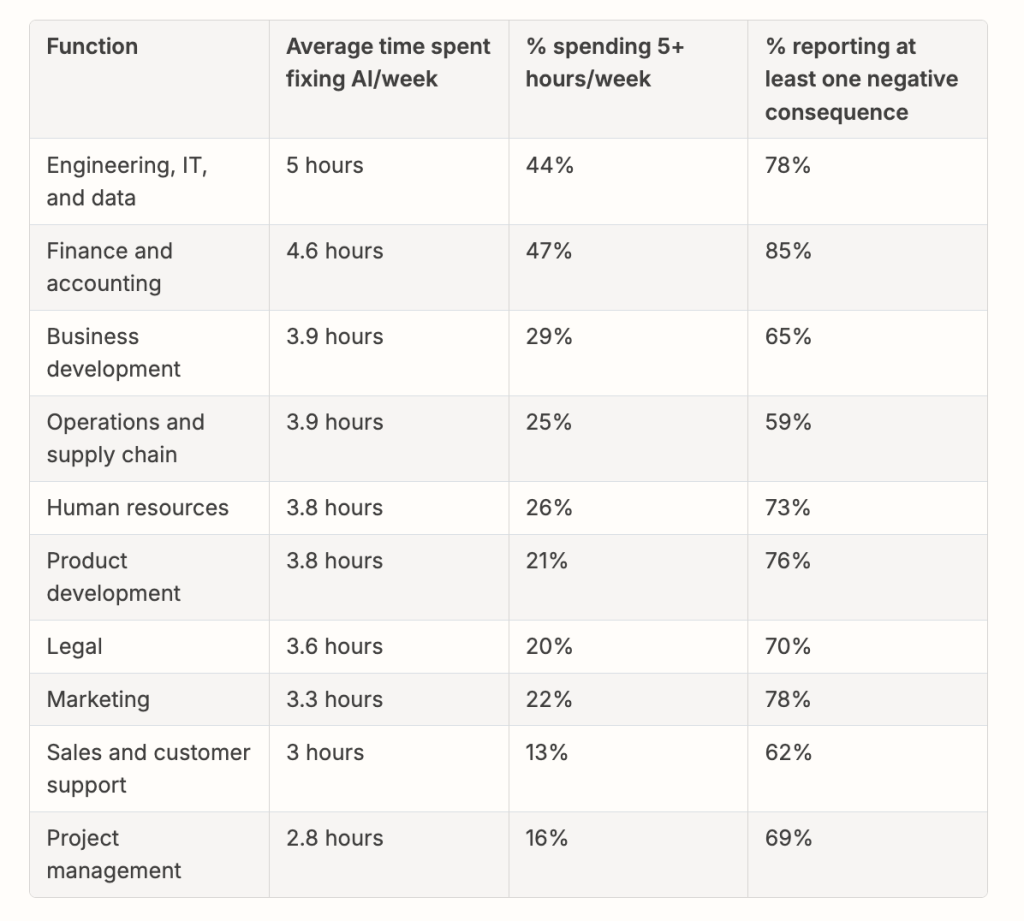
And today, the effects of this are still somewhat limited. We are approaching an era where AI agents execute transactions, coordinate with other agents, and make decisions that carry real-world consequences. And without memory, this just won’t be possible.
When an agent makes a transaction, you only know that a transaction occurred. When blockchain records it, you only know that something was recorded. There’s no context. No reasoning. No understanding of why it happened or what to do if it fails.
Blockchain Offers What Centralized Platforms Cannot—But Only With a Memory Layer
Blockchain offers something centralized platforms cannot deliver by design: verifiable, persistent, user-owned memory that travels across platforms and persists beyond any single provider’s lifespan.
But that raw blockchain storage isn’t enough. We can’t treat memory as a feature of individual AI platforms but as a separate infrastructure LAYER embedded in the blockchain itself. Instead of each AI service maintaining its own proprietary memory system, the blockchain serves as a universal memory substrate that any AI can access. Users control their own memory assets. AI platforms compete on reasoning and interface, not on data lock-in.
OpenAI, Anthropic, and Other LLMs Trap Your Data in Proprietary Vaults
OpenAI and Anthropic operate their memory systems like banks operated data before the internet. Information sits in proprietary vaults, accessible only through specific interfaces, controlled entirely by the platform.
Blockchain with an integrated memory layer inverts this model. Memory becomes infrastructure with private access controls. The system is decentralized, but the data remains encrypted and user-owned.
This essentially turns AI platforms into pure reasoning engines that access shared memory infrastructure rather than proprietary databases that trap it.
Benefits That Stateless AI Cannot Provide
The most obvious benefit of solving AI amnesia is convenience and time saved. But verifiable and persistent AI memory opens up entire categories of applications that current systems cannot support.
- Multi-agent collaboration: Agents reference the same knowledge base and build on each other’s work without human intervention, moving context between platforms.
- Longitudinal learning: An AI tutor tracks a student’s progress over years, adapting based on complete learning history. A health assistant monitors decades of patterns that single sessions would miss.
- Audit trails for high-stakes decisions: Regulators verify what information an AI loan officer considered. Researchers validate which sources an AI cited in medical recommendations.
- Reasoning trails for autonomous transactions: The memory layer provides not just that Agent A paid Agent B, but why, under what conditions, what alternatives were considered, and what would trigger different decisions.
- Genuine portability: Your preferences, knowledge base, conversation history, and accumulated learning become portable assets that move between platforms like switching email clients.
Memory Makes Life More Than an On-and-Off Switch
Human decision-making is never binary. There’s always reasoning behind our actions—context, evaluation, learned experience, strategic intent. When we make a purchase, we’re applying accumulated knowledge about quality, reliability, past experiences, and future needs.
Current AI agents and blockchains operate as on-and-off switches. Transaction executed: yes or no. Query answered: yes or no. There’s no richness, no reasoning, no ability to explain or improve.
Without a persistent memory layer, you cannot have reasoning. And without reasoning, you cannot have true intelligence.
Memory infrastructure changes everything. It means a blockchain within itself can actually contain information about why something happened and the context around it. Or if something failed, the context around that failure. And this context is the foundation for true and well-reasoned decision-making in the real world.
AI Memory Might Be Blockchain’s Real Killer Application
The blockchain industry has spent years searching for its next major application beyond payments and trading, and AI memory infrastructure could be it.
This is infrastructure that genuinely needs persistence, verifiability, and user ownership. Blockchain delivers those properties without the fragile complexity that keeps breaking DeFi protocols.
The current AI boom resembles the early internet, when companies built proprietary networks before open protocols took over. Email became standard because SMTP created interoperability across providers, and AI memory needs the same shift.
For a decade, blockchain advocates have promised to revolutionize finance. In reality, the real revolution might be giving intelligence the ability to remember—and more importantly, the ability to reason based on that memory.
Payments were always going to be a solved problem, whether through blockchain or traditional rails. But persistent, verifiable, user-owned memory for AI systems is a problem that only blockchain can solve.
Disclaimer: The views and opinions expressed in this article are those of the author and do not necessarily reflect the views of Cryptonews.com. This article is for informational purposes only and should not be construed as investment or financial advice.
