GameFi Poised to Drive Crypto’s Next Bull Run – This Project Holds the Keys

The fusion of gaming and finance isn't just a niche trend—it's becoming the engine for mainstream crypto adoption. Forget boring yield farms; the next wave of users will earn tokens by slaying dragons and conquering digital realms.
Why Gamers Are the New Whale Class
Traditional finance gatekeepers scoff at pixelated assets, but they're missing the plot. GameFi creates self-contained economies where playtime translates directly to portfolio growth. It bypasses the abstract complexity of DeFi and delivers value through universal engagement: competition, achievement, and community.
The Infrastructure Play You Can't Ignore
While countless projects promise the moon, one stands out by building the launchpad. Look for platforms solving the core trilemma: seamless gameplay, robust tokenomics, and genuine asset ownership. The winner won't just be a game—it'll be the economic layer for a thousand others.
From Beta to Bull Market
Early metrics don't lie. Surging active wallets, locked value migrating from legacy DeFi, and NFT marketplaces buzzing with in-game items signal a sector priming for liftoff. When the next cycle hits, liquidity will follow fun.
The smart money isn't just watching charts anymore—it's grinding for XP. After all, what's a more cynical hedge against traditional markets than betting on the financialization of play? The future of finance might just have a respawn point.
GameFi Survived the Winter – Its Economics Didn’t
In the State of GameFi 2022 report by ChainPlay, the backdrop was a market still reeling from the Terra–Luna collapse, which wiped out confidence and dragged crypto into a prolonged winter that stretched into the following years.
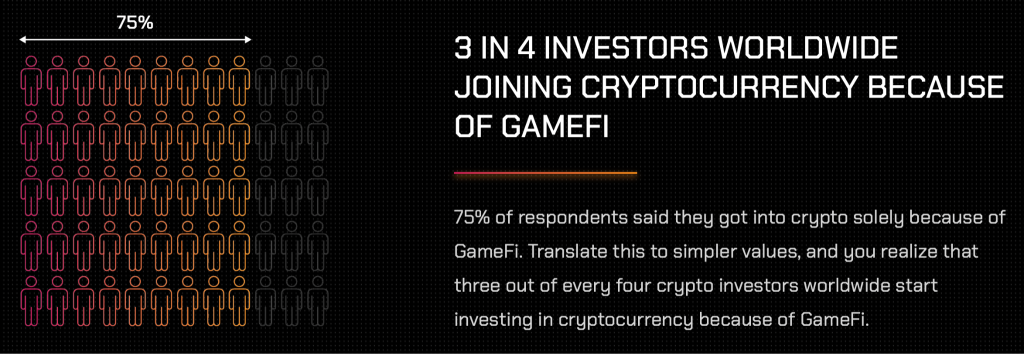
The report showed how that environment stress-tested GameFi in ways bull markets never do. Three in four respondents said GameFi was their entry point into crypto, highlighting how central games remained to user onboarding even as prices slid.
Despite falling token values, participants still spent an average of 2.5 hours per day inside blockchain-based games. That time commitment held even as financial results deteriorated, with 89% of respondents reporting lower profits than the year before.
When asked why returns declined, 58% pointed directly to poor in-game economic design.
Inflation-heavy reward structures and uncontrolled token emissions repeatedly surfaced as accelerants rather than solutions. Confidence eroded further as 73% of players flagged concerns around rug pulls and Ponzi-style mechanics across the sector.
Taken together, the data indicated a sector that kept users engaged during the downturn, while its economic models faltered once momentum dissipated.
With the crypto industry slipping into another familiar slowdown, gaming remains one of the few areas that continues to hold user attention. But lasting traction will depend on whether the mistakes that undermined earlier GameFi cycles are corrected.
One project attempting to do exactly that is PepeNode.
What Happens When GameFi Is Designed Like a Real Game
PepeNode turns mining into a VIRTUAL system, simulating it closely enough that playing the game is effectively managing a mining operation. Players purchase nodes using PEPENODE tokens, with each node carrying different traits, and the challenge lies in combining them in ways that actually work together rather than stacking blindly.
From there, tokens must be allocated across competing priorities, such as expanding facilities, upgrading infrastructure, and optimizing performance. The goal is to keep the operation running efficiently, maintaining a high hashrate and securing a meaningful share of the network’s total hashrate to improve the odds of mining more tokens.
Future mechanics are expected to go further. Power usage, cooling constraints, and other real-world trade-offs could be introduced, forcing players to make decisions that mirror actual mining operations. That design choice is deliberate as it moves away from earlier crypto games that reduced gameplay to tapping screens, answering unrelated prompts, grinding shallow mini-games, walking until injury, or battling reskinned creatures just to collect a daily token payout that was immediately sold.
That shift aligns with broader player preferences. The State of GameFi 2022 report found that 81% of GameFi investors prioritize fun over earnings when evaluating future projects – and this is a requirement, not a bonus, if games are meant to last.

Token rewards still matter, but they can’t exist in isolation. Players need reasons to spend value inside the game rather than extract it immediately, and that only happens when a Core rule of game design is respected: the experience has to be fun on its own.
Once that foundation is in place – in PepeNode’s case, by grounding gameplay in systems that resemble real mining – the in-game economy has room to stabilize. Tokenomics then becomes a supporting layer, not the primary focus, reinforcing long-term retention instead of trying to manufacture it.
Why PepeNode Refuses Easy Money Mechanics
Tokenomics can’t just be layered on top of a game without fixing what failed before. The promise baked into play-to-earn (that you can make money simply by playing) is impossible for players to ignore, especially in a market where most participants are still economically motivated.
People will play for cash. That reality doesn’t disappear just because a game is “fun.” PepeNode addresses this by pushing its most meaningful rewards into higher tiers, where the native token, PEPENODE, is tied to utility rather than passive extraction.
As players spend more to expand and refine their mining operations through proper allocation of PEPENODE tokens, they increase their chances of earning higher-demand assets, including meme coins like Pepe and FARTCOIN. As mentioned, depending on how the game develops and gains traction, those rewards could eventually extend to BTC.
However, that still leaves the inflation problem that undermined earlier GameFi projects. PepeNode confronts it directly through aggressive supply reduction. About 70% of tokens used for upgrades are permanently burned, removing them from circulation.
With a fixed total supply of 210 billion tokens, the system allows rewards to diminish over time, echoing Bitcoin’s halving model. Players can, in fact, track upcoming reward reductions inside the game, while the burn mechanism compounds the deflationary pressure.
The result is a system where growth doesn’t automatically mean dilution. Gameplay progression and token economics are aligned instead of fighting each other.
This combination of functional mechanics with a constrained supply model is why PepeNode is being built with longer timelines in mind. Rather than relying on constant inflows, it aims to hold together as participation increases.
That forward-looking approach has already attracted attention. Crypto commentator Michael Wrubel, who has more than 315,000 subscribers on YouTube, has publicly highlighted PEPENODE as one of the tokens he’s watching this year.
How the Next GameFi Cycle Is Taking Shape and How You Can Join
Indeed, PepeNode is forming at the front end of a new cycle, which means early participants can gain exposure before broader momentum returns. Those who want to join before the presale ends in 22 days should head to the presale site to buy PEPENODE tokens using ETH, BNB, USDT (ERC-20 and BEP-20), and even credit or debit cards.
Buyers can connect using their preferred wallet, such as Best Wallet, which is considered to be one of the best crypto and Bitcoin wallet in the industry. PepeNode is listed on Best Wallet’s new project screening tool, Upcoming Tokens, so you can buy, track, and claim once the project is live.
The project’s smart contract has been audited by Coinsult, which gives investors peace of mind about the security of its code, the team says.
Follow the project on X and Telegram for the latest updates.
Visit PepeNode.
