Bank of America Unleashes Bitcoin ETFs to 15,000+ Advisers – The Floodgates Are Officially Open

Wall Street's old guard just handed its army the keys to the crypto kingdom.
Bank of America's private client network—a sprawling force of over 15,000 financial advisers—can now officially allocate client funds into spot Bitcoin ETFs. This isn't a quiet policy shift; it's a seismic opening of institutional plumbing that connects traditional wealth directly to digital asset markets. Forget niche crypto brokers—this is mainstream finance's distribution muscle flexing.
The Advisor Pipeline Just Got Real
For months, these ETFs traded in a parallel universe, accessible mostly to self-directed investors and early fund adopters. Bank of America's move changes the game. It transforms Bitcoin from a speculative sidebar in a client conversation into a legitimate, ticker-symbol asset that can be placed into managed portfolios with a few clicks. The friction of 'how to buy it' just evaporated for a massive segment of high-net-worth capital.
Why This Isn't Just Another Product Launch
This unlocks a predictable, recurring flow of capital. We're talking about systematic investment plans, model portfolio allocations, and rebalancing trades—the kind of boring, institutional volume that builds resilient markets, not just pumps prices. It provides the 'cover' conservative advisers needed: a regulated, custodial, and familiar wrapper for an asset class they've largely avoided.
Of course, it also lets the bank collect fees on an entirely new asset pool—a move so predictably profitable it almost makes you nostalgic for the days when they just charged for overdrafts.
The signal here is louder than the transaction volume. When a pillar of traditional banking integrates crypto infrastructure, the 'fringe asset' narrative crumbles. The real test begins now: Will the advisers actually recommend it, or will this powerful new pipe sit mostly idle, another expensive feature waiting for a market crash to get the blame?
BofA’s New Crypto Access Marks Turning Point Ahead of Potential Stablecoin Launch
Until now, Bank of America’s wealthiest clients could only access Bitcoin ETFs by directly requesting them, leaving advisers unable to initiate any crypto-related recommendations.
However, starting January 5, clients of Merrill, Bank of America Private Bank, and Merrill Edge will gain streamlined access to four spot Bitcoin ETFs.
These include the Bitwise Bitcoin ETF, Fidelity’s Wise Origin Bitcoin Fund, Grayscale’s Bitcoin Mini Trust, and BlackRock’s iShares Bitcoin Trust.
The bank is pairing this access with formal guidance that encourages clients to consider a small crypto allocation.
Bank of America’s chief investment officer, Chris Hyzy, said clients with an interest in innovation and an understanding of market swings could consider a 1% to 4% allocation to digital assets.
He noted that the lower end of the range may be suitable for conservative investors, while those with a higher tolerance for portfolio swings may consider the upper end.
Hyzy stressed that the bank’s guidance remains focused on regulated investment vehicles and informed decision-making.
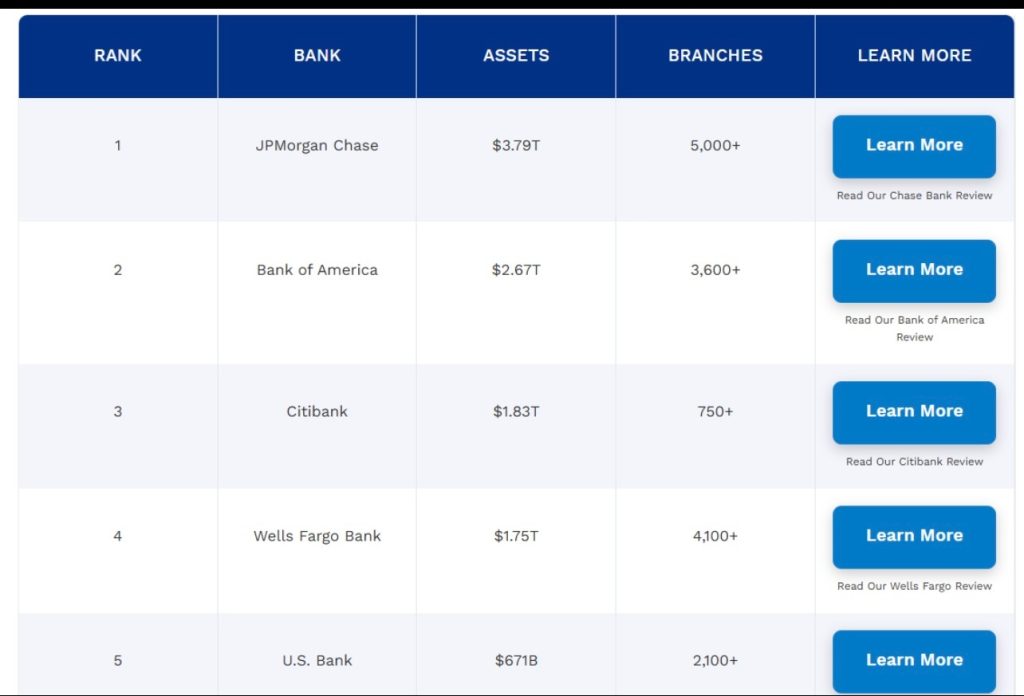
Bank of America, which holds roughly $2.67 trillion in consolidated assets and operates more than 3,600 branches, said the shift reflects rising demand from its client base.
The decision arrives as several other major U.S. financial institutions MOVE deeper into crypto markets.
Morgan Stanley, in October, suggested that investors consider a 2%–4% allocation to crypto.
 Morgan Stanley’s Global Investment Committee advises investors to keep a cautious 2%–4% of portfolios in crypto, tied to risk appetite.#MorganStanley #CryptoPortfolio https://t.co/Y9lycldVbs
In January, BlackRock told clients that a 1%–2% Bitcoin allocation falls within a reasonable range, arguing that Bitcoin now carries a risk profile comparable to major tech stocks such as Apple, Microsoft, Amazon, and Nvidia.
Fidelity has also made a similar recommendation, stating that a 2%–5% Bitcoin allocation could offer upside while managing downside exposure.
Additionally, in June, Bank of America CEO Brian Moynihan said the firm has completed substantial groundwork on launching its own stablecoin, though the timeline will depend on regulatory clarity.
He added that the bank intends to meet customer demand when conditions allow.
Major Banks Deepen Crypto Push as Vanguard, Goldman, and JPMorgan Expand Services
Beyond investment guidance, several major banks have accelerated their broader crypto plans.
Vanguard, after years of hesitation, has begun allowing customers to trade crypto-focused ETFs and mutual funds on its U.S. brokerage platform.
 Vanguard will allow trading of crypto-focused ETFs and mutual funds starting Tuesday, opening access to Bitcoin, Ether and other tokens for millions of investors.#Vanguard #CryptoETFs https://t.co/mmU1DdIi7s
Goldman Sachs recently agreed to acquire Innovator Capital Management, adding a set of defined-outcome ETFs, including a Bitcoin-linked product, to its asset-management division.
JPMorgan Chase has ramped up crypto integrations as well, allowing customers to fund Coinbase accounts using Chase credit cards.
Meanwhile, regulators in the United States and abroad are shaping the environment in which these institutions will operate.
The Office of the Comptroller of the Currency recently confirmed that national banks may hold crypto on their balance sheets for activities such as paying blockchain transaction fees.
 U.S. banks officially cleared to hold crypto following the @USOCC policy reversal, a major win for digital assets and traditional finance. #OCC #Bankshttps://t.co/PYpmuOPZmK
Additionally, a growing shift among younger investors is also influencing this wave of institutional activity.
A survey from crypto payments firm Zerohash found that 35% of young, high-earning Americans have already moved money away from advisers who do not offer crypto exposure.
More than 80% said their confidence in digital assets increased as major institutions adopted them.
The study also found strong demand for access to a wider range of digital assets beyond Bitcoin and Ethereum.
