CME Blackout Sparks Outrage: 10-Hour Trading Halt Freezes Markets Amid Manipulation Claims

Exchange Grinds to Complete Standstill as Critical Infrastructure Fails
The Chicago Mercantile Exchange's unprecedented 10-hour trading suspension locked billions in positions—triggering immediate accusations of market manipulation from furious traders. No orders executed, no positions adjusted, just frozen screens and mounting panic across trading floors.
Institutional Outcry Over 'Controlled Demolition'
Major funds reported being completely exposed during key trading hours with zero ability to hedge or exit positions. The timing—during peak volatility periods—has veteran traders questioning whether this was mere technical failure or something more calculated.
Regulatory Scrutiny Intensifies Amid Growing Suspicion
Watchdogs are already demanding internal communications and system logs from CME executives. The complete absence of contingency protocols during the blackout period suggests either catastrophic planning failure or—as some are whispering—convenient incompetence.
When the plumbing of modern finance springs a leak, someone always profits from the flood. Funny how these 'technical glitches' never seem to happen when markets are calm.
CME Outage on Thin Thanksgiving Liquidity Sparks Questions From Traders
During the outage, traders across asset classes—equities, currencies, commodities, energy, and crypto—reported being unable to close or adjust positions, a scenario that several described as a “nightmare.”
One stock trader, Timothy Bozman, publicly accused CME of allowing a “simple issue” to cripple the entire futures complex, questioning how all major markets could be taken offline by a single point of failure.
Manipulation at it's best. How in the actual $@ could the entire Index Futures, FX Futures, Metals futures, Energy Futures, Agriculture Futures markets and options be halted because of a server overheating. A simple issue could take down @CMEGroup entire futures platform? pic.twitter.com/ZwvDJ4WImy
— Timothy Bozman (@MrAmazingBoz) November 28, 2025Others went further, suggesting that the timing was “too convenient,” given that the halt arrived during the low-volume Asia session on Thanksgiving, when sudden price moves can unfold with limited resistance.
Some traders pointed out that silver futures were approaching a record high near $54 just minutes before prices froze, adding fuel to the speculation and frustration.
The outage was widespread because the Globex platform handles the majority of CME’s volume.
An earlier cryptonews report stated that crude and palm oil markets stopped moving during the halt, while crypto traders saw Bitcoin and ethereum futures go offline entirely.
The timing added complexity for firms preparing month-end rolls, particularly those needing to adjust Treasury futures or SOFR-linked positions
Several traders later noted that even after markets reopened, delays continued in Treasury futures and certain rate products.
Trading activity had already been muted due to the U.S. Thanksgiving holiday, but the outage further slowed an already quiet session.
Official communication from CME Group on their website has been posted. It’s officially ruled as a technical halt. Carry on.
I’d expect your prop firm to cancel losses for any stuck trades but we’ll see. $NQ $GC $ES pic.twitter.com/kknVpFj7Hj
One user on X publicly urged CME to cancel losses for trades affected during the freeze, reflecting the broader anxiety of traders locked into moving markets with no ability to act.
CME Suffers Major Outage as It Prepares Shift to 24/7 Crypto Trading in 2026
CyrusOne, which operates more than 55 data centers globally and is backed by KKR and BlackRock’s Global Infrastructure Partners, confirmed the cooling malfunction.
The Aurora facility is well-known among high-frequency trading firms that place servers as physically close as possible to CME’s matching engines to shave off microseconds.
The exchange acknowledged that CME Direct, a platform used for some markets, remained unavailable even after Globex reopened, showing the extent of the disruption.
The incident lasted far longer than a similar 2019 CME outage, and it was the latest reminder of how centralized infrastructure can pose systemic risk in electronic markets.
CME has faced technical issues in the past, including a 2014 outage triggered by a software malfunction affecting agricultural contracts.
Despite the friction, markets resumed and continued adjusting to broader price movements.
Bitcoin futures, which closed on Wednesday at $90,355 before the holiday, reopened at $90,940 on Friday and pushed above $93,000 later in the session as BTC rebounded from its recent low of around $80,522.
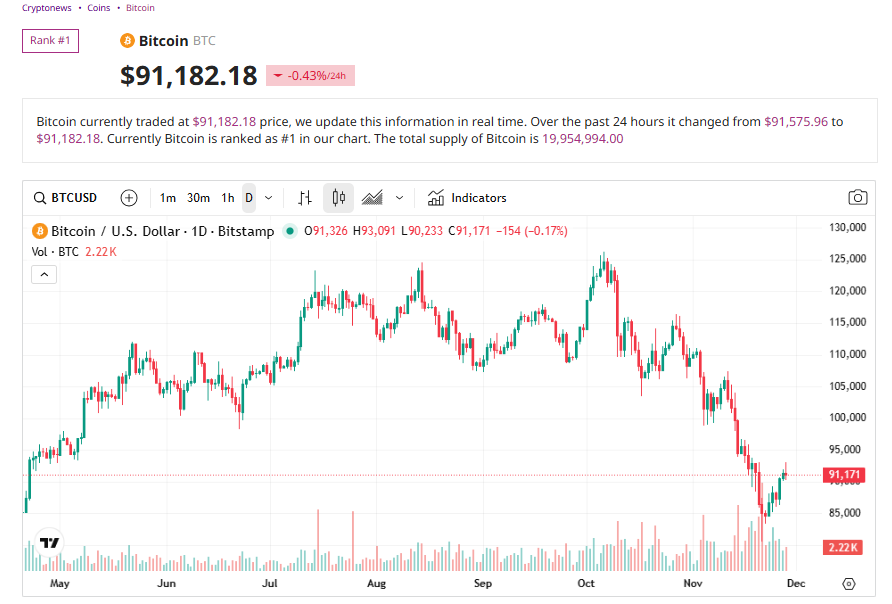
Analysts noted that Bitcoin faces resistance near $95,000, but reclaiming that level could reopen the path toward six-figure territory.
The blackout also comes at a moment when CME is expanding its role in the digital asset sector. In October, the exchange said it plans to move its cryptocurrency futures and options into a full 24/7 trading cycle starting in early 2026, subject to regulatory approval.
The firm cited rapidly rising demand for continuous risk management in crypto markets, which never close.
CME said trading will run nonstop on Globex, aside from a brief weekly maintenance window, and weekend transactions will be assigned to the next business day for clearing and settlement.
