VanEck’s Sixth Amendment Pushes Solana ETF Closer to Reality

SEC filing frenzy continues as asset managers race for crypto ETF approval
The Regulatory Marathon
VanEck just submitted its sixth amendment to the SEC for that Solana exchange-traded fund everyone's been whispering about. This isn't their first rodeo—remember the Bitcoin ETF saga? They're playing the long game, tweaking paperwork while the market holds its breath.
Why Solana Matters
While Wall Street analysts debate whether we really need another crypto ETF, the underlying tech keeps chugging along. Solana's been processing transactions at speeds that make older chains look like dial-up modems. The network's proving that scalability isn't just theoretical—it's happening right now.
The Institutional Endgame
Another day, another filing fee. Traditional finance finally realizes that digital assets aren't going away—they're just getting started. The real question isn't if these products get approved, but when the floodgates open completely. Watch this space—the paperwork might be boring, but the implications are anything but.
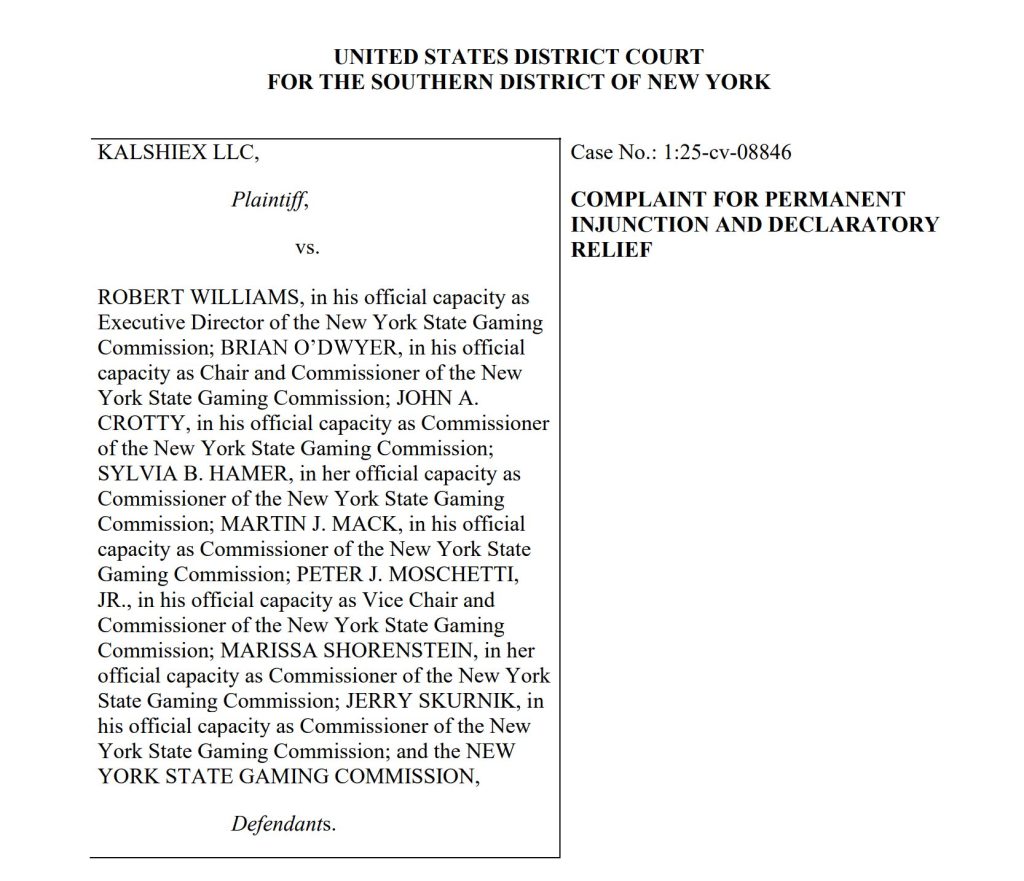 Source: BWBX
The legal battle erupted after state regulators sent Kalshi a cease-and-desist letter on October 24, 2025, claiming the platform’s sports-related contracts violated New York gambling laws and demanding immediate shutdown of operations within the state.
Kalshi contends that Congress granted the Commodity Futures Trading Commission exclusive jurisdiction over derivatives trading on designated contract markets, making state interference both field-preempted and conflict-preempted under the Supremacy Clause of the U.S. Constitution.
Federal Authority Clashes With State Gambling Oversight
Kalshi’s argument centers on its status as a CFTC-designated contract market, a designation the commission unanimously granted in 2020 after determining the exchange met stringent regulatory requirements.
On January 22, 2025, Kalshi self-certified its first sports contracts under federal law, offering event contracts on outcomes such as NCAA tournament advancement and the U.S. Open Golf Championship winner.
 @Kalshi has filed a lawsuit against the Nevada Gaming Control Board and the New Jersey Division of Gaming Enforcement.#Kalshi #Cryptohttps://t.co/hgPBmcFV1i
The exchange operates under the Commodity Exchange Act, which Congress deliberately designed to preempt state regulation and prevent a patchwork of potentially conflicting state laws across all 51 jurisdictions.
Federal oversight requires Kalshi to maintain extensive recordkeeping, meet liquidity standards, prevent market manipulation, and enforce position limitations across a nationally accessible platform.
New York gaming regulators countered that Kalshi’s sports-based contracts constitute sports wagering under state Penal Law and Racing Law, requiring a sports gaming license to operate legally within state borders.
The commission threatened criminal action and civil penalties unless Kalshi immediately ceased offering what regulators characterized as illegal gambling opportunities to New York residents.
Prediction Market’s Existential Threat
The lawsuit extends beyond Kalshi’s immediate business concerns, potentially affecting how prediction markets operate across state lines amid diverging regulatory philosophies.
Robinhood recently filed similar lawsuits in New Jersey and Nevada after those states refused to recognize federal court rulings favoring Kalshi, with officials warning the brokerage firm that offering event contracts WOULD constitute willful violations of law.
 @RobinhoodApp has sued Nevada and New Jersey, accusing the states of unfairly blocking its entry into the sports event contracts.#Robinhood #Cryptohttps://t.co/y6qGcRa09C
Event contracts function as derivatives that allow stakeholders, such as advertisers, sponsors, networks, and sportsbooks, to hedge exposure to economically significant sports outcomes, with prices fluctuating based on market perceptions of event probability.
Kalshi argues that blocking access to these federally authorized instruments imposes substantial economic and reputational harm while creating uncertainty for consumers and business partners.
The platform faces a potential existential threat if forced to implement state-by-state restrictions, as the CFTC could take action against it for violating requirements that designated contract markets operate as truly national exchanges accessible to all participants.
They noted that developing technological solutions to block specific state residents while maintaining platform integrity would require complex, untested systems that could undermine Kalshi’s regulatory standing.
New York’s Growing Regulatory Tensions
New York’s aggressive stance toward prediction markets resembles broader state-level efforts to regulate emerging financial technologies, including cryptocurrency transactions that remain outside comprehensive federal frameworks.
In August, state Assembly Member Phil Steck introduced legislation imposing a 0.2% excise tax on all digital asset transactions, with proceeds earmarked for upstate school substance abuse prevention programs.
The proposed tax, which should have taken effect on September 1, 2025, places compliance responsibility on anyone making or effectuating crypto transfers, potentially creating challenges for exchanges, traders, and decentralized finance protocols.
 New York Assembly bill seeks a 0.2% excise tax on crypto and NFT transactions, targeting the digital asset sector for substance abuse prevention funding.#Crypto #Taxhttps://t.co/fx48tYwUjA
Assembly Bill A08966 defines digital assets broadly as anything issued or transferred using distributed ledger or blockchain technology, encompassing currencies, coins, and non-fungible tokens.
Global jurisdictions have pursued vastly different approaches to crypto taxation and regulation, ranging from the United Arab Emirates’ emerging tax reporting framework to Hong Kong’s full licensing regime that encourages crypto business growth.
