Farage Declares Himself Crypto’s ’Champion’ - Pushes UK Bitcoin Reserve & Major Tax Cuts

Nigel Farage just positioned himself as cryptocurrency's political savior - and his proposals could reshape Britain's financial landscape overnight.
The Bitcoin Reserve Gambit
Farage wants the UK to establish official Bitcoin reserves, mirroring national gold holdings. This isn't just talk - it's a direct challenge to traditional central banking doctrine. Imagine Her Majesty's Treasury stacking sats alongside pound sterling.
Tax Revolution for Digital Assets
His plan slashes crypto taxes across the board. Capital gains? Reduced. Transaction fees? Minimized. The message to crypto entrepreneurs: Britain's open for business while traditional finance gatekeepers sweat over their spreadsheets.
The establishment hates this - but Farage knows digital assets don't need permission to disrupt. While City bankers polish their leather chairs, crypto's building the next financial system right under their noses.
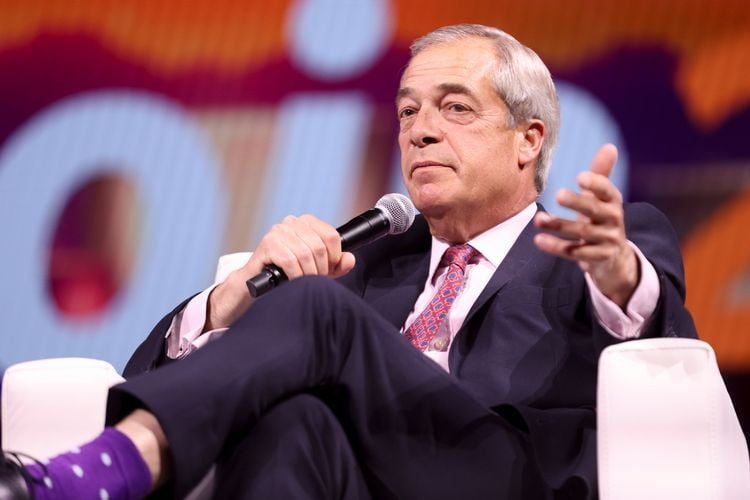 Nigel Farage in bitcoin ‘25 Conference | Source: The London Economic
What Reform’s Crypto Bill Would Actually Do
Farage’s platform mirrors the approach taken by U.S. President Donald Trump, who cultivated industry support before his 2024 election victory and has pursued a crypto-friendly agenda since taking office in January 2025.
 @Nigel_Farage has thrown his full backing behind cryptocurrency, unveiling an ambitious pro-crypto legislative plan.#Bitcoin #UKhttps://t.co/mC5puHBEwE
The Reform Party chief’s proposed bill WOULD allow British taxpayers to pay taxes directly in Bitcoin, with funds either converted to pounds or directed to the reserve fund.
Additionally, banks would be prohibited from denying or withdrawing services to customers based on lawful crypto-related activities, directly addressing industry concerns over “debanking.”
Farage connected the debanking issue to his own experience, telling the conference crowd, “I went to 10 banks, all of whom refused me an account,” and adding, “No wonder so many people are going for Bitcoin—because they can’t close you down, and that is the ultimate freedom.”
Meanwhile, Farage characterized the Bank of England’s plans for a central bank digital currency as “the ultimate authoritarian nightmare” and vowed to “stop it overnight” should Reform win the next election.
He also targeted the Bank of England’s proposed stablecoin holding limits, capping personal holdings at £10,000 to £20,000 and business holdings at £10 million, calling the restrictions “frankly ridiculous.”
According to Bloomberg, Farage claimed he had discussed the stablecoin caps directly with Andrew Bailey, the Governor of the Bank of England.
The Reform leader stated that the UK government is falling behind international competitors and must act quickly to regulate the crypto industry to safeguard Britain’s position as a financial hub.
Farage said “this whole area of digital assets and crypto just isn’t being talked about at all,” and pointed out that “we’ve got no regulated market.”
He also said that if Reform wins the next election, his government would enact the Crypto Assets and Digital Finance Bill “very, very quickly.”
Reform UK currently leads in numerous polling projections.
However, Britain’s first-past-the-post electoral system presents a major structural challenge to translating that support into parliamentary seats, as demonstrated in the 2024 general election when Reform received 4.1 million votes but secured only five seats.
The next UK general election is not expected until 2029, leaving four years for both political and market conditions to shift.
Why Global Crypto Competition is Forcing UK Regulators to Act
Britain’s regulatory environment now faces competitive pressure from the United States, where the TRUMP administration accelerated crypto-friendly policies, including thefor stablecoin oversight.
The European Union has also instituted a unified regulatory framework for digital assets, creating incentives for UK policymakers to clarify their own approach to crypto regulation.
Earlier this month, the Bank of England announced that it was considering exemption plans for its proposed stablecoin holding limits for crypto exchanges and other firms requiring large holdings for liquidity purposes.
Most recently, Governor Andrew Bailey acknowledged that stablecoins could drive financial innovation and coexist with traditional banking systems.
 Bank of England Governor says stablecoins could reduce UK reliance on commercial banks while proposing controversial ownership caps.#UK #Stablecoinhttps://t.co/TW5EGT8a6O
The Bank of England is also preparing to permit stablecoins as settlement assets in its Digital Securities Sandbox, a controlled environment for testing blockchain-based trading and issuance.
The uncertain stance of the nation has prompted industry executives to warn that overly restrictive regulations in the UK will risk diverting business and talent to jurisdictions with more favorable crypto frameworks.
As it stands now, the Financial Conduct Authority will complete its consultation on whether crypto firms should face the same regulatory standards as traditional financial institutions by year-end, with implementation expected to begin in January 2026.
