Trump’s Bombshell Report: Stablecoins Get Green Light, CBDCs Face Brutal Rejection

Stablecoins just scored a political touchdown—while central bank digital currencies got benched. A new report linked to former President Trump throws weight behind private-sector crypto alternatives, slamming the door on government-controlled digital money.
The crypto industry's been waiting for this play. With regulators playing whack-a-mole with exchanges, the endorsement comes at a critical moment. Stablecoin issuers are already popping champagne—CBDC advocates? Not so much.
Wall Street's probably fuming. After spending millions lobbying for Fed-controlled digital cash, they just got outmaneuvered by... *checks notes*... cryptocurrency. The irony's thicker than a banker's bonus.
In Brief
- The Trump administration’s working group publishes a highly anticipated report on crypto regulation in the United States.
- A new role distribution is proposed between the SEC and CFTC to coherently oversee the crypto market.
- The report recommends a clear taxonomy of digital assets to better distinguish tokens classified as securities or commodities.
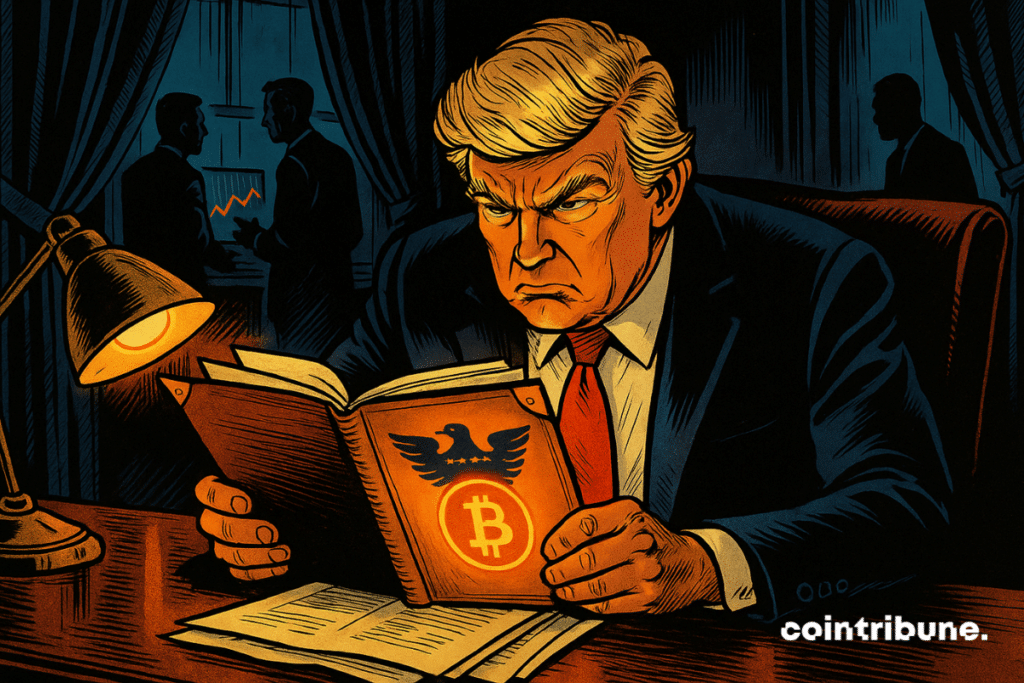
- The Trump administration firmly rejects the idea of a digital dollar (CBDC) in the name of individual liberties and the fight against state surveillance.
Toward a Shared Regulatory Structure Between the SEC and the CFTC
While the Genius Act was published a few days ago, a new report released this Wednesday by the Trump administration’s crypto working group outlines the major points of a future regulatory framework for the American crypto ecosystem. Its primary goal is to clarify the respective competencies of federal authorities in order to effectively regulate the market while fostering innovation.
BTCUSDT chart by TradingView“Jurisdictional oversight of cryptocurrencies should be shared between the CFTC and the SEC”, the report states, specifying that “the CFTC WOULD have authority over the crypto spot market”. In other words, the report proposes a segmentation of responsibilities based on the nature of assets, with a clear division of prerogatives.
Here are the main regulatory points detailed in the report:
- Define a clear taxonomy of cryptocurrencies, distinguishing securities and commodities ;
- Assign the CFTC supervision of the “spot” market, i.e., transactions of cryptos on a cash basis ;
- Retain regulation of tokens classified as securities under the jurisdiction of the SEC ;
- Encourage collaboration between the SEC and the CFTC to ensure a harmonized and coherent national approach.
This vision of a bilateral regulatory framework aligns with the desire to preserve American leadership in the sector. The SEC chairman, Paul Atkins, praises this positioning : “the best way to catalyze American innovation, protect investors against fraud, and maintain the attractiveness of our capital markets is a rational regulatory framework for digital assets”.
By proposing a coherent and structured interpretation of legal obligations, this report aims to create an environment conducive to the growth of crypto businesses while reinforcing legal security for participants.
Stablecoins Supported, CBDC Rejected, and Tax Reform on the Horizon
The document goes beyond market regulation. It also addresses future financial infrastructures and crypto taxation. One of the most striking focuses is explicit support for stablecoins.
According to the report’s authors, these assets can serve as a bulwark against the hegemony of the U.S. dollar. They even state that stablecoin issuers can collaborate with authorities to freeze and seize assets in cases of illicit use, highlighting their compatibility with homeland security standards.
The report also encourages banking regulators to simplify obtaining licenses to allow banks to offer crypto-related services, including custody.
Contrary to many initiatives in other major economies, the report openly calls to prohibit the development of a central bank digital currency (CBDC) in the United States.
It supports the CBDC Anti-Surveillance State Act, a legislative proposal aiming to ban all federal funding or research on a potential digital dollar. This marked opposition is explained by fears of state surveillance and loss of individual freedom.
At the same time, the report proposes tax reform adapted to the specificities of cryptocurrencies, calling on Congress to legislate to recognize cryptocurrencies as a new asset class benefiting from hybrid tax rules, midway between securities and commodities.
These proposals outline a very particular vision for the future monetary and financial landscape of the United States: that of a decentralized system but under regulatory control as evidenced by the laws passed by the United States, excluding any FORM of programmable public currency. While this report does not constitute law itself, it nonetheless marks a clear and potentially lasting political direction.
Maximize your Cointribune experience with our "Read to Earn" program! For every article you read, earn points and access exclusive rewards. Sign up now and start earning benefits.
