Elon Musk Secures Major Judicial Victory for Tesla - What It Means for the Future

Elon Musk just dodged a legal bullet—and the markets are already buzzing.
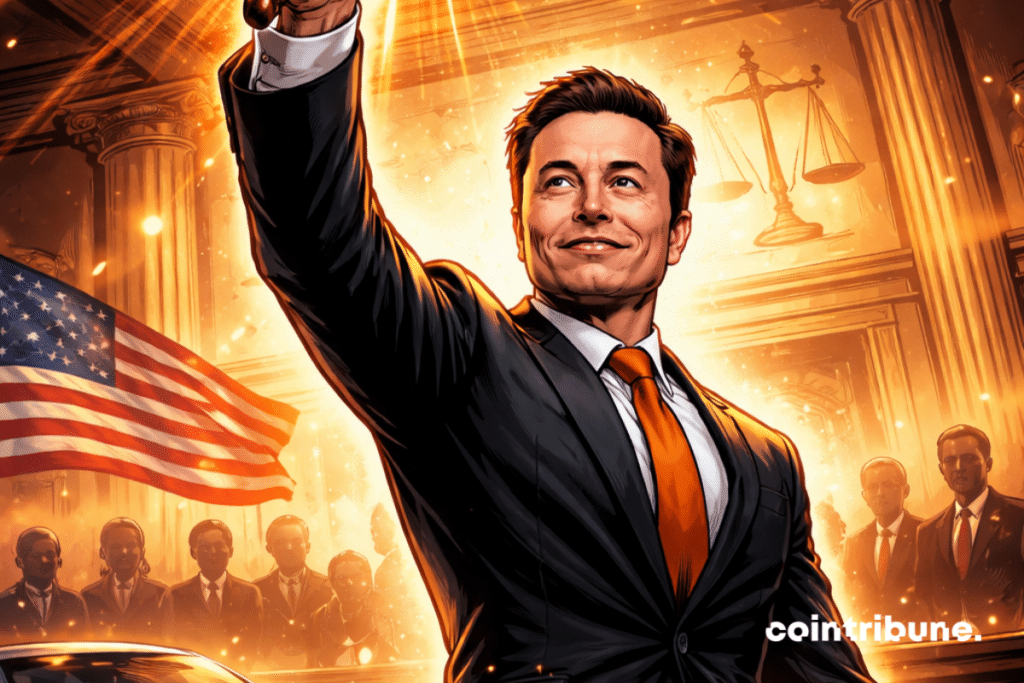
The Tesla CEO scored a decisive win in court this week, with a judge dismissing a high-stakes lawsuit that threatened to derail the company's momentum. The ruling clears a significant regulatory hurdle, freeing Musk to push forward with his most ambitious projects.
Zero to Legal Vindication in Record Time
The case centered on allegations that have dogged Tesla for months. Critics argued the company's governance was veering off-road. The court's dismissal wasn't just a win; it was a full-throttle endorsement of Tesla's current trajectory. Legal experts are calling it a precedent-setting decision that could shield other disruptive tech leaders from similar challenges.
Wall Street's Pivot: From Skeptics to Cheerleaders
Almost immediately, analyst upgrades started rolling in. The legal overhang—a favorite excuse for cautious investors to sit on the sidelines—has evaporated. One major firm raised its price target, citing "reduced execution risk." Translation: the road ahead just got a lot smoother. Of course, the same analysts who cited the lawsuit as a key risk last quarter are now touting its resolution as a reason to buy—gotta love the consistency of sell-side research.
The Ripple Effect Beyond Automotive
This victory isn't just about cars. It reinforces Musk's unique position as a founder-CEO with the legal latitude to operate at the edges of convention. For Tesla, it means full steam ahead on AI, robotics, and energy storage. The judge's gavel might as well have been a starter's pistol.
The ruling sends a clear message: the old guard's playbook for slowing down disruptors is losing its potency. One legal battle ends, but the war to define the future of transportation and technology accelerates. Buckle up.
 Read us on Google News
In brief
- The Delaware Supreme Court restores Elon Musk’s 2018 compensation plan at Tesla (56 B$), overturning the 2024 decision deemed too excessive.
- Musk recovers 303 million shares worth about 150 billion dollars based on quoted prices
- The court recognizes governance errors, but only awards a symbolic one dollar in damages
An extraordinary compensation, but achieved objectives
On Friday, the Delaware Supreme Court restored the compensation plan granted to Elon Musk by Tesla in 2018, estimated at 56 billion dollars. It thus overturned the 2024 decision that had nullified this plan, deeming the sanction too radical.
Recently, Tesla tried to retain Elon Musk by offering him 96 million shares, equivalent to 29 billion dollars. A special board committee was even tasked with designing a new plan to ensure Musk’s presence at the helm of the group.
Originally, the 2018 plan already raised eyebrows. Never before had a leader benefited from such an ambitious, almost provocative compensation mechanism. No fixed salary, no traditional bonus. Only shares, unlocked on condition of achieving a series of industrial and financial objectives deemed, at the time, nearly unrealistic.
Yet, against all odds, Elon Musk ticked all the boxes. Between 2018 and 2024, Tesla went from a promising manufacturer to a global giant. The company flirts with a market capitalization exceeding 1 trillion dollars. The growth was rapid, sometimes chaotic, but undeniable. In this context, the Supreme Court considered that completely canceling the compensation amounted to denying six years of efforts and tangible results.
The judges’ statement is unequivocal. Indeed, deleting the entire plan constituted an excessive sanction. The message is clear. Governance errors cannot erase the massive value creation generated for shareholders.
Delaware retreats, but does not fully exonerate Tesla
The jurisdiction however did not give a blank check to the board. It explicitly recognizes that the approval process for the 2018 plan was flawed. Too much closeness, not enough contradiction. Elon Musk dominated the room, and the board followed.
But whereas the Chancery Court chose the hardline approach in 2024, the Supreme Court opts for a more measured one. Thus, only a symbolic one dollar in damages will be paid to sanction these shortcomings.
On the other hand, the financial consequences are colossal. Tesla can return to Musk 303 million shares, currently valued at around 150 billion dollars. A staggering sum, but one that also reflects the group’s stock market explosion over the period.
Ironically, this judicial victory could bury an even more extravagant project. Anticipating a favorable outcome, the board had proposed a new compensation plan that could climb up to 1,000 billion dollars if new objectives were reached. Shareholders had validated the principle, but on condition: this plan WOULD be abandoned if the 2018 one was reinstated.
Maximize your Cointribune experience with our "Read to Earn" program! For every article you read, earn points and access exclusive rewards. Sign up now and start earning benefits.
