Crypto’s Capitol Hill Champion Cynthia Lummis Retires from Senate, Leaving Industry at a Crossroads

Wyoming's crypto crusader is stepping down. Senator Cynthia Lummis, the industry's most vocal and influential advocate in Washington, has announced her retirement from the Senate. Her departure punches a massive hole in the digital asset sector's political defense—just as regulatory battles heat up.
The Lummis Legacy: A Framework Forged in Fire
Lummis didn't just talk about crypto—she built policy. Her landmark bipartisan bill with Senator Kirsten Gillibrand aimed to create the first comprehensive U.S. regulatory framework for digital assets. It carved out clear roles for the CFTC and SEC, a move hailed as revolutionary by proponents and viewed with deep suspicion by traditional finance regulators. She argued not for a wild west, but for clarity—the very thing entrepreneurs and institutions claim they need to innovate responsibly.
Who Fills the Void?
The immediate question isn't just about one seat. It's about momentum. Lummis provided intellectual heft and political cover for pro-crypto arguments, translating blockchain jargon into legislative language. Without her, the industry's D.C. playbook reverts to lobbyists and trade associations—powerful, but lacking a senator's podium and vote. Other allies exist, but none with her unique blend of Western libertarian ethos and detailed policy chops.
A Sector Under Siege Needs Its Generals
This exit lands as agencies like the SEC double down on enforcement-first strategies. The "come in and register" mantra rings hollow to builders who see no clear path to compliance—a classic regulatory catch-22 that Lummis fought to dismantle. Her absence may embolden regulators pushing a stricter line, potentially chilling U.S. innovation while offshore hubs cheer. After all, nothing helps a competitor like watching your home team lose its star quarterback.
The final irony? The very volatility and disruption the crypto industry celebrates may have just claimed its steadiest political anchor. The market will price in the news—after it finishes pricing in everything else, of course.
 Read us on Google News
In brief
- Cynthia Lummis announces her departure from the Senate in 2027, citing exhaustion and mental load.
- She championed the GENIUS Act, regulating stablecoins and structuring the US crypto market.
- The Bitcoin Act proposed integrating $80 billion of BTC into a strategic national reserve.
- Without a clear successor, the crypto industry loses an experienced ally in the halls of Washington.
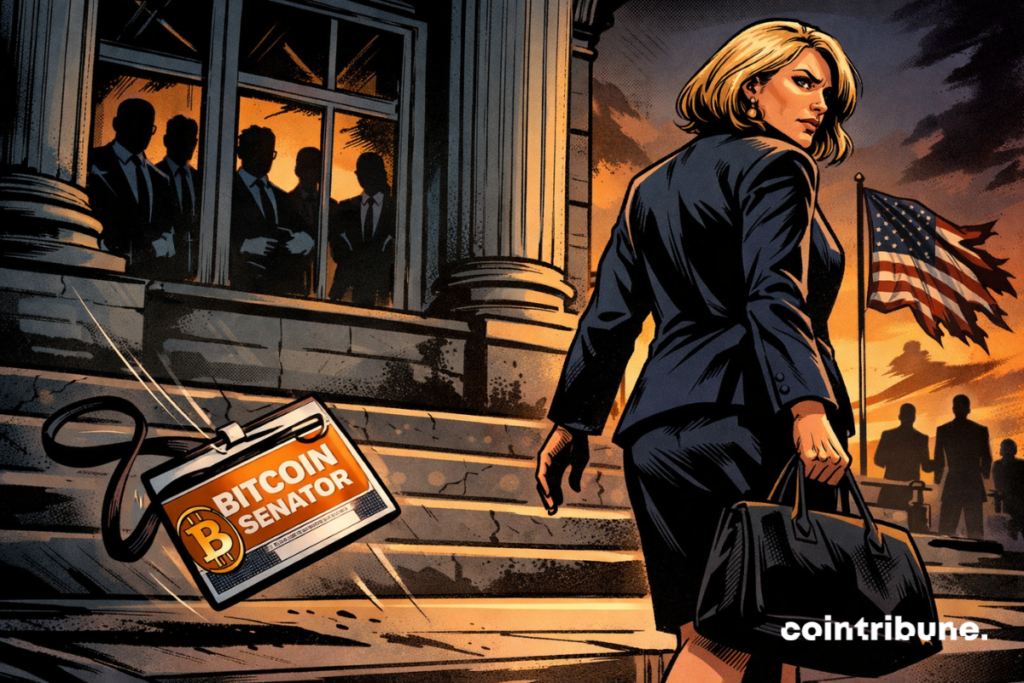
Washington loses its “Bitcoin Senator”: a political shockwave
Cynthia Lummis, 71 years old, will not seek a second term. “I am a dedicated legislator, but I feel like a sprinter in a marathon. The necessary energy no longer follows,” she said in a statement, referring to the exhaustion from long Senate sessions. Yet, her aura was not diminished. Supported by Donald Trump, nicknamed the “Crypto Queen,” Lummis embodied a bridge between the libertarian culture of the blockchain and the old Republican guard.
Hardly the announcement was made, tributes poured in. Ji Kim, director of the Crypto Council for Innovation, praised:
Senator Lummis has been a leading champion for digital assets in Washington. The digital asset ecosystem is stronger thanks to her commitment, and we are grateful for her leadership.
Her decision comes as no figure as exposed appears ready to take her role in Senate debates. Harriet Hageman, possible replacement, remains silent on crypto-assets. In 2020, Lummis won her seat with a 46% lead. But 2026 promises to be more uncertain for crypto enthusiasts. The Senate might no longer be a terrain as favorable to blockchain innovations.
From GENIUS Act to Bitcoin Act: a heavy legacy
Lummis did not just talk Bitcoin, she legislated. In July, she got the GENIUS Act passed, the first federal text structuring the stablecoin market. This law, negotiated amid political turmoil, offers a clear framework for issuers like Circle or Tether. A feat in a fractured America.
At the same time, the senator proposed an idea as disruptive as it was ambitious: making Bitcoin a national strategic reserve. The Bitcoin Act proposes a plan to purchase $80 billion in BTC over five years. Objective: to anticipate a global monetary shift.
Since 2022, she has also co-sponsored the bill on crypto market structure with her Democratic colleague Kirsten Gillibrand. But internal industry disagreements have slowed the debates. This text, if passed, would legalize the majority of crypto activities in the United States.
Lummis knew that without rules, chaos awaited. But she also knew that too much regulation WOULD kill innovation. This process was exhausting but necessary, she confided, a few days after the commission was postponed to 2026.
After Cynthia Lummis, what future for the pro-crypto camp?
The timing is striking: the crypto market is trying to recover from two years of uncertainties. Without Lummis, the Senate loses its most technical and committed voice on Bitcoin, AI, and digital assets. Yet 2026 could be a turning point. The fight over the market structure bill is far from over. The fragmented crypto industry struggles to agree on priorities: lighter regulation or enhanced security?
A sober but eloquent tweet officially announced the departure:
Thank you, Wyoming! Serving our state has been the honor of my life.
Meanwhile, other cryptos like Ethereum, Solana, or even XRP follow divergent regulatory trajectories. The lack of coherent leadership in the Senate could accentuate unequal treatment. And Washington, without Lummis, might close the chapter of constructive dialogues with the blockchain ecosystem.
Some key markers to understand the issue
- Cynthia Lummis was elected to the Senate in 2020 with over 46% lead;
- In July 2025, the GENIUS Act on stablecoins became law;
- The Bitcoin Act plans $80 billion in BTC in federal vaults;
- The “market structure bill” has been under negotiation since 2022, with no resolution;
- Harriet Hageman, possible replacement, has no public position on crypto-assets.
If the Lummis page closes soon, the book is not finished. Next January, she will still have a role to play. The Senate will then debate the Clarity Act, another key piece to define the legal status of cryptocurrencies in the United States. And once again, the Wyoming senator could well weigh in the balance.
Maximize your Cointribune experience with our "Read to Earn" program! For every article you read, earn points and access exclusive rewards. Sign up now and start earning benefits.
