Bitcoin Holds Steady Yet Fragile as Bank of Japan Decision Looms

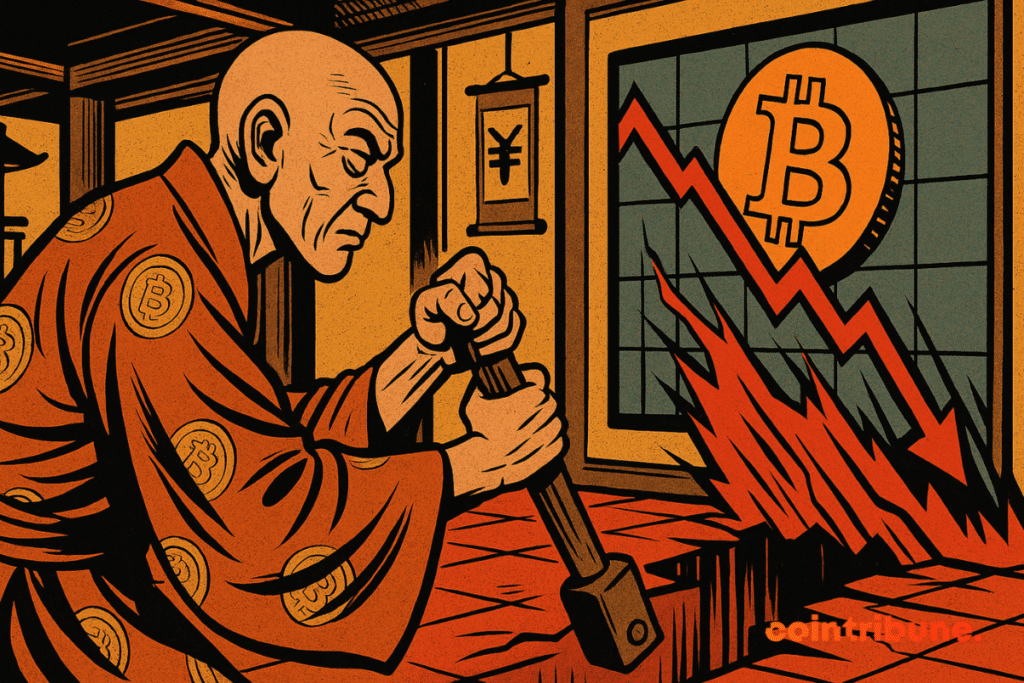
Bitcoin’s price is holding its ground—but the foundation feels like sand. All eyes are locked on Tokyo as the Bank of Japan prepares a policy move that could send shockwaves through global liquidity and, by extension, the crypto markets.
The Calm Before the Storm?
Don’t let the stable charts fool you. The current equilibrium is deceptive, propped up by thin order books and trader indecision. Market depth across major exchanges has evaporated, meaning any significant buy or sell pressure could trigger violent swings. This isn’t stability; it’s fragility wearing a convincing mask.
Why the BoJ Decision Matters for Crypto
For years, the Bank of Japan has been the world’s last holdout of ultra-loose monetary policy—the so-called ‘dovish darling’ of central banks. Its yield curve control has acted as a global anchor for cheap capital. A decisive shift away from this stance wouldn’t just rattle the yen. It would recalibrate risk appetites worldwide, pulling capital from speculative assets as investors recalculate the cost of money. Bitcoin, sitting at the intersection of macro liquidity and digital gold narratives, gets caught in the crossfire.
The Liquidity Lifeline—or Noose
Crypto’s 2024-2025 bull run was built on a tide of abundant liquidity. Central bank pivots threaten to drain that pool. A hawkish surprise from the BoJ could be the pin that pops the current sentiment bubble, proving once again that crypto’s ‘decoupling’ dream remains just that—a dream, often shattered by the cold, hard reality of traditional finance’s levers. After all, what’s another market cycle without a central bank reminding everyone who really controls the money printer?
Brace for impact. The decision won’t just move yen; it will test the very thesis of Bitcoin as a sovereign asset. The next 24 hours will separate the tactical traders from the true believers.
 Read us on Google News
In Brief
- The Bank of Japan is set to raise its rates for the first time in nearly 20 years, a decision anticipated by 98 % of markets.
- Previous Japanese rate hikes caused significant bitcoin drops, ranging from -23 % to -30 % in 2024 and early 2025.
- This phenomenon is explained by the weakening of the yen carry trade, a financial leverage historically used to invest in risky assets.
- Some analysts fear another bitcoin correction below $70,000 if the December 19 hike is confirmed.
The Bank of Japan and the Specter of a New Crash
At its meeting scheduled for December 18 and 19, the Bank of Japan is very likely to raise its key interest rate by 25 basis points similar to the Fed, to reach 0.75 %, a level unseen for nearly twenty years.
This anticipation is currently estimated at 98 % by the Polymarket platform, making it, according to analysts, one of the most critical monetary appointments of the year for risk markets.
Several players point out that every BoJ rate hike decision in the past has coincided with marked corrections in the Bitcoin price. Analyst 0xNobler is adamant : “every time Japan raises its rates, bitcoin loses 20 to 25 %. Next week, they will raise them to 75 bps again. If the pattern repeats, BTC will fall below 70,000 dollars on December 19.”
These fears are based on a numerical history that leaves little room for doubt. During the three previous rate hikes by the Bank of Japan, crypto market reactions were particularly violent :
- In March 2024 : the main crypto’s price dropped about -23 % ;
- In July 2024 : another decline of -25 % ;
- In January 2025 : an even more brutal correction, exceeding -30 %.
This phenomenon is explained by the questioning of the yen carry trade, an old strategy consisting of borrowing in yen at nearly zero rates to invest in more profitable assets such as stocks, bonds, or bitcoin.
Analyst Mister crypto reminds us that “the yen has been for decades the number one currency to borrow and convert into other assets… This carry trade is disappearing now that Japanese yields are rising quickly.”
In clear terms, if the BoJ tightens its monetary policy, investors heavily exposed to yen leverage could be forced to liquidate their risky asset positions, thereby creating a sharp downward pressure on the crypto market.
Towards a Global Reconfiguration of Capital Flows ?
Not all observers share the same alarmist interpretation. Part of the macroeconomic sphere sees in this MOVE by the Bank of Japan a sign of a global monetary regime change, likely to alter the geography of global liquidity.
Analyst Quantum Ascend takes a less pessimistic view. According to him, the Japanese rate hike, if combined with expected rate cuts from the U.S. Federal Reserve, could create a positive dynamic for risky assets. “This is not a liquidity shock, it is a regime change,” he asserts, suggesting that the gradual withdrawal of the yen carry trade could be offset by an influx of weaker and thus more abundant dollar liquidity.
This thesis relies on a crucial distinction. Thus, it is not the Japanese rate hike itself that matters, but how the balance of global monetary policies evolves in response. In plain terms, if the United States injects more dollars while Japan tightens slightly, the net balance could remain favorable for investment in cryptos.
This partly explains why, despite signals of fragility and rising bond yields, bitcoin has remained relatively stable for several weeks, evolving in a consolidation phase according to Daan Crypto Trades, marked by low liquidity and lack of investor conviction ahead of the year-end holidays.
Bitcoin collapses after false rebound hope, caught in the turmoil of a changing macroeconomic context. If the BoJ decision could mark a turning point, it mainly reminds us of the persistent vulnerability of cryptos to global monetary dynamics.
Maximize your Cointribune experience with our "Read to Earn" program! For every article you read, earn points and access exclusive rewards. Sign up now and start earning benefits.
