Terraform Founder Do Kwon Sentenced to 15 Years for Massive Fraud

Another crypto titan falls—this time, the architect behind one of the decade's most spectacular collapses faces the music.
The gavel drops on Do Kwon.
A South Korean court has handed down a decisive 15-year prison sentence to Terraform Labs founder Do Kwon, found guilty on multiple counts of fraud. The verdict caps a global legal saga that began when his algorithmic stablecoin, TerraUSD (UST), and its sister token, LUNA, imploded in 2022, vaporizing an estimated $40 billion in market value almost overnight.
The Anatomy of a Collapse
The prosecution painted a picture of deliberate deception. They argued Kwon and his team misled investors about the stability of the UST peg and the actual adoption of the Terra blockchain. Internal chats and promotional materials became key evidence, allegedly showing awareness of the project's fragility while publicly touting its robustness.
Regulatory Reckoning Goes Global
This isn't just a Seoul story. Kwon also faces parallel charges from the U.S. Securities and Exchange Commission (SEC) and awaits potential extradition. The 15-year sentence sends a chilling message to the industry: the era of 'move fast and break things' is giving way to 'break the law and do the time.' Market watchdogs worldwide are taking notes, sharpening their claws for the next big audit.
Aftershocks and the Road Ahead
The Terra ecosystem's failure was a contagion event, triggering bankruptcies across the crypto lending and investment space. While a faction of the community has rallied to rebuild under the 'Terra' name, the original vision lies in ruins. The case sets a formidable precedent, proving that decentralized finance's borderless ambitions can still be pinned down by national courts.
For the crypto faithful, it's a brutal lesson in due diligence. For skeptics, it's just another finance bro finding out—proving that even in the wild west of Web3, the oldest rule still applies: if it sounds too good to be true, it probably is. Especially when the math is made up and the peg doesn't matter.
 Read us on Google News
In Brief
- Do Kwon, co-founder of Terraform Labs, was sentenced to 15 years in prison for fraud after the collapse of his crypto ecosystem.
- Do Kwon’s sentencing, like Sam Bankman-Fried’s (FTX), shows a judicial toughening against massive crypto frauds.
- Stablecoins like Tether (USDT) could be the next targets of regulators due to their opaque reserves and systemic role in the crypto market.
Crypto: 15 years in prison for the co-founder of Terraform
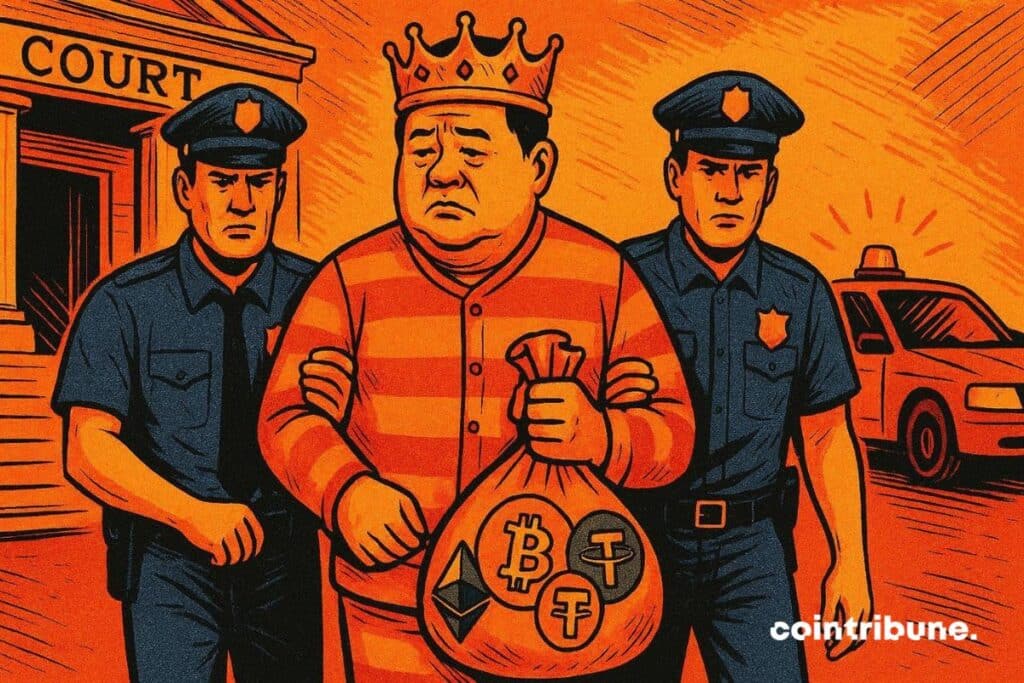
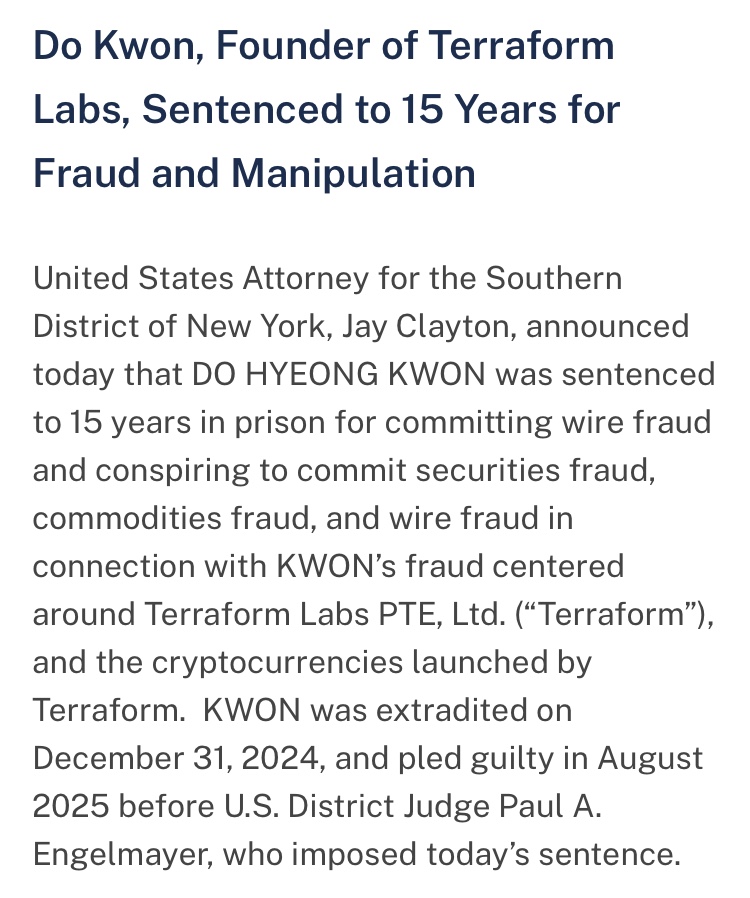
Do Kwon, co-founder of Terraform Labs, was sentenced to 15 years in prison for fraud after the collapse of his crypto ecosystem in 2022. The American court qualified the actions as generational fraud, highlighting the $40 billion losses suffered by investors. Kwon pleaded guilty to conspiracy and wire fraud, sealing his fate.
Victims, some of whom lost their savings, testified to the devastating impact of this case. The judge emphasized the need to send a clear message: fraudsters will not go unpunished. This conviction comes after months of investigation and legal procedures, marking a key step in crypto regulation.
For observers, this harsh sentence from the judges could deter other players in the crypto sector from engaging in fraudulent practices. It also reminds us that, despite technological innovation, traditional financial rules apply.
Sam Bankman-Fried and Do Kwon: same fate, same mistakes?
The sentencing of Do Kwon to 15 years in prison recalls that of Sam Bankman-Fried, founder of FTX, jailed for 25 years in 2024. The two cases share striking similarities:
- Unkept promises;
- Fraudulent use of client funds;
- Spectacular collapse of their platforms.
These sentences show a clear trend: American authorities no longer tolerate abuses in crypto.
Bankman-Fried, like Kwon, built an empire on fragile foundations, exploiting investors’ trust without real transparency. Their respective falls revealed sophisticated fraud schemes, but also a total lack of initial remorse. Judges in both cases emphasized the need for exemplary sentences to protect markets. Are we witnessing the end of impunity for the kings of crypto? Or do these cases remain exceptions in a still largely deregulated sector?
Which crypto could be the next victim of this regulatory tightening?
In this context of increased regulation, stablecoins like Tether (USDT) are under scrutiny. Their model, based on sometimes opaque reserves, recalls TerraUSD’s unkept promises. Authorities could target these assets, whose stability is crucial for the crypto ecosystem. Tether, with its $80 billion capitalization, is often criticized for its lack of transparency.
If regulators proved that its reserves are insufficient or manipulated, a crisis of confidence could occur, leading to a collapse similar to Terra’s. Other projects like Circle (USDC) could also suffer. Experts emphasize that stablecoins are systemic, and their downfall WOULD have repercussions across the entire crypto market. Investors must therefore remain vigilant, while crypto projects must anticipate stricter audits.
The sentencing of Do Kwon and that of Sam Bankman-Fried send a strong message: crypto is no longer a lawless zone. But will this rigor be enough to restore trust? The debate remains open, between necessary regulation and innovation to preserve. One thing is certain, the era of impunity seems over.
Maximize your Cointribune experience with our "Read to Earn" program! For every article you read, earn points and access exclusive rewards. Sign up now and start earning benefits.
