Japan Unleashes 17 Trillion Yen Stimulus Bomb – Crypto Markets Brace for Impact

Tokyo drops a fiscal nuke as policymakers scramble to juice the economy.
Key details:
- The 17 trillion yen package marks Japan's largest stimulus since the pandemic
- Analysts predict liquidity tsunami could flood into risk assets
- Crypto traders eye potential capital rotation from traditional markets
The Bank of Japan now faces its ultimate test – can it print its way to prosperity without triggering a yen collapse? Meanwhile, crypto exchanges report surging JPY-denominated stablecoin inflows as investors hedge against currency debasement.
Fun fact: 17 trillion yen could buy every Japanese citizen one whole Bitcoin... if they'd stopped printing money back in 2010.
 Read us on Google News
In brief
- Japan commits 17 trillion yen to save an economy undermined by demographics.
- In 2024, 309 companies closed, unable to recruit enough qualified available staff.
- The hotel industry invests only 20,000 yen per employee compared to 450,000 in other economic sectors.
- Major projects, such as TOC’s, are postponed until 2036 due to lack of human resources.
Japan: A Stimulus Fueled by Yen, but Short on Workers
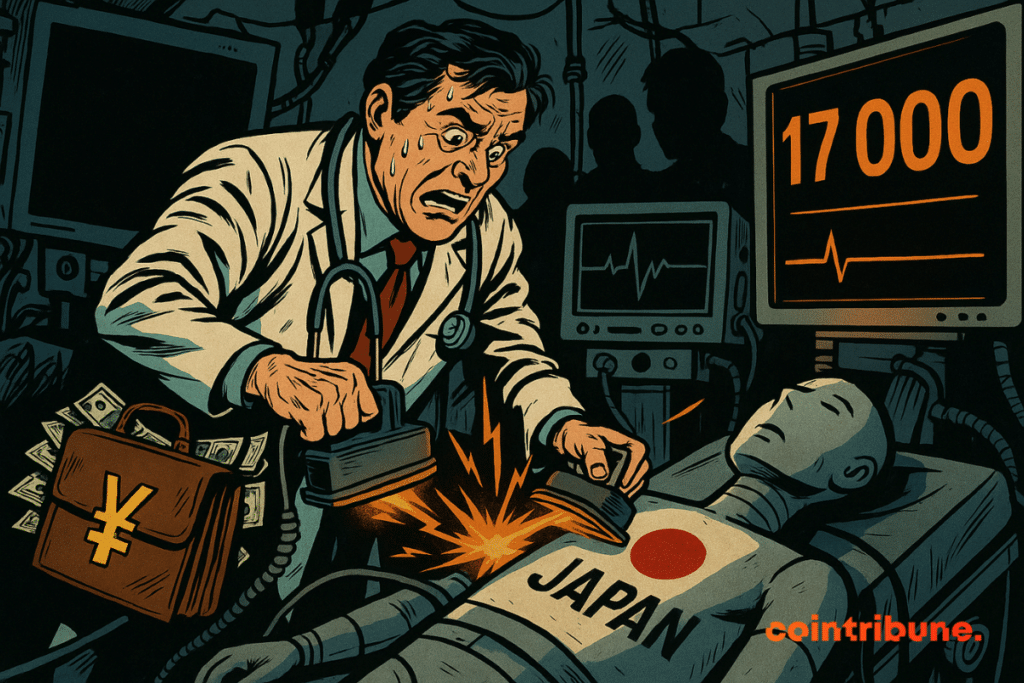
Burdened by a mountain of debt and a tense economic environment, government chief Sanae Takaichi decided to strike hard. To revive the economy, she is betting on a budget of more than 110 billion dollars, financed by a supplementary budget of 14 trillion yen. A forceful response to soaring prices, and above all, to an economy on life support.
But the Japanese economy has a much deeper problem: it no longer has enough hands to operate. In 2024, 309 companies filed for bankruptcy due to staff shortages. And the figures hurt: 16 trillion yen in losses per year, or 2.6% of GDP evaporating. Hotels, nursing homes, restaurants… all are struggling.
Makoto Ono, who manages a hotel in Nikko, has seen 40% of his staff disappear since the pandemic. The result? Half of the rooms remain empty, even in peak tourist season. A hemorrhage stalling any recovery. And without workers, even the best stimulus plans are stalled.
AI in the Land of Robots: Promise or Industrial Mirage?
The government is therefore betting big on technology. One of the plan’s key pillars: AI (artificial intelligence). Japan plans to inject 10 trillion yen by 2030 into AI and semiconductor sectors. A risky but strategic bet. The idea? To gain productivity to compensate for the labor shortage.
But on the ground, reality is less glorious. In hotels, only 20,000 yen per employee is invested in software. That’s twenty times less than the national average. The contrast is striking: a country known for its robots, but which does not automate its crisis sectors.
In some cases, companies prefer to cancel services rather than hire temporarily. Like in Saitama, where the Co-op Deli cooperative suspended deliveries for five days this summer. Causes: heatwave and delivery staff shortage. It was costly… but hiring temporary workers WOULD have cost even more.
The tech-driven stimulus is appealing, but Japan is not yet ready. It would require massive modernization of SMEs and a training strategy. Without this, artificial intelligence risks remaining a nice showcase without an engine.
An Economy in a Trap: Growth, Debt, and Illusions
Behind the dizzying numbers of the stimulus, a DEEP malaise crosses the Japanese economy. Since 2019, large companies have not honored 10% of their investment projects. In 2024, 1.9 trillion yen was left on the table. Too risky, not enough visibility, and above all, a vague fear of the future.
Even giants like TOC are postponing their construction sites. In Tokyo, a 13-story skyscraper was to be demolished to make way for a more profitable tower. But faced with soaring labor costs, the project is postponed until… 2036. That shows the extent of the freeze.
Takaichi is trying to reform labor law, but overtime capped at 720 hours per year limits flexibility. And targeted aid – food vouchers, reduced gas bills – does not solve the structural issue of aging and lack of renewal.
Figures and Realities to Remember:
- 309 companies went bankrupt in 2024 due to labor shortages;
- 2.6% of GDP vanishes each year due to this shortage;
- The hotel sector invests 20,000 yen per employee in digital tech… compared to 450,000 elsewhere;
- 1.9 trillion yen in private investments abandoned in 2024;
- Goal of 10 trillion yen by 2030 in AI and semiconductors.
While some American analysts mention cryptos as a potential tool against inflation and debt, Japan is not far behind. Rumors about a national Bitcoin reserve are resurfacing. In an economy in flux, the pivot to digital assets could well mark the next chapter of Japan’s strategy.
Maximize your Cointribune experience with our "Read to Earn" program! For every article you read, earn points and access exclusive rewards. Sign up now and start earning benefits.
