Circle’s USDC Goes Ballistic: Now Powers Legal Firearm Purchases

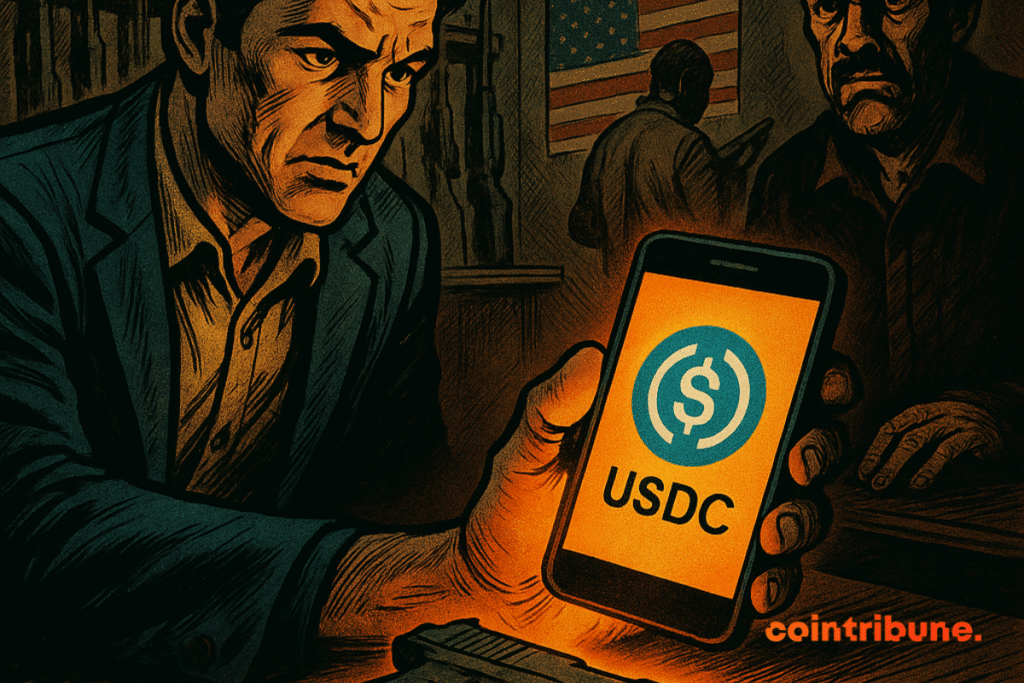
Stablecoins just got a combat upgrade. Circle—the powerhouse behind USDC—quietly greenlit crypto payments for firearms, merging Silicon Valley's favorite toy with America's other favorite pastime.
Guns, meet digital dollars
No more fumbling with wire transfers or credit card declines. USDC transactions now bypass traditional banking hurdles for firearm dealers—while conveniently dodging the 'why does my Venmo say 'AR-15'' problem.
Regulators load their spreadsheets
Expect Treasury hawks to circle (pun intended) this move. Crypto's dance with firearms adds fresh ammo to the compliance debate—just as Congress debates stablecoin legislation. Timing? Impeccable.
Bonus jab
Because nothing screams 'financial innovation' like digitizing the age-old tradition of buying weapons before the government changes its mind.
 Read us on Google News
In brief
- Circle now allows the legal purchase of firearms with USDC, reigniting the debate on crypto financial neutrality
- The decision, praised by some and criticized by others, comes as Circle also launches a testnet with partners
- The case highlights the paradox of stablecoins: useful and compliant, but exposed to political pressures, far from Bitcoin’s independence.
When Crypto Enters the Firearms Debate
The boundary between crypto and politics has once again eroded. The issuer of the USDC stablecoin, Circle, has officially changed its internal policy to allow the legal purchase of firearms. In the same context, and with the support of several partners, the company launched a testnet, extending its policy revision and its openness to legally regulated uses.
This move, praised by Second Amendment supporters, marks for some a return to a certain financial neutrality, and for others, a submission to current political pressures.
Until now, Circle prohibited any transaction related to “weapons, ammunition, or explosives.” But facing criticism from organizations like Americans for Tax Reform, the company revised its terms of use. Now, USDC can be used for any transaction “legally authorized.”
This change, reported by journalist Eleanor Terrett, brings back a burning question: can crypto really be neutral in a polarized world?
Beyond the symbol, this reversal highlights a DEEP tension within the ecosystem: the one opposing the promise of decentralization to the reality of institutional control.
A Crypto Under Influence: Between Freedom and Compliance
Circle, despite its image as an innovative Web3 player, remains an American company, therefore subject to the laws and political moods of Washington. “A private company cannot issue a neutral crypto, because it remains dependent on national policies,” reminded Kadan Stadelmann, CTO of Komodo.
This observation is unsettling. Crypto, supposed to embody financial freedom and resistance to censorship, finds itself here caught by real-world constraints. Where Bitcoin remains a decentralized tool, stablecoins like USDC remain instruments managed by centralized companies, exposed to societal debates.
Some Republican lawmakers, such as Bill Hagerty and Cynthia Lummis, have congratulated Circle for “aligning its terms of use with citizens’ constitutional rights.” Others, on the contrary, denounce a FORM of political accommodation masked under the pretext of legal compliance. Thus, crypto becomes an ideological battleground: should it be regulated in the name of security or preserved in the name of individual freedom?
USDC and the Paradox of Financial Neutrality
This policy change also has an economic dimension. The stablecoin market now weighs several hundred billion dollars, and Circle is trying to solidify its position against Tether (USDT). By easing its restrictions, the company is likely trying to broaden its adoption, while reassuring users attached to the freedom of crypto usage.
But this decision raises a paradox: the more crypto wants to be accessible and legal, the more it exposes itself to regulatory censorship. By allowing some uses and prohibiting others, centralized actors redefine the very notion of monetary neutrality.
For purists in the sector, this confirms one thing: real crypto remains the one escaping institutional control. Despite its transparency and compliance, USDC cannot claim the same independence as an asset like Bitcoin.
Maximize your Cointribune experience with our "Read to Earn" program! For every article you read, earn points and access exclusive rewards. Sign up now and start earning benefits.
