FTX Founder’s Appeal Meets Judicial Skepticism in High-Stakes Crypto Battle

Crypto's fallen prince faces his toughest courtroom challenge yet.
The Judicial Gauntlet
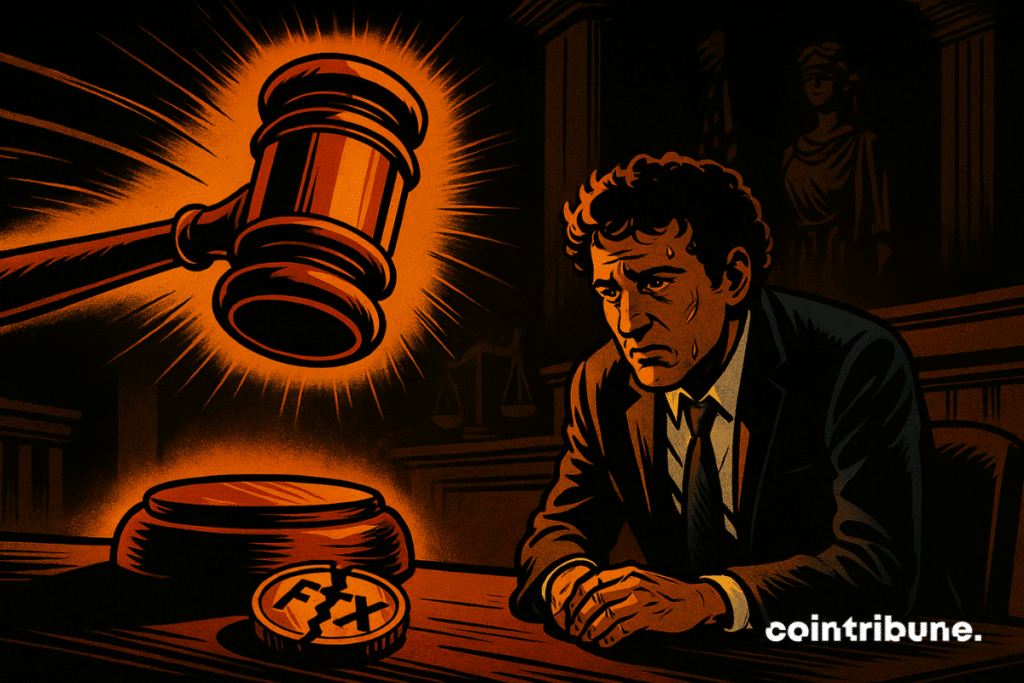
Three appellate judges shredded the FTX founder's legal arguments during a tense hearing that could determine the future of crypto accountability. Their skepticism cut through the legal jargon like a hot knife through Bitcoin's volatility.Appeal Strategy Crumbles
The defense team's carefully constructed appeal narrative met immediate resistance. One judge questioned the fundamental premise while another highlighted procedural missteps that even rookie crypto traders would avoid.Industry Implications
This hearing represents more than just one man's fate—it's a referendum on whether crypto's wild west days are truly over. The judges' probing questions suggest they're not buying the 'innovator above the law' defense that's become standard in digital asset circles.The final ruling could set precedent that either reins in crypto's cowboy culture or gives it another get-out-of-jail-free card—proving once again that in finance, some people treat regulations like they treat transaction fees: something to be minimized at all costs.
 Read us on Google News
In brief
- Sam Bankman-Fried, former CEO of FTX, appeals his 25-year prison sentence for financial fraud.
- His defense argues that clients could have been reimbursed if FTX had more time before its collapse.
- Judges of the New York appeals court expressed strong skepticism toward this argument deemed hypothetical.
- The defense believes SBF acted in good faith, under legal counsel, but this line remains fragile against the evidence.
Judges unreceptive to the solvency argument
During the November 5 hearing before the Second Circuit Court of Appeals, Sam Bankman-Fried’s lawyer, Alexandra Shapiro, presented a central argument. According to her, FTX WOULD have been able to reimburse its clients if the company had had more time before its collapse, while Predictive markets ignite around SBF’s fate.
“The clients would have recovered their money”, she claimed. This line of defense immediately triggered critical reactions from the judges. Judge Barrington Parker Jr. expressed his skepticism explicitly : “It almost seems like you are dedicating more ink to Judge Kaplan than to the substance of the case”. This comment reflects the court’s irritation at a strategy perceived as diverting the debate from substance to form.
The judges’ questions revealed several points of tension that weaken the defense’s position :
- The absence of concrete evidence that FTX could actually have reimbursed its clients, even with more time ;
- The hypothetical nature of the argument, which relies on alternative scenarios without new material basis ;
- The lack of focus on facts, according to the judges, in favor of a strong criticism of trial management by Judge Lewis Kaplan ;
- Doubt over the relevance of retrying the case, given the strength of evidence presented at the first trial.
As summarized by Samson Enzer, former federal prosecutor : “although the defense showed tenacity, the overall tone of the questions asked shows DEEP skepticism from the panel”. As it stands, the delayed solvency argument struggles to convince the magistrates that a miscarriage of justice would justify a new trial.
The lingering shadow of Alameda and diverted funds
Beyond the timing issue raised by the defense, the heart of the case still rests on the opaque management of client funds within FTX and their massive transfer to Alameda Research, the sister company also founded by SBF.
At the appeal hearing, prosecutors unambiguously reminded that “client money was not kept securely on FTX” and reaffirmed that 8 billion dollars were moved to Alameda to finance risky investments and political donations. These elements, already central in the 2023 trial, continue to weigh heavily in the appeal examination, as they cast doubt on any presumption of good faith.
The defense attempted to argue that Sam Bankman-Fried acted under the advice of his lawyers and never intended to deceive anyone. This argument was considered interesting and significant by Samson Enzer during the first trial.
However, Judge Kaplan had largely restricted the introduction of evidence on this subject. The defense team believes this limitation constitutes a procedural error that could justify a new trial. Yet, the appeals judges showed little interest in revisiting this decision, focusing their remarks on the accused’s direct responsibility in funds management.
If the appeals court were to reject the request for a new trial, SBF’s conviction would remain unchanged, with a 25-year prison sentence already underway. A possible acceptance of the appeal would open the way to a highly publicized new trial, potentially redefining the responsibilities for FTX’s collapse and regulatory standards in the crypto universe. In any case, this new judicial episode reminds us that the consequences of the FTX case continue to fuel debates on transparency, governance, and systemic risks in the sector.
Maximize your Cointribune experience with our "Read to Earn" program! For every article you read, earn points and access exclusive rewards. Sign up now and start earning benefits.
