Farcaster Token Airdrop Debunked: The Real Story Behind the Hypersnap Rumors

Farcaster issued a stark warning to crypto markets on April 15, 2026, forcefully denying plans for a native token and attributing recent speculation to a fork called 'Hypersnap.' The decentralized social protocol's public clarification aims to quell a frenzy that had attracted bots, scammers, and airdrop hunters, highlighting the persistent risks of unfounded hype in the digital asset ecosystem.
No Tokens, No Airdrops, No Guesswork
The project has moved to stop a fast-growing rumor. The decentralized social protocol said it does not plan a Farcaster token launch. The clarification came after confusion spread around Hypersnap, a fork of Farcaster. In a market that often rewards tokens chatter, the statement drew clear lines for users.
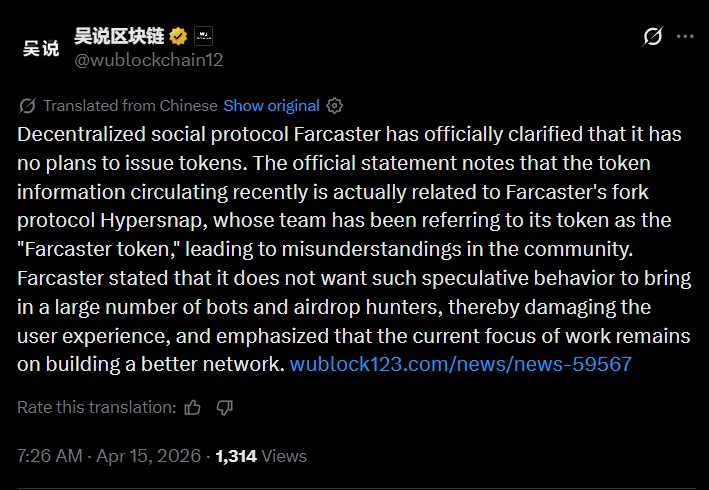
Source: Wu Blockchain X
How Did the Confusion Start?
The recent talk was not about its own network. It said the confusion came from Hypersnap, whose team described its asset as the “Farcaster token.” That wording appears to have blurred the difference between the original protocol and the fork.
The core message was simple. The project does not want tokens speculation to shape its user base. It said hype could pull in bots, crypto airdrop hunters, and scam activity. For a social network, that risk matters. It can weaken trust and crowd out real users.
This is why the statement stands out.
Crypto readers often expect every fast-growing protocol to launch a token. The platform pushed back on that idea. It said its current work remains focused on building a better network, not designing a speculative asset. That choice may disappoint hunters. It may also reassure users who want cleaner product growth.
Why Does Hypersnap Matter Here?
Hypersnap is a fork of Farcaster. A fork means a separate project built from an existing code base. That link gave the rumor more weight. Some users likely assumed any “Farcaster token” reference came from the main protocol.
That is the detail wanted to correct. It drew a firm line between its own plans and the branding used by the fork. The clarification also shows how quickly naming choices can mislead a crypto audience. In this sector, one phrase can trigger price chatter, bot traffic, and false expectations. For new readers, this is a useful reminder. Not every project tied to a known protocol speaks for that. Forks can share code. They do not share official policy.
What Does the Market Read From This?
There was no verified price reaction tied to the clarification in the material available at publication. That means any claim about broad trader response would go too far. What is clear is the likely target of the statement: reduce rumor-driven behavior before it shapes the platform’s reputation.
For crypto users, the takeaway is practical. Not every tokens rumor points to an official launch. In this case, the market had mixed up a fork project with the base protocol itself.
Conclusion
The clarification lands at a time when tokens rumors can spread in hours. By rejecting launch talk early, the protocol is trying to protect network quality, limit scam risk, and keep attention on actual product development rather than speculative noise.
Disclaimer: This article is for news and education only. It does not offer investment advice or a trading view. Crypto markets move fast, and readers should verify official statements, assess risks carefully, and rely on primary sources before making financial decisions.

Log in to Reply
Log in to comment your thoughtsComments
Related Articles
|Square
Get the BTCC app to start your crypto journey
Get started today Scan to join our 100M+ users