CRYPTO PAYMENTS HIT HISTORIC MILESTONE—Monthly transaction volume for cryptocurrency-linked payment cards surged past $600 million for the first time in March 2026, reaching a record $607 million. The breakthrough figure signals accelerating mainstream adoption as digital assets move from speculative holdings to practical tools for everyday purchases like coffee and flights, with top card providers now racing to capture the rapidly expanding market.
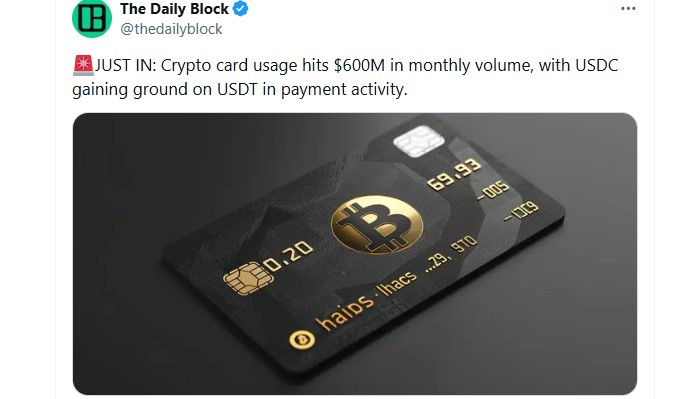
Massive Growth in Crypto Cards: Digital Assets in Daily Use
The growth of the crypto debit card has been lightning-fast. Just one year ago, in March 2025, the volume was only $187 million. That means spending has jumped by 211% in a single year. If we look back to late 2024, the market was only at $100 million. In just 18 months, the amount of money spent using these cards has grown six times over.
Data from Paymentscan shows that people have now spent a total of $6.5 billion across 21.4 million transactions. This crypto card trend shows that users are moving away from just trading coins to actually spending them at stores.
Not Bitcoin, Stablecoins and Fast Networks Lead the Way
When people use a crypto card, they aren't usually spending Bitcoin or Ethereum. Instead, they use stablecoins like USDT and USDC. These coins stay at a steady price, making them perfect for shopping.
The networks used to send this money are also changing. TRON handles over 35% of all payments because it is very cheap and fast. BNB Chain handles about 15%, and Solana takes 9%. Most of these transactions happen on the Visa network, which handles 97% of the total volume.
Top Crypto Card Providers: Who's Leading the Pace?
The market for top digital asset cards is split between famous big names and new, tech-savvy companies.
RedotPay: Based in Hong Kong, they process nearly $391 million a month. They are great for simple spending and work with Apple Pay.
ether.fi: This card processed over $60 million in March. It lets users spend their ETH without selling it.
KAST: Another big player reaching $60 million monthly, offering high rewards for loyal users.
Crypto.com: Known for its metal cards and high rewards (up to 8% back).
Coinbase Card: Very popular in the US and very easy for beginners to use.
Bybit & Binance: These cards offer great rewards for active traders, sometimes reaching 10% cashback.
Why Is Crypto Card Usage Exploding?
There are several simple reasons why a crypto card is now a must-have for many people:
Pure Convenience: You can spend your crypto at any shop that takes Visa or Mastercard.
No Need to Sell: You don't have to move money back to a bank first. It happens instantly at the checkout.
Low Fees: Using networks like TRON makes it very cheap to move money.
Great Rewards: Many cards give you cashback in cryptocurrency, which can grow in value over time.
As of April 2026, the future looks bright with experts prediction the market to reach in trillions by 2035. Whether you are a pro trader or just starting, using a crypto card is now one of the easiest ways to join the digital economy.
Innovation With the Unrealized Threat
By using fast blockchain networks, cryptocurrency cards can offer lower costs, quicker settlements, and higher rewards, however, they begin to challenge traditional banks. As more users shift to digital assets, this puts pressure on old fees and intermediaries systems–an essential part of regular financial systems.
Additionally, growth is tied closely to the cryptocurrency market, which is considered highly volatile and issues like changing rules, prepaid limits, and uneven regulation could also sabotage.
In short, while the growth in on-chain spending is record-breaking, the long-term success of these cards will depend on a stable cryptocurrency market and clearer global laws to protect users.
This article is for informational and educational purposes only and does not constitute financial, legal, or investment advice.
Articles on this site are sourced from public networks or curated by AI for informational purposes only and do not represent BTCC’s views. Original rights belong to the respective authors. For copyright concerns, please contact
[email protected]. BTCC assumes no liability for the accuracy, timeliness, or completeness of this information, and disclaims all liability arising from reliance on such content. This content is for reference only and should not be taken as investment, legal, or commercial advice.



Log in to Reply
Log in to comment your thoughtsComments