
BTCC Deposit Bonus & Campaign in 2026
As of April 2026, the BTCC Crypto Bonus is still one of…
2026-04-08
Remittix has issued a stark warning to its presale participants, revealing a mechanism that could trigger immediate price volatility upon launch. The project's official documentation confirms that any unsold tokens from its presale allocation will be permanently burned, a deflationary move that analysts suggest could catalyze a 10% or greater price correction as supply shock meets initial trading. This hard-cap policy transforms the upcoming launch from a mere calendar event into a pivotal test of tokenomics, putting the project's commitment to scarcity and long-term value squarely in the spotlight.
According to the official token allocation page, the project has a fixed supply of 1.5 billion RTX coins. Of that, 50%, or 750 million RTX, is set aside for the presale. The same page says that if all pre-sale tokens are not sold, They will hold a token burn event to reduce total supply.
That matters because the current sale is not finished yet. The official presale page says the sale is 77.49% sold, with $29,834,398.59 raised, 726,681,481.68 coins sold, a current price of $0.13, and a next-stage price of $0.135. In simple terms, the project is close to a full sale, though it has not reached that line yet.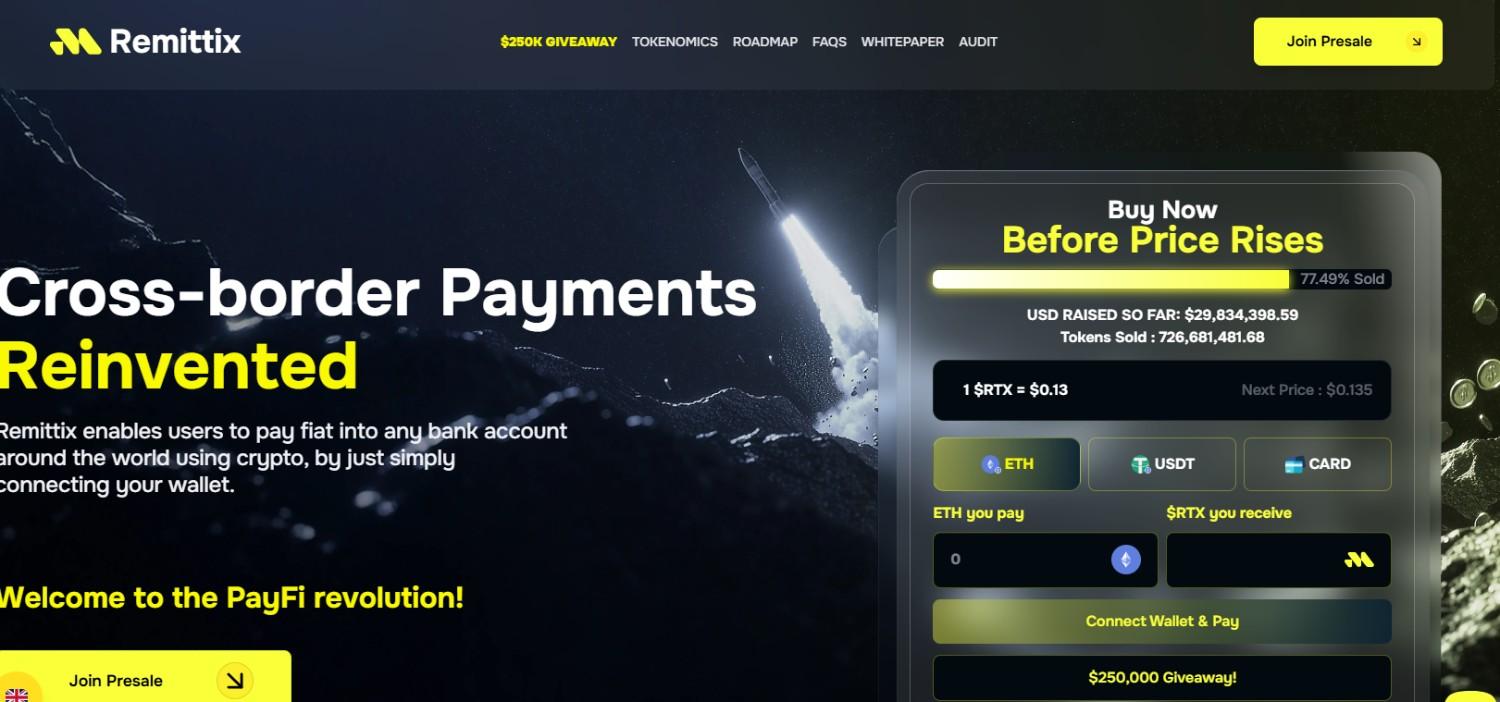
Source: Official website
A token burn means the project removes coins from supply. In plain English, those coins would no longer be available to trade later. If Remittix Presale follows that rule, the listing would start with fewer tokens than the full presale allocation first suggested.
That can change how readers think about the Remittix Launch Date.
Fewer unsold coins could mean lower future supply pressure.
Lower supply does not guarantee higher price.
The burn clause mainly changes coin count, not demand.
This is the key point many quick presale stories skip. A burn can make supply tighter on paper. Still, price depends on trading demand, liquidity, listings, and trust after release. So the burn clause is important, though it is not a magic fix. That is an inference based on the coin structure, not a promised outcome.
The release picture is not fully simple right now. Tokens roadmap still lists these next steps as pending: conclude the pre-sale, prepare TGE, list on Uniswap, lock LP, and list on multiple CEXs. TGE means Token Generation Event, which is the point when the token officially launches on-chain.
At the same time, the official X account has posted two different signals. One post said the Remittix Launch Date was February 9, 2026. Another said the RTX listing date on exchanges would be announced only when the pre-sale reaches $32 million raised.
That difference matters.
It suggests the Remittix Launch Date may not be one single event. The platform release, the asset release, and the exchange listing may happen on different dates. For first-time readers, that makes the unsold-burn rule more important, because the final supply picture may not be clear until the sale fully ends.
Platform listing date and asset release date may differ.
The pre-sale still appears active on the official site.
The final burn decision depends on what remains unsold.
The best way to read the Remittix Launch Date story is with caution. According to it’s official pages, unsold pre-sale coins may be burned, the current token price is $0.13, and the sale has raised nearly $29.83 million so far. Still, the exact post-sale steps remain partly assumption-based because the project has not published one fully settled listing sequence for every stage. So if you track the Remittix Launch Date, watch the burn-clause, the $32 million milestone, and the final TGE update together, not as separate headlines.





Log in to Reply
Log in to comment your thoughtsComments