UK Crypto Case: How This $172M Bitcoin Theft Could Shape Global Regulation

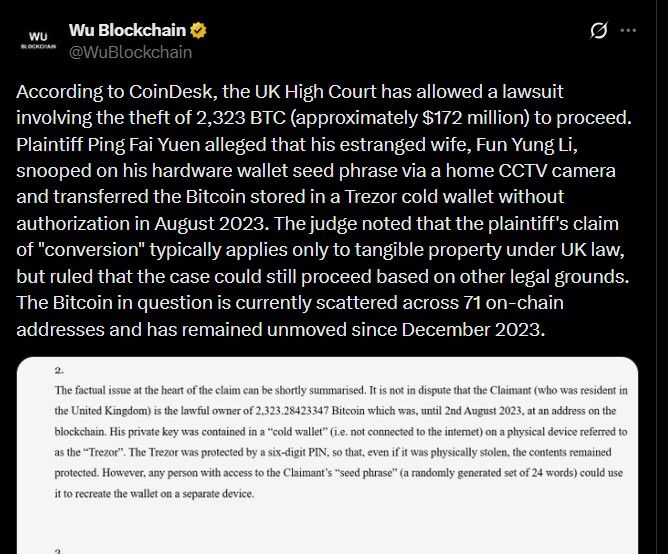
A landmark UK High Court ruling has allowed a $172 million Bitcoin theft lawsuit to proceed, setting a critical precedent for cryptocurrency regulation worldwide. The case centers on 2,323 BTC allegedly stolen via a compromised Trezor cold wallet seed phrase, with funds now frozen across 71 blockchain addresses. This decision reinforces judicial recognition of crypto as property while forcing traditional legal frameworks to confront digital asset security, custody, and liability in a rapidly evolving financial landscape.
Source: X Official
Alleged Theft and Legal Proceedings
Yuen alleges that Li secretly recorded his seed phrase to gain control of his wallet, allowing unauthorized transfers.
The judge acknowledged that the UK legal concept of conversion generally applies to physical property, but permitted the lawsuit to continue under other lawful grounds.
This ruling could set a precedent for future digital asset disputes, demonstrating how courts are adapting to cases involving cryptocurrencies and establishing new standards for civil litigation.
Audio Evidence Reveals Bitcoin Transfer as Dispute Turns Violent
Before the alleged theft, Yuen’s daughter reportedly warned him that Li might attempt to steal his Bitcoin. Acting on this tip, he installed an audio recording device in his home to monitor activity. The recordings allegedly captured Li saying phrases such as, “The bitcoin has transferred to me,” suggesting she had knowledge of and access to the funds. After confirming the unauthorized transfer, Yuen confronted Li, resulting in an assault for which he later pleaded guilty. This sequence of events highlights both the domestic nature of the dispute and the complications surrounding digital asset theft in personal relationships.
Legal and Regulatory Implications
The UK crypto case emphasizes the evolving recognition of digital assets under law:
Courts increasingly treat cryptocurrencies as legally protectable property.
Regulatory bodies worldwide may clarify rules regarding ownership, recovery, and transfer of stolen digital funds.
Such developments could strengthen investor confidence and encourage institutions to adopt formal guidelines for handling crypto disputes, bridging gaps between technology and legal frameworks.
Wallet Security Lessons
Even offline storage is not immune if sensitive information is exposed. This case underscores best practices for protecting digital assets:
Seed phrase safety is critical; exposure compromises even secure cold wallets.
Multi-layered authentication, surveillance awareness, and secure storage practices can mitigate domestic or insider threats.
As awareness grows, demand for advanced wallets, crypto insurance, and on-chain tracking services may increase, providing protection for high-value holdings and deterring unauthorized access.
Conclusion:
The UK crypto case demonstrates the intersection of law, technology, and investor psychology. High-profile theft lawsuits highlight both the importance of seed phrase protection and the recognition of cryptocurrencies as property under modern legal systems. While the immediate market impact may be limited to short-term volatility, the broader lesson is clear: digital asset holders must combine robust security practices with legal awareness. This case may influence future regulation, drive demand for secure wallets and recovery services, and shape how courts globally handle disputes involving large-scale crypto holdings.
