FOMC Meeting Final Day: Fed Rate Cuts Decision Faces War Uncertainty Ahead of Crucial Policy Announcement

The Federal Reserve faces mounting pressure to signal its 2026 rate-cut trajectory as geopolitical turmoil injects unprecedented uncertainty into today's final FOMC deliberations—with markets bracing for a potential 10% correction across risk assets depending on the central bank's communicated path forward.
How War Disrupts Fed Rate Decision: Surge in Oil Prices
The biggest disruptor right now is the surge in oil prices driven by Middle East tensions. Supply concerns, especially around critical routes like the Strait of Hormuz, have pushed crude prices sharply higher.
This has a direct impact on inflation:
Higher fuel costs increase transportation and production expenses
Consumer prices rise as businesses pass on costs
Inflation moves further away from the bank's 2% target
Because of this, the Fed is under pressure to stay cautious. Even if economic growth slows, rising inflation makes Fed Rate Cuts harder to justify in the near term.
Fed in Dilemma, Markets Certain: U.S. Economic Data
As per the most updated data, the U.S. economy is showing mixed signals. GDP growth slowed to 0.7%, unemployment rose to 4.4% with job losses, and inflation remains above 2% target (CPI 2.4%, Core PCE ~3.06%).
Looking at that, for the Fed, the dilemma is clear:
Cutting rates could fuel inflation further
Keeping rates high could weaken economic activity
Policymakers may prefer to wait for clearer data rather than act too early.
However, the broader market is betting big on pause. According to CME FedWatch data, markets are almost certain that the Federal Reserve will not change rates at this meeting. The current probabilities show:
99.1% chance of no change (current rates staying at 3.50%–3.75%)
0.9% chance of a rate cut
0% chance of an rate hike
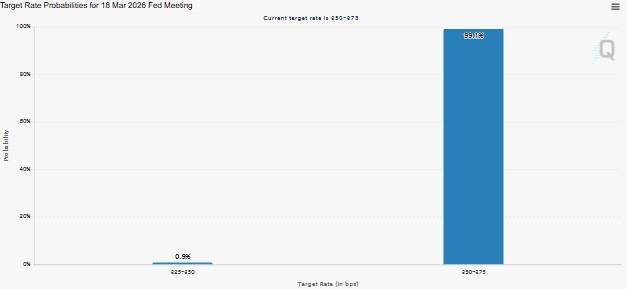
This strong consensus highlights that the immediate decision is not in doubt. However, what makes this meeting significant is not the interest value decision itself, but the future guidance.
Market Impact: How Stocks and Crypto Reacting
U.S. stock markets are showing resilience, with major indices like the S&P 500 and Nasdaq gaining around 0.3%–1.1% ahead of the decision, reflecting cautious optimism despite macro risks.
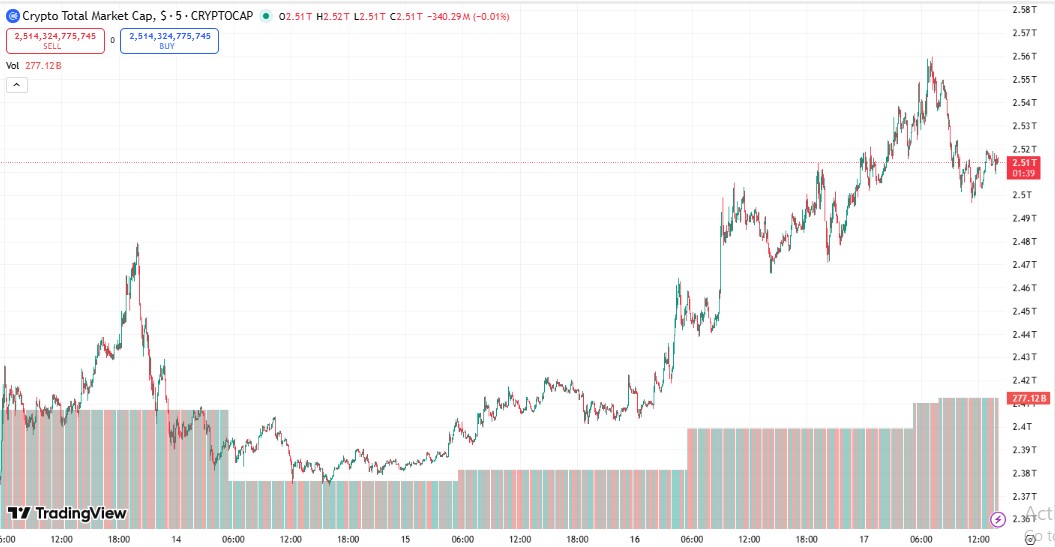
Source: Trading View
In crypto, reaction is closely following equities, as Bitcoin trades above $70K for almost over a week, where the whole crypto market gained around $180 billion during the same period. However, altcoins remain volatile, with potential 5–10% intraday swings even before the Federal Reserve decision.
Looking ahead, market reactions will largely depend on the central bank’s tone and guidance. If the Federal Reserve signals a higher rate stance or delays decision further, the impact could be mixed. Stocks may initially face pressure, especially tech and growth sectors, as higher rates increase borrowing costs and reduce future valuations.
At the same time, crypto markets could lose momentum, as tighter liquidity typically reduces risk appetite, potentially leading to short-term corrections.
On the other hand, if the Federal Reserve hints at possible rate cuts later in 2026 despite current risks, markets could see a relief rally. Stocks could extend gains as lower rates support valuations and economic activity. Crypto may benefit even more in this scenario, as improved liquidity and investor sentiment often drive stronger rallies.
In a less expected scenario, if inflation spikes further and forces the central bank to consider rate hikes, both stocks and crypto could face sharper downside.
Conclusion: Next Fed Meeting in Focus
While the outcome of the current meeting is largely priced in, the real focus is on what comes next. The future of Fed Rate Cuts will depend heavily on how inflation and geopolitical risks evolve in the coming months.
The next Fed meeting, scheduled for April 28–29, 2026, will be crucial in confirming whether the central bank maintains a cautious stance or begins signaling a shift toward easing.
