Indian Rupee Hits Record Low, Sparking Surge in Crypto and Gold Hedge Demand

The Indian rupee plunged to a historic low of 92.3–92.5 against the US dollar on March 12, 2026, triggering immediate capital flight into traditional and digital safe-haven assets. This unprecedented currency weakness has intensified investor warnings of a potential 10% market correction, driving urgent hedging activity into gold and cryptocurrencies as domestic confidence erodes.
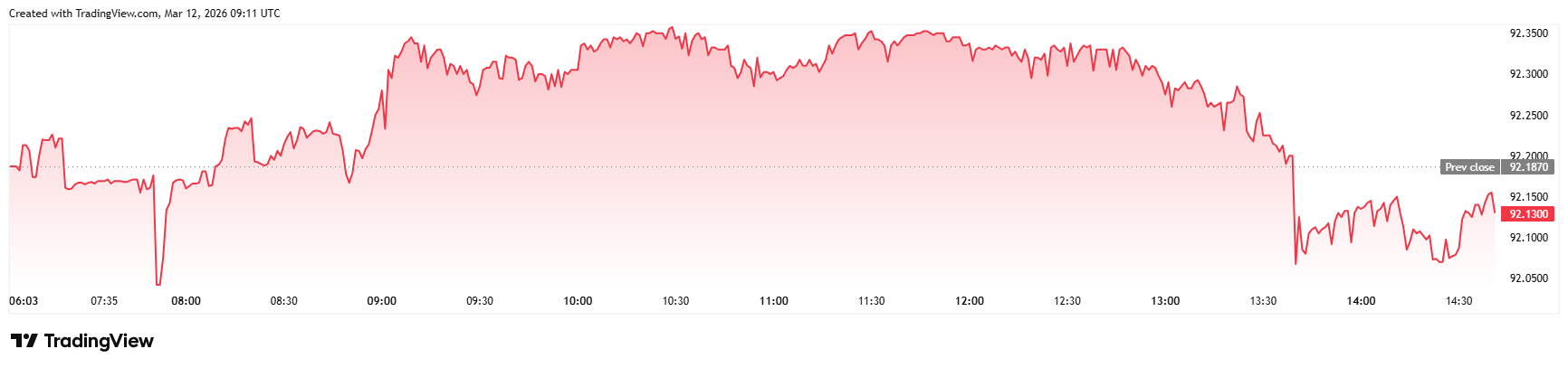
The sharp fall reflects rising global pressures rather than domestic economic weakness. Despite India remaining one of the fastest-growing major economies, external shocks such as geopolitical tensions, higher oil prices, and foreign investor outflows have pushed the Rupees lower.
Many market watchers now believe the Indian currency record low could influence investment behaviour in the country, including growing interest in traditional hedge assets like gold and digital cryptocurrencies like Bitcoin.
Indian Rupee Record Low in 2026: Why?
Several global and financial factors combined to push the Indian rupee record low this month.
Oil price surge: Higher crude prices increase India’s dollar demand and weaken the rupees.
Strong US dollar: Global uncertainty pushes investors toward the dollar, pressuring emerging currencies.
FII outflows: Foreign investors selling Indian assets reduce dollar supply.
High imports: More oil and gold imports widen the trade deficit.
Economists estimate the currency has weakened around 28 times since independence where it was about ₹3.30 per USD, with an average depreciation of about 5% per year over the long term. The drop reflects external global factors more than internal economic issues.
Nation in Action: RBI Steps In to Slow the Rupee’s Slide
To manage the downtrend, the Reserve Bank of India has been actively intervening in the currency market. Recent estimates suggest the central bank sold about $10–12 billion from its foreign exchange reserves in early March to stabilize the market. The RBI is using several tools like:
Spot dollar sales through state-run banks
Dollar-rupee swaps to maintain liquidity
Forward market operations to manage expectations
Occasional offshore interventions in global markets
The RBI’s strategy focuses on reducing volatility rather than fixing a specific exchange rate, meaning gradual depreciation may still continue if global pressures persist.
Currency Lows Could Boost Alternates: Crypto and Gold on Investment Radar
One emerging effect of the Indian rupee record low is a rise in interest toward digital assets. Many investors see cryptocurrencies as a hedge against currency depreciation and analysts already estimate that regional currency pressures across emerging markets have already boosted digital asset adoption by up to 25% year-over-year in 2026. Their detachment from any central economic control makes them attractive as an alternative store of value.
Here, when the rupee weakens, Bitcoin and other cryptocurrencies priced in INR often rise faster than their global USD price. Adding on, the country already hosts the highest crypto-adopting population in the world as per Chainalysis 2025 report.
A rise in demand from the Indian crypto market, one of the world’s largest, could support a broader market recovery amid continued volatility since the October 2025 crash.
For tech-savvy investors, crypto is increasingly viewed as a “digital gold” hedge against inflation and currency depreciation.
This scenario could also push for governmental level attempts to form a secure digital money infrastructure as the country lacks in it currently. Moreover, the centre can fast its CBDC process, including digital Rupee initiative as well.
On the other hand, physical Gold continues to play a major role in the country’s economic values. As of early 2026, the RBI holds around 880 tonnes of physical gold, valued roughly $123–$138 billion depending on the global price charts.
Interestingly, Indian households hold far larger reserves, estimated at 25,000–35,000 tonnes in different forms. At current high prices, it is worth $4–5+ trillion, which is larger than India’s GDP and U.S. national gold reserves, making household gold one of the country’s biggest informal wealth buffers.
Here, the physical asset is stockpiled not only from investment but from a traditional perspective also.
For Now: India Currency Future
Market analysts say the future path of the Indian rupee will largely depend on global factors. If geopolitical tensions ease, the IND currency could see some recovery later in 2026, while a potential India–US trade agreement may improve capital flows.
However, if oil prices stay elevated and global uncertainty persists, the currency could test levels near ₹94 per dollar before stabilizing. For investors, the trend highlights growing interest in wealth protection, with traditional assets like gold remaining strong while cryptocurrencies gain attention as digital alternatives.
This article is for informational purposes only and does not constitute financial or investment advice.
