South Korea Proposes Corporate Stablecoin Ban in Sweeping Crypto Guidelines

South Korean regulators just dropped a bombshell on the corporate crypto world—a proposed ban on stablecoins for businesses. This isn't just a tweak; it's a fundamental redrawing of the rules of engagement for companies in the digital asset space.
The Regulatory Hammer Falls
Forget gentle nudges. The draft guidelines, reportedly circulating among financial authorities, aim to sever the direct link between corporations and stable digital currencies. The message is stark: if you're a business, your access to the crypto economy's most predictable asset class might be getting walled off. It’s a move that prioritizes systemic control over corporate convenience, betting that isolating business capital from crypto's volatility is worth the friction.
Corporate On-Ramps, Closed
The implications are immediate. Companies using stablecoins for treasury management, cross-border payments, or as a settlement layer for smart contracts are staring at a potential dead end. The proposal effectively funnels all corporate crypto activity through more traditional, and more easily monitored, financial channels. It’s a classic regulatory play—increase oversight by limiting optionality, forcing everything into the daylight of the existing banking framework.
A Chilling Effect on Innovation
Beyond the direct ban, the tone of the broader guidelines suggests a deep-seated caution. The subtext for fintech startups and Web3 ventures is clear: innovate, but do it within very rigid guardrails. Expect a surge in compliance overhead and legal scrutiny for any business model that even flirts with digital assets. Some will see it as necessary pruning; others will call it innovation-stifling overreach—the eternal finance sector debate, now with a crypto twist.
Finance's Old Guard Gets a New Tool
Let's be cynical for a second. This plays right into the hands of traditional banks. By making it harder for companies to operate natively in crypto, regulators are subtly reinforcing the primacy of the legacy financial system. It’s a not-so-subtle reminder that when governments get nervous, they fall back on what they know—and they know banks. The 'decentralized' dream just met a very centralized reality check.
South Korea's move is a watershed. It’s not just a local rule change; it’s a signal to global markets about how a major economy chooses to corral corporate crypto adoption. The industry's response will be telling. Will it adapt, circumvent, or push back? One thing's certain: the easy money era for corporate crypto experimentation in South Korea might be over.
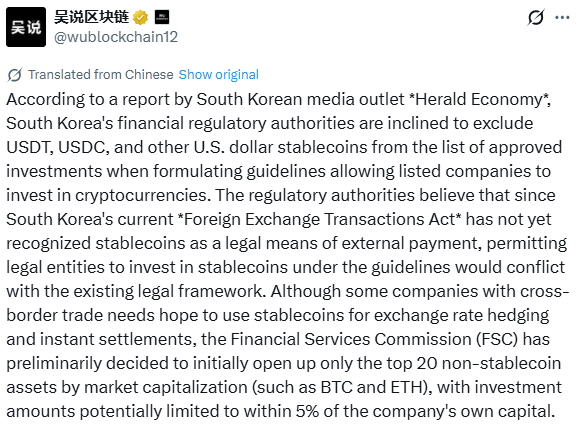
This careful approach by the FSC is meant to protect the market during its early stages. Under the proposed draft, companies would only be allowed to buy the top 20 non-stablecoin cryptocurrencies, such as Bitcoin and Ethereum. To further manage risk, the rules may also limit a company's total investment to just 5% of its own capital. For a market that has been mostly run by retail investors, this is a massive shift toward institutional participation.
Understanding the Legal Conflict Behind the South Korea Stablecoin Ban
The main reason for the South Korea stablecoin ban is a conflict with the country’s existing laws. Specifically, the Foreign Exchange Transactions Act does not currently recognize stablecoins as a legal way to make international payments. Regulators worry that if companies are allowed to hold these tokens, it could clash with rules that require all big foreign payments to go through authorized banks.
Why Regulators are Being So Cautious
Authorities believe including stablecoins would break the rules of the Foreign Exchange Transactions Act.
Keeping dollar-pegged tokens out of the market helps prevent big losses for companies new to crypto.
By limiting trades to the top 20 assets, the FSC hopes to keep the national economy stable.
Regulators fear that companies might use stablecoins to move money out of the country without bank supervision.
Why Businesses Want Stablecoin Access
Even with the proposed stablecoin ban, many local businesses are asking for access to USDT and USDC. Companies that trade globally find stablecoins very useful because they allow for fast and cheap international transfers. They also use them to protect against changes in currency values. While some firms already use stablecoins through overseas wallets, they are pushing the FSC to make corporate access official and legal.
Future Outlook: Expert Analysis
The current South Korea stablecoin ban for firms shows that the FSC is taking a "safety first" approach. While the first set of rules seems strict, the situation could change soon. A new law that would recognize stablecoins as a legal payment method is currently being reviewed by South Korea’s National Assembly. If this passes, the conflict with the Foreign Exchange Transactions Act would be gone, and the ban would likely be lifted.
By 2026, South Korea hopes to have a balanced market where innovation and safety live side-by-side. For now, the focus is on letting companies enter the space slowly through well-known assets like Bitcoin while keeping a close eye on dollar-pegged tokens. This is a major turning point that will shape the future of finance in one of the world's most active crypto hubs.
Cryptocurrency investments carry high financial risk. Regulatory changes in South Korea can happen quickly and affect asset values. Always consult with a financial expert before making corporate investment decisions.
