Morgan Stanley Bitcoin ETF Filing Signals Institutional Stampede—Wall Street Finally Wakes Up

Another banking giant just placed its bet on Bitcoin. Morgan Stanley's latest ETF trust filing isn't just paperwork—it's a flashing neon sign pointing to where the smart money is heading.
The Institutional Floodgates Are Open
Forget the crypto bros in basements. This move is about pension funds, asset managers, and family offices. They've been circling for years, waiting for a regulated on-ramp. An ETF from a name like Morgan Stanley provides just that—a familiar wrapper for an unfamiliar asset. It legitimizes Bitcoin in portfolios that were once off-limits.
Why an ETF Changes Everything
Direct ownership of Bitcoin comes with headaches: private keys, custody, regulatory gray areas. An ETF sweeps all that complexity under a Wall Street rug. Investors get the price exposure without the operational risk. It's the difference between mining gold and buying a gold stock—one requires heavy machinery, the other just a brokerage account.
The Domino Effect Has Started
One major filing begets another. When a peer bank sees a competitor moving, the fear of missing out becomes a powerful motivator. We're not talking about speculative demand here; this is strategic allocation. It's the kind of capital that doesn't panic-sell during a 20% dip. It's sticky.
A Cynical Take from Finance
Let's be real—Wall Street hates an asset it can't fee to death. First they ignored Bitcoin, then they mocked it. Now they're building the toll booths on the highway. The ultimate finance jab? They'll probably charge a 2% management fee for the privilege of holding a decentralized asset designed to bypass… well, them.
The trend is clear. The question is no longer *if* major institutions will hold Bitcoin, but *how much*. Morgan Stanley's filing is just the latest confirmation. The old guard is adapting—or, more accurately, finding a way to profit from the revolution it once dismissed.
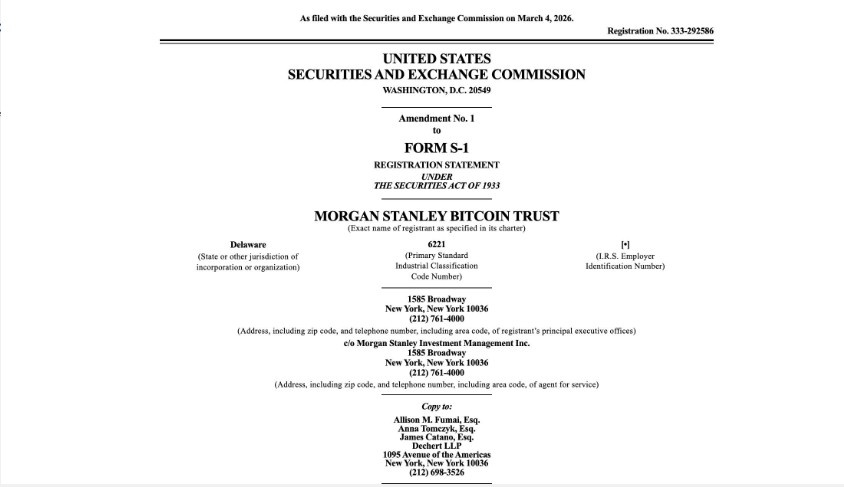
Source: SEC GOV Official
This step highlights the growing shift among large financial institutions toward virtual asset products as demand from investors continues expanding globally.
Official Details of the ETF Filing
According to the updated filing, several key institutions will play critical roles in the proposed fund structure.
Coinbase has been selected as the custodian, responsible for securely storing the digital assets backing the ETF.
BNY Mellon will serve as the fund administrator, managing operational tasks such as accounting, regulatory compliance, and recordkeeping.
Daily pricing for the product will reference the CoinDesk BTC 4 PM New York Settlement Rate, which provides a standardized valuation method widely used by institutional investors.
Why Major Banks Are Entering Bitcoin ETFs
Large investment banks are increasingly exploring crypto investment vehicles because many traditional clients want exposure to digital assets but prefer regulated financial products.
Spot ETFs provide an easy entry point. Investors can access BTC exposure through brokerage accounts without managing private keys, wallets, or exchange accounts.
For wealth managers, these products also create new revenue opportunities through management fees while meeting growing client demand for alternative assets.
The move comes as financial institutions compete to expand offerings in the rapidly evolving digital asset funding sector.
Recent ETF Inflows Show Rising Institutional Interest
Recent market data suggests strong demand for Bitcoin-based exchange-traded products. Over the last two weeks, BTC investment funds have experienced steady inflows after earlier market uncertainty.
The most recent weekly data showed approximately $458 million entering Bitcoin ETFs, reflecting renewed institutional interest compared with previous weeks when inflows slowed significantly.
This capital movement indicates that traditional investors continue viewing Bitcoin as a long-term diversification asset within broader investment portfolios.
Potential Market Impact
If approved and launched, the new ETF could expand access to Bitcoin for institutional clients and wealth management investors.
When asset managers offer such products, they typically acquire underlying BTC to back the fund. This process can reduce circulating supply available on exchanges while increasing institutional ownership of the asset.
Industry analysts believe this trend may gradually strengthen the long-term demand structure of the digital asset market.
The development reinforces the broader narrative surrounding institutional adoption, particularly as Morgan Stanley files a product designed to integrate digital assets within traditional financial infrastructure.
Conclusion
The latest filing highlights growing interest from large banks in crypto investment products. With strong recent inflows and expanding institutional participation, Morgan Stanley files for a Bitcoin ETF Trust that could further bridge traditional finance and digital assets while increasing market accessibility.
This article is for informational purposes only and does not constitute financial or investment advice. Cryptocurrency investments involve risk, and readers should conduct their own research before making financial decisions