Crypto’s 3% Rebound Crashes Into Geopolitical Reality: Why Markets Are Down Again Amid War Tensions

Digital assets staged a brief comeback—then global tensions pulled the rug out. Again.
The False Dawn Rally
A flicker of green on the charts. A three percent bounce that had bulls whispering about a turnaround. It lasted until the next geopolitical headline hit the wire. Welcome to crypto in 2026, where algorithms trade on fear and hope in equal, volatile measure.
War Is a Macro Virus
Forget 'digital gold' narratives during a crisis. When major powers rattle sabers, capital treats all risk assets—Bitcoin, tech stocks, you name it—as the same sell button. Liquidity flees to the sidelines, waiting for the dust to settle. That brief rebound wasn't a change of heart; it was a liquidity trap for the over-leveraged.
The Institutional Freeze
Hedge funds and ETF managers aren't paid to be heroes. Their mandates scream 'risk-off' at the first sign of systemic uncertainty. The inflows that powered the last bull run? They reverse in nanoseconds when VIX spikes. It's not a crypto problem; it's a 'volatility destroys carry trades' problem.
Retail's Painful Lesson
Meanwhile, the average holder watches their portfolio swing on news they can't control. That three percent gain felt good—until the ensuing drop wiped out a week of paper profits. It's a brutal reminder: in the short term, crypto trades on sentiment, not utility.
The Path Forward (Through the Noise)
True believers are using the fear to accumulate. They're betting that long-term adoption curves—DeFi, tokenization, decentralized infrastructure—are stronger than any single news cycle. They might be right. Or they might be catching a falling knife. That's the game.
So, why is the market down? Because three percent is a rounding error when confidence shatters. Because Wall Street still treats crypto as its risk-on casino wing—ready to be liquidated at the first sign of real trouble. And because sometimes, the 'store of value' narrative gets stored away until the coast is clear. The rebound was a technical bounce. The sell-off is a reality check.
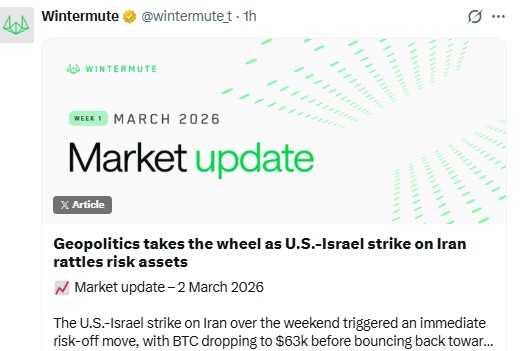
Source: X (formerly Twitter)
Geopolitical Shock Hits the Crypto Market
Oil surged nearly 9%, briefly crossing $80. Some analysts now expect Brent crude to reach $100 if the conflict continues. Gold also jumped sharply, while U.S. equities opened lower. The VIX, which measures fear in traditional markets, hit its highest level of 2026.
This risk-off environment directly impacts the Crypto Market. Bitcoin, often seen as a high-beta asset, reacts strongly to global stress. The first wave of fear pushed BTC down to $63,000. The bounce to $67,000 followed as traders believed much of the bad news was priced in.
However, energy disruption may create a second wave of pressure. Higher oil prices can keep inflation elevated. If inflation stays high, the Federal Reserve may delay rate cuts. That scenario hurts growth assets like crypto.
Liquidations Add Volatility
Looking at the liquidation heatmap, over $400 million in total liquidations occurred in the past 24 hours. Bitcoin alone saw more than $164 million in liquidations, while ethereum recorded over $97 million.
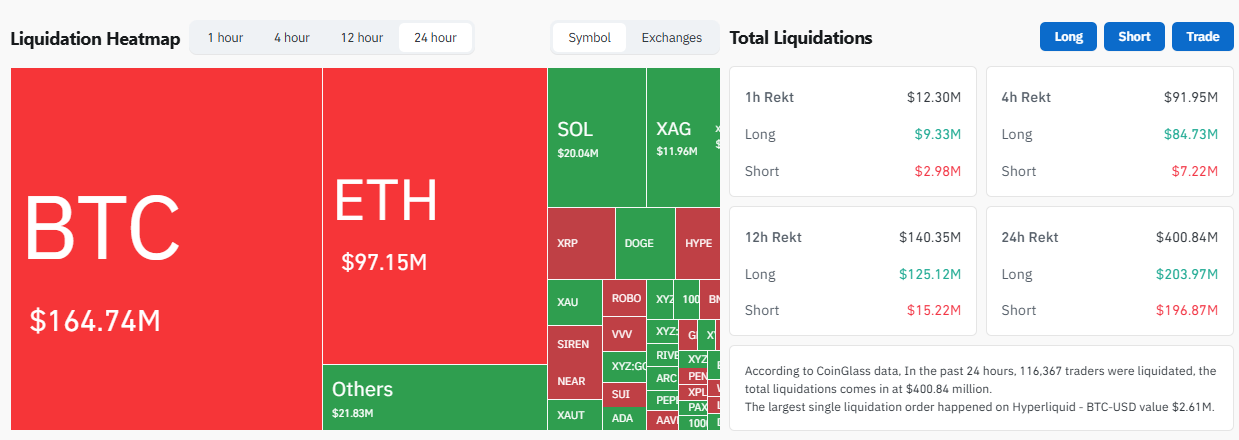
Source: Coinglass
Short-term traders were squeezed during the rebound, but the Crypto Market still shows signs of fragility. Open interest remains elevated, and options markets are pricing daily swings of 2.5% to 3%.
ETF Flows Provide Mixed Signals
There was a positive sign late last week when over $1 billion in ETF inflows broke a five-week outflow streak. But year-to-date flows remain negative by around $4.5 billion.
Institutional OTC activity remains quiet compared to the $85,000–$95,000 trading range seen months ago. At current levels NEAR $67,000, the strong institutional bid is missing. That makes the space vulnerable to sharp moves.
Altcoins Continue Weak Pattern
Altcoins are following a typical bear market structure. Short rallies are not sustained. The Altcoin Season Index remains low at 36/100, showing limited risk appetite outside Bitcoin.
Meanwhile, regulatory uncertainty adds another layer. The Clarity Act bill remains stalled in the Senate, creating uncertainty around digital asset oversight. Political friction is keeping investors cautious.
Near-Term Outlook
The Crypto Market now sits at a key decision point. If bitcoin holds above $64,000–$65,000, stability may return. But if energy prices continue climbing and geopolitical headlines worsen, further downside cannot be ruled out.
For now, caution dominates. It is reacting more to macro events than crypto-specific news. Until the conflict shows signs of cooling or oil prices stabilize, volatility is likely to remain elevated.
The next major driver will be headlines around Hormuz reopening and inflation expectations. Until then, the market remains fragile despite the short-term rebound.
