Altcoin Market Plunges 38% as Global War Tensions Escalate

Geopolitical tremors send shockwaves through crypto markets.
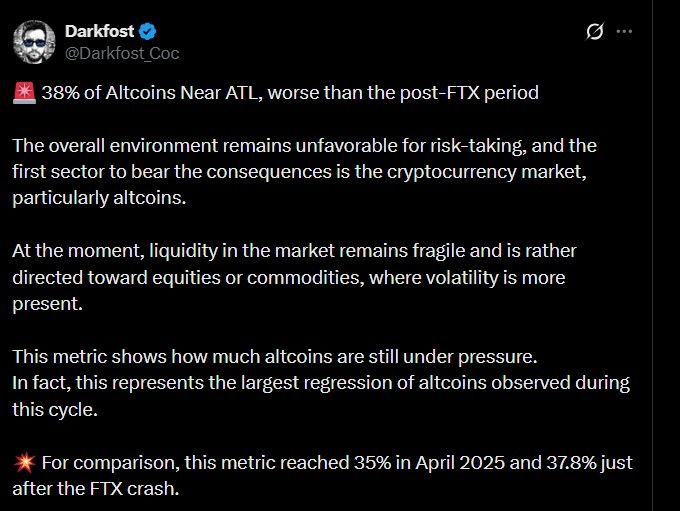
Altcoins are taking the brunt of the sell-off—down a staggering 38% as traditional safe havens see inflows. The correlation between digital assets and global risk appetite is on full, brutal display.
Fear Overrides Fundamentals
Forget tokenomics and roadmap promises. When headlines scream conflict, portfolio managers hit the sell button first. The decentralized dream meets the centralized reality of macro panic. Liquidity vanishes, and leveraged positions get liquidated in a cascading rush for the exits.
The Flight to Safety
Capital isn't disappearing; it's rotating. While altcoins bleed, watch traditional flight-to-safety plays. It's a stark reminder that for all its disruptive talk, crypto still dances to the old masters of fear and greed. The 'digital gold' narrative gets tested when actual artillery starts firing.
One cynical take? The same finance pundits who called crypto a 'risk-on casino asset' are now nodding sagely as their boring bond funds tick up—proving once again that in a crisis, everyone runs back to mommy government, real or imagined.
This is a stress test no white paper predicted. The market isn't judging technology today; it's pricing pure, unadulterated risk. The bounce, when it comes, will separate the resilient from the redundant.
Source: X Official
Why Are Alternative Tokens Falling So Hard?
Several macro factors are driving the downturn:
Liquidity rotation into safer assets: Investors are shifting funds away from smaller, riskier tokens into Bitcoin, gold, and traditional stocks. Reduced demand directly pressures prices.
Risk-off sentiment: Global markets are cautious due to economic and geopolitical uncertainty. High-volatility assets are avoided during such phases.
Bitcoin dominance rising: When BTC absorbs capital, smaller tokens typically weaken further.
Adding to the pressure is the escalating geopolitical tension between Iran, the United States, and Israel. War conditions increase government debt and financial instability. During such times, investors prioritize secure holdings to prepare for potential economic disruptions. If instability spreads, individuals may need liquid and stable funds to relocate or manage emergencies.
Even bitcoin is facing short-term weakness. On March 2, it traded near $69,800 but dropped to around $66,900 on March 3, reflecting market sensitivity to geopolitical headlines.
ETF Inflows Show Defensive Positioning
While smaller tokens struggle, institutional flows tell a different story. Recent data shows:
Bitcoin ETFs recorded $458 million in inflows.
Ethereum ETFs saw $38 million added.
XRP funds collected $8.9 million.
These movements suggest investors are choosing structured exposure through regulated products rather than directly holding volatile tokens. Large-cap assets are viewed as more resilient compared to smaller projects.
Such defensive positioning reflects caution rather than panic. Investors appear to be protecting capital against macro adversity rather than abandoning the sector entirely.
Will It Recover or Face Deeper Downturn?
Whether alternative tokens recover or fall further depends largely on macro stability. With nearly 38% of projects trading NEAR historic lows — higher than the 37.8% seen after the FTX collapse — downside pressure remains strong. If geopolitical tensions between Iran, the U.S., and Israel escalate, capital may continue flowing into defensive assets like Bitcoin, gold, and ETFs. However, if global tensions ease and liquidity improves through potential rate cuts or monetary support, a gradual rebound could begin. Historically, extreme fear phases often precede recovery, but timing remains uncertain.
Continued war escalation could extend capital rotation into safer assets.
Policy easing or improved global stability may trigger a slow uptrend.
Conclusion:
Current altcoin news shows historic regression driven by liquidity rotation, rising dominance, and geopolitical stress. While ETF inflows reflect cautious institutional confidence, recovery will depend largely on global stability and risk appetite returning to financial markets.
This content is for informational purposes only and not financial advice. Crypto investments carry high risk. Please consult a licensed financial advisor before investing.