Raj Kundra Bitcoin Scam Case: Mumbai Court Grants Bail to Businessman - A Regulatory Wake-Up Call for Crypto

Another high-profile crypto case hits the courts—and another businessman walks free on bail. Mumbai's judicial system just granted Raj Kundra temporary release in a Bitcoin scam investigation that's raising more questions about India's regulatory framework than it's answering.
The Legal Gray Zone
India's dance with cryptocurrency regulation continues its awkward two-step. On one hand, the government talks digital rupee innovation; on the other, local courts keep wrestling with cases that expose gaping holes in consumer protection. Kundra's bail doesn't mean innocence—it means the system moves at traditional finance speed while crypto operates at blockchain velocity.
Investor Protection or Paper Shield?
When courts treat crypto cases like traditional financial fraud, everyone loses. The evidence trails differ, the transaction histories live on immutable ledgers, and the recovery mechanisms... well, good luck with that. India's proposed crypto regulations keep getting delayed while investors navigate a wild west with better technology but the same old human greed.
The Real Scam Might Be the Status Quo
Let's be cynical for a moment: traditional finance spends decades building regulatory moats, then acts shocked when crypto innovators build bridges right over them. The Mumbai court's decision isn't surprising—it's predictable. Until regulators stop treating blockchain like a spreadsheet with extra steps, these cases will keep coming. The technology evolves faster than the laws governing it, leaving investors holding the bag while the legal system plays catch-up. Sometimes the biggest scam isn't in the code—it's in believing legacy systems can protect you from tomorrow's financial realities.
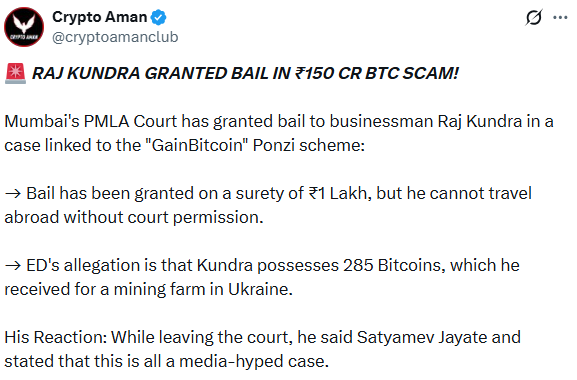
The Enforcement Directorate (ED) has been looking into his roles for several years. While the court found enough initial evidence to MOVE forward with a trial, it granted bail because he has been cooperating with officials since 2018. This news brings some relief to the businessman, though he still faces a long legal battle ahead.
Charges and Details in the Raj Kundra Bitcoin Scam Case
The main allegation in the Raj Kundra Bitcoin scam case is that he received 285 Bitcoins from the scheme's mastermind, Amit Bhardwaj. These coins were supposed to be used to build a Bitcoin mining farm in Ukraine. However, the ED claims this project never happened. Today, those 285 Bitcoins are worth more than ₹150 crore.
Key Points from the Investigation:
The ED says he has not shared the wallet addresses where the Bitcoins were sent.
He claimed he lost important data because his iPhone X was damaged, which the ED views as a way to hide evidence.
Investigators found a "Term Sheet" signed by the businessman, which they say proves he was deeply involved in the deal.
The agency is also looking at the sale of flats in Juhu at very low prices to see if money was being laundered.
Court Conditions and Raj's Reaction
The court granted bail on a surety of ₹1 lakh. While he is out of jail, the businessman must follow strict rules. He cannot travel outside of India without asking the court first. He must also appear for all future court dates to face the charges under the Prevention of Money Laundering Act (PMLA).
As he left the court, Kundra told reporters "Satyamev Jayate," which means truth alone wins. He argued that the media has hyped up the case too much and that he has done nothing wrong. His legal team believes the charges lack merit and will continue to fight the case in higher courts.
Expert Analysis: The Future of Crypto Laws in India
The Raj Kundra Bitcoin scam case is a high-profile example of how India is fighting crypto fraud. The government is using strong money laundering laws to track digital assets and protect investors. This matter shows that even years after a transaction happens, the authorities can still use blockchain data and bank records to build a case.
Future Outlook
The next step in the Raj Kundra Bitcoin scam case will be the technical trial. The ED will try to prove where the Bitcoins went, while Kundra’s team will try to quash the charges entirely. This legal battle will likely set a precedent for how other cryptocurrency scams are handled in India in the coming years.
This article discusses legal charges and financial fraud. It is not legal or financial advice. Cryptocurrency investments are risky and often unregulated. Always talk to a professional before investing.
