Dutch Crypto Market Reels as Regulators Slam Door on Polymarket

The Netherlands' crypto ecosystem just took a regulatory gut punch. The abrupt ban on prediction market platform Polymarket sends shockwaves through a sector already navigating a tightening oversight landscape.
A Warning Shot Across the Bow
This isn't a minor compliance tweak—it's a decisive move. Authorities labeled the platform's operations illegal, cutting off a popular venue for speculative trading on real-world events. The message is clear: the old 'ask for forgiveness later' playbook is getting shredded. For local traders and platforms, the freewheeling days are over.
The Compliance Squeeze Tightens
For every other DeFi project and exchange operating in or targeting Dutch users, the calculus just changed. The ban sets a precedent, showing regulators are willing to draw hard lines around what they consider unlicensed gambling or securities trading. It forces a brutal choice: invest heavily in legal overhead to meet stringent Dutch Financial Supervision Act (FSA) standards, or wall off an entire market.
Innovation Versus Enforcement – The Eternal Tango
The move highlights the core tension crippling crypto's mainstream dreams. Builders push the envelope on decentralized, borderless finance, while national watchdogs cling to geographic jurisdiction and existing rulebooks. One side's disruptive innovation is the other's regulatory nightmare. It’s a costly dance where the music can stop without warning—just ask any Polymarket user now staring at a frozen wallet. The whole saga feels like watching traditional finance slowly teach the crypto rebel a very expensive, very boring lesson in paperwork.
The Netherlands was once a beacon of tech-forward thinking. Now, its crypto scene is under pressure, forced to mature under a microscope. This ban won't kill innovation, but it will undoubtedly bend its trajectory. The path forward is paved with licenses, lawyers, and compromises—the very things crypto set out to bypass.
Polymarket Netherlands Ban: Sparking Fresh Crypto Fears
A major trigger for the current debate around Netherlands digital asset regulation was the February 17, 2026 cease-and-desist order against Polymarket.
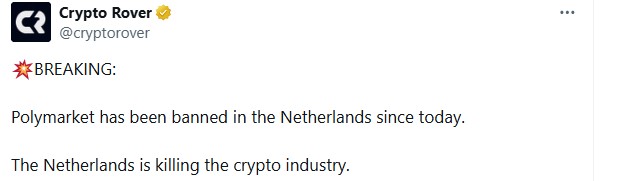
The order came from the Netherlands Gambling Authority (KSA), which classified Polymarket’s prediction markets as unlicensed online gambling under Dutch law.

The regulator demanded that Polymarket:
Immediately stop serving Dutch users
Block access from the country
Face fines of €420,000 per week, capped at €840,000, if it fails to comply
Strictness or Regulation: Why Regulators Stepped In?
The decision followed an investigation that revealed over $32 million was wagered on Dutch national election outcomes. The KSA made it clear that markets tied to politics, news events, or cryptocurrency prices are considered gambling, even if they run on blockchain infrastructure.
Market analysts warn that the MOVE of mounting hurdles in prediction markets can push natives to offshore platforms or into risky ones. Even after having advanced economical infrastructures, the country’s actions could push capital outside the boundaries instead of managing them inside.
Netherlands Tightens Rules Beyond Polymarket: Crypto Tax Shock
The pressure on the Netherlands crypto sector doesn’t stop with prediction markets, but stretching to broader space.
Just days before the Polymarket action, the Dutch House of Representatives approved a major tax reform targeting savings and investments, including cryptocurrencies.
The, passed on February 12, 2026, shifts taxation from assumed returns to actual returns, including unrealized cryptocurrencies gains.
Flat tax of around 36% on yearly gains, even if the holders don’t sell the assets
Applied to all digital coins including Bitcoin, Ethereum, and other liquid digital assets
The plan is expected to take effect on January 1, 2028, pending Senate approval
While crypto ownership and trading remain legal under the EU’s MiCA framework, critics say this could force asset sales during volatile markets just to pay taxes.
“You Can’t Kill Blockchain”: Crypto Community Reacting
Reactions to the tightening environment have been loud and divided. Some users argue the country is “killing innovation” by applying old rules to new technology. Others point out that blockchain platforms are global by design.
Many digital asset users even joked that banning a blochian-based platform is largely symbolic, arguing that tools like VPNs, decentralized wallets, and permissionless access make full enforcement difficult in practice.
From their perspective, prediction markets are inherently hard to shut down as long as the underlying infrastructure remains decentralized and globally accessible.
Is the Netherlands Really Killing Crypto?
Despite the fear, the situation is more nuanced. The nation’s crypto trading is not banned. Buying, holding, and selling digital asset remains legal under the EU’s MiCA framework, which has been fully active since late 2024.
In short, the country is not killing outright, but it is making it harder, more expensive, and more regulated. For now, whether this approach protects consumers or pushes innovation elsewhere is the real question now facing the Dutch cryptocurrency ecosystem.
