Russia’s Ruble-Pegged Stablecoin Set for 2026 Domestic Launch - A Sovereign Digital Currency Gambit

Moscow is building its own walled garden—and filling it with digital rubles.
The Sovereign Stablecoin Play
Forget Tether or USDC. Russia's upcoming digital asset pegs directly to the national fiat, creating a state-controlled corridor for domestic transactions. It's a direct challenge to dollar-dominated crypto—and a potential blueprint for other sanctioned economies.
Why 2026 Matters
The timeline isn't arbitrary. It gives the Central Bank of Russia two years to finalize blockchain infrastructure, regulatory frameworks, and—crucially—banking integration. They're not just launching a token; they're engineering an alternative financial pipeline.
The Domestic-First Strategy
Initial rollout focuses entirely inside Russian borders. Citizens and businesses get a digital ruble that promises faster settlements than traditional banking—while giving the Kremlin unprecedented transaction visibility. International expansion? That comes later, if ever.
The Finance Sector's Cynical Take
Another day, another government realizing blockchain's potential for control rather than liberation. They'll call it innovation while building the most sophisticated financial surveillance tool since SWIFT—proving once again that in finance, the only constant is the desire to track every penny.
Watch this space. If successful, Russia's 2026 experiment could inspire a wave of national stablecoins—reshaping global crypto dynamics one sovereign blockchain at a time.
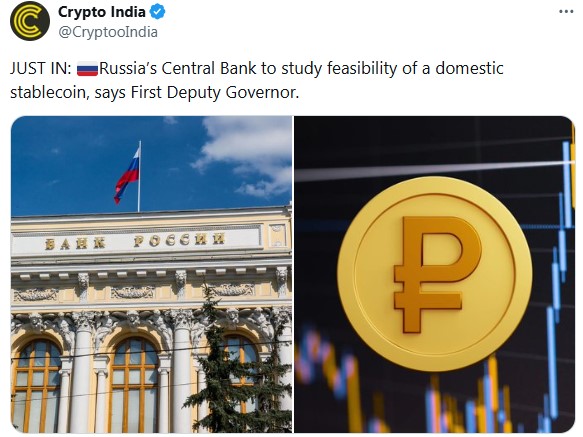
Speaking at the Alfa Talk conference in Moscow, First Deputy Governor Vladimir Chistyukhin said the bank will examine the risks and benefits of a ruble-backed stablecoin this year. The findings will be opened for public discussion after reviewing lessons from other countries.
Ruble-Pegged Stablecoin: Shift In Policy or Need In Sanctions
Since 2018, Russia restricted stablecoins and banned crypto payments, citing financial stability risks. That policy softened after 2022, when Western sanctions pushed the country to explore alternative settlement systems.
The country legalized crypto mining in 2024 and approved the use of digital assets for cross-border trade. Officials estimate that crypto-based foreign trade settlements now see daily turnover of around 50 billion rubles. While the digital ruble is already in pilot, a Ruble-Pegged digital coin could give the private sector more flexibility, though under strict regulatory oversight.
While opening the door for domestic stablecoins, the central bank has stressed that privately issued foreign-pegged stablecoins will remain restricted.
Private Ruble Stablecoins Forced the Conversation
The policy rethink comes as private ruble-linked digital coins are already active. The most prominent example is A7A5, a 1:1 ruble-pegged stablecoin launched in early 2025.
Issued via a Kyrgyzstan-linked structure but backed by ruble deposits at Promsvyazbank (a Russian state-linked bank), A7A5 reportedly processed over $100 billion in transaction volume in under a year, according to blockchain analytics firms.
A7A5 has been widely used as a bridge from rubles to dollar-pegged coins for international trade. Western sanctions in 2025 targeted related entities, causing volume drops, but the token remains operational on ethereum and TRON.
Importance of Russia Domestic Stable coin
State-backed Ruble-Pegged Stablecoins could help the country regain control over ruble-based crypto flows, support sanction-resistant trade, and complement the digital ruble, which authorities aim to roll out fully by September 2026. As more than 100 countries test CBDCs, Russia’s MOVE reflects a broader trend: governments are adapting as private crypto solutions outpace regulation.
This article is for informational purposes only and does not constitute financial or legal advice.
