The Crypto Speculative Era Is Over: How Institutional Money Is Reshaping the Market

Forget the memecoins and moon-shot dreams. The crypto casino is closing its doors to retail gamblers as Wall Street moves in with forklifts.
From Wild West to Regulated Frontier
The days of 24/7 volatility driven by Twitter hype and Reddit raids are fading. The market's heartbeat is syncing with quarterly reports and institutional balance sheets, not influencer pump-and-dumps. Trading floors are swapping degenerate apes for risk-adjusted portfolios.
Compliance Is the New Alpha
Funds aren't chasing the next anonymous dev team—they're backing infrastructure. Think custody solutions that would make a Swiss bank blush, regulatory tech that navigates three jurisdictions before breakfast, and tokenization platforms built for pension funds, not crypto bros. The smart money is building the rails, not just riding the train.
The Liquidity Migration
Volume is shifting from unregulated offshore exchanges to venues with actual know-your-customer rules. Price discovery happens where compliance officers have a seat at the table, not in Telegram groups. It's boring, predictable, and exactly what a multi-trillion-dollar asset class needs—even if it kills the fun for weekend traders who thought leverage was a personality trait.
This isn't a downturn; it's a takeover. The market's soul might feel sold, but its foundation just got poured in concrete. The speculative frenzy funded the lab, and now the grown-ups are here to run the experiments—with proper lab coats, safety goggles, and of course, management fees.
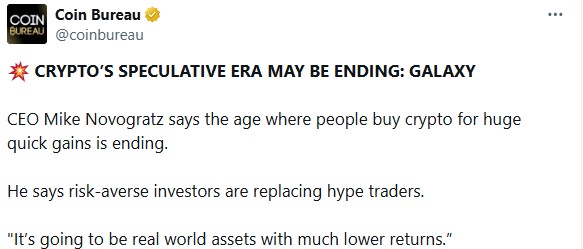
During the CNBC interview on February 10,2026, Novogratz explained that the crypto market has been moving beyond speculative trading bubbles created by hype-driven retail traders and moving in the hands of large institutional investors, who creates a mature phase by focusing on utility rather than volatility.
Crypto Speculative Era Ending as RWAs and Institutions Rise
Novogratz connected this shift to the increasing adoption of tokenized real-world assets (RWAs), which provide inventors with more stable financial returns similar to traditional systems, but little lower. The institutional community prefers to invest in tokenized bonds, U.S. Treasuries, private credit, real estate and money market funds, instead of changing high volatility.
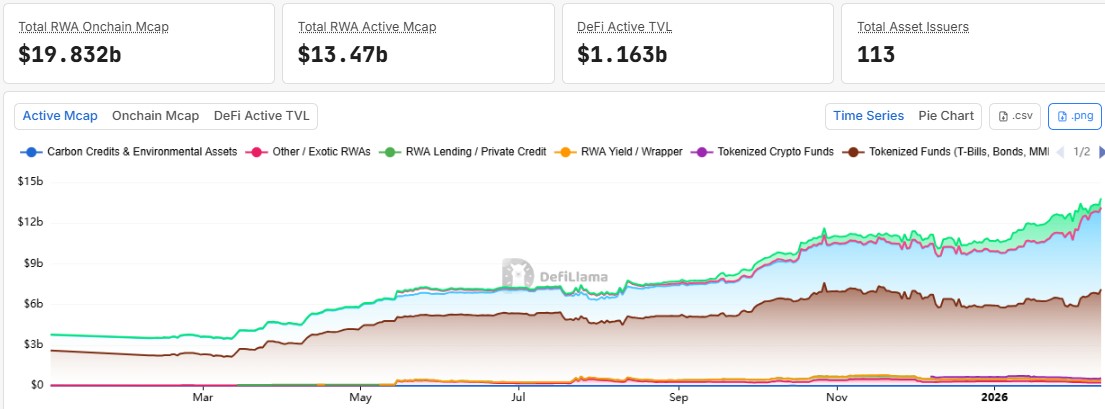
The transformation is significantly supported by the broader data. The value of tokenized RWAs, excluding stablecoins, has crossed $19 billion in early 2026 from around $5–$6 billions in 2022, recording a massive 280% rise. It doesn’t stop here, Standard Chartered’s analyst Geoffrey Kendrick predicted that the RWA marketcap will reach up to $2 trillion by the end of 2028, if institutional demand continues to rise.
Major examples include:
BlackRock’s BUIDL fund, which crossed $1 billion in assets under management
Franklin Templeton’s Benji platform, allowing tokenized money market funds to be used as collateral
Fidelity’s tokenized funds on Ethereum
Tokenized U.S. Treasuries and private credit gaining traction across global banks
These developments reinforce the view that the crypto speculative era ending is being replaced by practical financial infrastructure.
Other Factors Breaking Norms: Resets, Regulation, and Institutional Flows
The 2022 FTX collapse, which pushed bitcoin down roughly 22%, flushed out excessive leverage and damaged trust in speculating platforms, forcing the marketplace to mature.
Large institutions now dominate crypto activity. Unlike retail traders chasing quick 10x gains, institutions focus on steady returns, risk control, and long-term value.
Progress on crypto laws with the GENIUS Act (US), MiCA (European Union), Payment Services Act (Singapore) are encouraging compliance and real use cases, making cryptocurrency more like financial infrastructure than a casino.
Growth is now coming from tokenized funds, ETFs, and settlement systems built by firms like BlackRock, Fidelity, and Franklin Templeton, not meme-driven speculation.
Crypto coins are now increasingly being used for daily accommodations. Leading the trend, Many Japanese organisations accept specific crypto tokens in exchange for purchase. Whether it's fashion, food, automobile or other shopping, digital assets are potentially involved in the mainstream.
What This Shift Means for Crypto
The cryptocurrency market exhibits ongoing price fluctuations, yet its function in the marketplace environment experiences transformation. The market now transitions from unpredictable price movements toward operational market functions which provide consistent returns and help customers achieve their financial goals.
The average returns for investments will likely decrease to an annual range between 5 and 11 percent because more people will start using the system.
The end of the crypto speculative era does not indicate decline because it brings the industry into a new phase. The industry now enters a development stage which will establish an institutional marketplace that operates with actual assets and generates enduring business value.
The article above is for informational purposes only. It does not constitute any financial or legal advice.
