India Launches Crypto Task Force to Crack Down on Darknet Narcotics Trading

India is taking the gloves off. A new crypto-focused task force just formed with one mission: dismantle the darknet's narco trade. This isn't about gentle regulation—it's a targeted strike on the intersection of digital currency and illicit drugs.
The Hunt for Digital Shadows
Forget broad-stroke bans. This unit is surgical. Its mandate? Trace the untraceable, follow the crypto trails from anonymous wallets to physical shipments. The darknet markets have long operated in the digital shadows, using privacy coins and mixing services to obscure transactions. This task force aims to be the flashlight.
Tech Meets Enforcement
It's a fusion of blockchain analysts and seasoned narcotics officers. Their toolkit likely includes chain analysis software, AI-driven pattern recognition, and old-fashioned investigative work. The goal is to connect online crypto payments with offline drug distribution networks, creating a map of the entire supply chain.
The Regulatory Ripple Effect
This move signals a sophisticated approach to crypto regulation—targeting specific misuse rather than throwing the baby out with the bathwater. It acknowledges crypto's legitimate potential while drawing a bright red line around criminal activity. Other nations watching may follow suit with similar specialized units.
Of course, the finance cynic might note that for every narco-trader caught, a dozen Wall Street banks continue their perfectly legal—and arguably more destructive—financial engineering. Priorities, right? The task force is live. The darknet's anonymous economy just got a new, determined adversary.
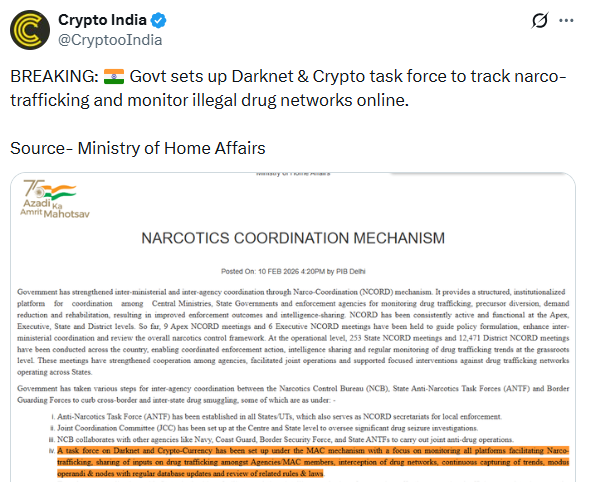
The India Crypto Task Force was created to bring different government agencies together. Minister Nityanand Rai explained to the Lok Sabha that the unit will help the Narcotics Control Bureau (NCB) and state police work as one team. By sharing data and tracking new trends, they can catch drug smugglers who think they are hidden behind a screen. The goal is to monitor every platform that helps illegal trade. The government will also update laws to stay ahead of cybercriminals. Crypto regulations need mass adoption in India
How the India Crypto Task Force Protects the Digital Economy
To help with this mission, the government is using a digital database called NIDAAN. This portal has records of over 9.50 lakh drug offenders. The task force can now match digital money trails with these records to find out who is funding illegal trades. This "follow-the-money" method makes it much harder for criminals to hide their wealth in the crypto space. This new level of tracking is a big win for national security. It ensures that illegal networks cannot use virtual assets to bypass the law.
The unit also focuses on inter-agency coordination. By working with the Navy, Coast Guard, and Border Security Force, the task force can stop drug smuggling at every level. This includes both physical borders and the virtual border of the darknet. The government has also set up new zonal units in key areas to improve its reach. These offices help local police use the task force's tools to fight drug crime in their own cities. These efforts focus on:
Real-time intelligence sharing through the MAC mechanism to disrupt active networks.
Blockchain forensics to identify and de-anonymize suspicious wallet addresses.
Regular database updates to track the latest methods used by virtual drug traffickers.
Building a Future-Proof Digital Shield
While the India Crypto Task Force fights crime today, India is also looking at future threats. A new report shows that the country wants to be "Quantum Safe" by 2028. This means protecting the encryption used in banking and finance from advanced hackers. The government is also setting up labs to test new security products made in India. By using local tech, the country aims to be self-reliant in protecting its critical systems. This ensures that even the most advanced computers cannot break the safety of India's virtual economy.
The road ahead is very clear. India wants a clean and secure virtual market for all its citizens. By 2030, high-priority systems will move to new security standards to stay safe from "Harvest Now, Decrypt Later" attacks. The task force is just the first step in a larger plan to make sure digital assets are used for growth, not crime. As these new rules take effect, the crypto market in India will become much safer for honest users and investors. The focus is on creating a space where technology helps people instead of harming them.
Digital asset laws are changing rapidly to protect national security. This news report is for info only and does not constitute legal or financial advice.
