Vitalik Buterin’s Algorithmic Stablecoins: The True Vision of DeFi Unlocked

Forget the hype—algorithmic stablecoins are finally delivering on DeFi's original promise. No more centralized gatekeepers, no more opaque reserves. Just code, collateral, and pure market mechanics.
The Core Mechanism: Trustless Stability
Vitalik Buterin's vision cuts through the noise. Algorithmic models bypass traditional finance's weakest links—the human intermediaries and their fragile balance sheets. They use on-chain arbitrage, dynamic mint/burn mechanisms, and over-collateralization to peg value. It's stability engineered for the internet age.
Why This Defines True DeFi
True decentralization isn't just about where assets sit; it's about how they're governed. Algorithmic stablecoins hand control to transparent protocols, not boardrooms. They operate 24/7, settle in seconds, and open global access—finally making 'permissionless' and 'stable' work in the same sentence. It's the backbone for everything from decentralized lending to synthetic assets, all without asking a bank for permission.
The Road Ahead: Challenges and Evolution
Sure, past failures left scars—usually where the algorithm met a liquidity crisis or a speculative frenzy it couldn't tame. The new generation learns from those burns. They're building in deeper liquidity pools, hybrid models, and circuit breakers. The goal? Resilience that outlasts any single entity's solvency. After all, if your stablecoin needs a bailout, you've just reinvented the very system DeFi aimed to replace.
This isn't just another crypto asset class. It's the foundational layer for an autonomous financial system. One that proves the most reliable stability might come from the most rigid logic—not from a central bank's printer or a CEO's promise. The future of finance won't be managed; it will be programmed.
The Mechanics of Pure Decentralization
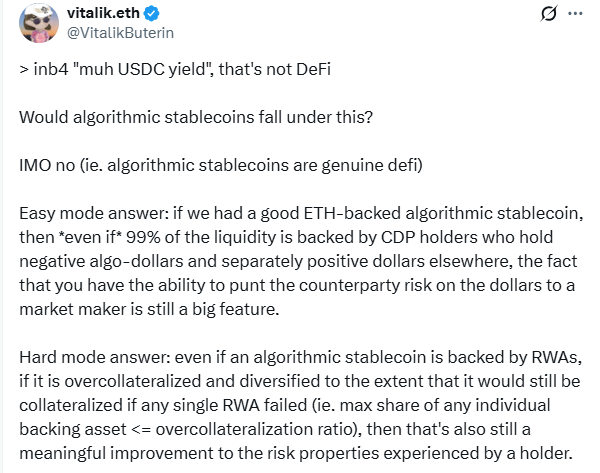
According to the new framework, the true value of Vitalik Buterin Algorithmic Stablecoins is how they handle risk. Buterin says high-quality coins backed by ETH are a "big feature." Even if most of the money comes from CDP holders, the system still works. The main goal is to shift USD risk away from users. Instead, this risk goes to professional market makers. This makes the system safer for everyone else.
This idea challenges the way many people use DeFi today. Many current apps just put USDC into lending pools like Aave. Buterin says this is not true DeFi. These apps rely on a central company that can freeze your coins at any time. By using ETH-backed designs, we can build a system that no one can shut down. It is a more honest way to handle digital money.
How Vitalik Algorithmic Stablecoins Redefine Financial Risk
Buterin also talked about "Hard Mode" for stablecoins. This involves using Real-World Assets (RWAs) like bonds or property. He says these can work in DeFi, but they must be very safe. The coins must be over-collateralized and highly diversified. This means if one asset fails, the coin stays stable. This "anti-fragile" style keeps the system running even during a crisis. It protects the holder from a single point of failure.
Feature | Centralized Models (USDC/USDT) | Algorithmic (Vitalik’s Vision) |
Primary Backing | Cash in Banks | ETH or Mixed Assets |
Trust Model | Trust in Companies | Trust in Code |
Risk Focus | Borne by the User | Shifted to Market Makers |
Unit of Value | US Dollar Peg | Global Asset Index |
As we move through 2026, the goal is to stop relying on the US Dollar. Buterin wants the industry to move toward a "diverse index." This WOULD track a basket of different goods. This change would protect people from inflation in any one country. It would create a global money system that is fair for everyone.
Expert Analysis: The Future of Crypto-Native Money
This announcement comes at a key time for crypto. In early 2026, central banks are trying to control digital assets more than ever. Buterin’s push for algorithmic stability is a stand for freedom. He is telling developers to build tools that are truly independent. We are seeing a new wave of "Sovereign Web" apps that focus on self-custody.
In the next few months, expect to see new projects follow this path. These tools will favor safety and math over fast yields. While many people still like the ease of USDC, the heart of DeFi is moving toward ETH-native coins. If we can solve the problem of oracle data and staking competition, we might see a new king of stablecoins. This would be a coin that no bank can stop and no government can freeze.
