US Government Shutdown Today: What’s Behind It & 3 Major Monday Outcomes

Washington grinds to a halt—again. Another funding standoff pushes the federal government into shutdown mode, sending ripples through markets and Main Street alike. Here’s what triggered the deadlock and the three immediate consequences now in play.
Outcome 1: Market Volatility Spikes
Expect a classic flight to safety. Traders dump risk assets at the opening bell, seeking refuge in Treasuries and gold. Crypto markets won’t be spared—initial sell-offs are likely, though decentralized assets often find bizarre strength during political dysfunction. A cynical take? Traditional finance’s ‘safe havens’ are just the least-worst options in a system built on IOUs.
Outcome 2: Economic Data Goes Dark
Key reports from the Bureau of Labor Statistics and Commerce Department freeze. Without real-time employment or inflation data, the Federal Reserve flies blind. Monetary policy decisions get based on outdated figures, increasing the chance of a policy misstep that could rock asset prices for months.
Outcome 3: Regulatory Machinery Stalls
Ongoing SEC and CFTC operations slow to a crawl. New enforcement actions and rulemakings hit pause, creating a temporary regulatory vacuum. For crypto, it’s a brief respite from scrutiny—but also delays clarity on frameworks the industry desperately needs.
The shutdown exposes the fragility of centralized systems. While politicians posture, decentralized networks keep validating blocks. The irony isn’t lost on those watching from the blockchain—where consensus actually works.
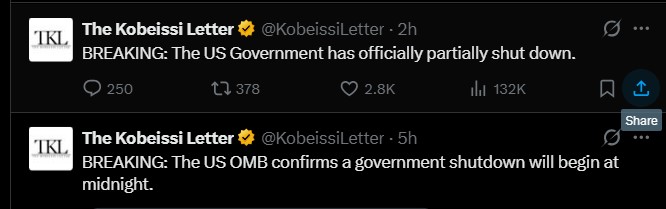
Prediction platforms had already priced this outcome with NEAR certainty, but the U.S. government partial shutdown confirmation has added fresh pressure on risk sentiment, including crypto.
Why The US Government Shutdown 2026 Happened Today?
This US government shutdown began even after the Senate approved a short-term funding deal. The problem lies elsewhere. The congress funding bill 2026 lapse started when the House failed to approve the Senate-backed bill that WOULD fund most federal agencies until September.
The deal included only a two-week extension for the Department of Homeland Security (DHS), which oversees immigration enforcement. The House of Representatives did not vote on it, and remains out of session. As a result, several govt. agencies were forced to initiate a pause plan.
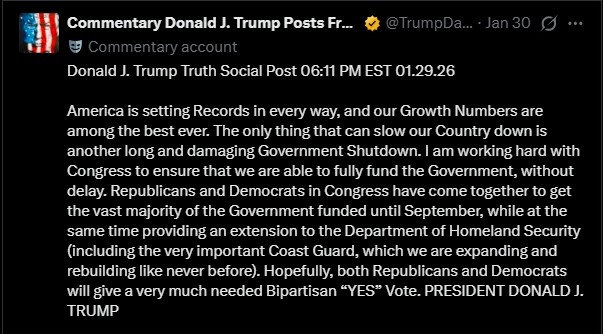
President Donald TRUMP publicly cautioned that a prolonged a federal pause could slow United States growth, even as he praised strong economic numbers. While this pause is expected to be shorter, the uncertainty is already weighing on markets.
Markets Knew Before Washington Acted
Kalshi Prediction markets anticipated failure well ahead of official confirmation. On Kalshi, the current US govt shutdown probability surged to 99%, supported by around $55.6 million in trading volume. That sharp MOVE showed traders were convinced Congress would miss the deadline.
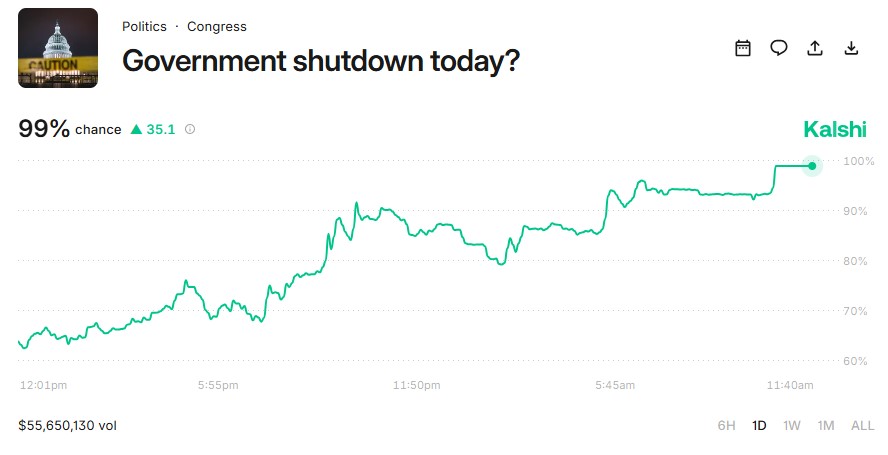
This matters because markets now react faster to political dysfunction than traditional headlines. By the time confirmation arrives, assets are already repriced. This news on government shutdown in United States is another example of expectations moving markets before policy decisions are finalized.
What Happens on Feb 2, Monday: Government Shutdown Deadline
Monday is critical for ending the US government shutdown. Congress has until then to pass a funding deal and reopen affected agencies. Three outcomes matter most for investors:
-
Quick approval: If the House of Representatives passes the 2026 funding bill, the federal pause could end quickly, easing volatility and supporting risk assets.
-
More delays: Continued talks without a senate vote may keep markets unstable and investors defensive.
-
Negotiation breakdown: Any new U.S govt update could trigger broader sell-offs and push investors toward safe assets.
Crypto Feels the Pressure First
“Will House of Representatives pass the funding bill trend” is already reflected in crypto prices. Total crypto market cap fell about 3% to $2.87 trillion. Bitcoin dropped to the $83,000 range, down nearly 7% over the past week. Ethereum slipped toward $2,693, while XRP traded near $1.73 and Solana around $118, both down roughly 8% weekly.
Sentiment remains fragile. The Fear and Greed Index stands at 20, signaling extreme fear. Even traditional SAFE assets like gold and silver failed to attract strong demand, highlighting a broader risk-off move.
What Traders and Investors Should Watch Closely
For crypto traders, during the current US government pause, several signals matter most. Coingabbar market analysts note that any confirmed House vote timing, DHS funding language, and WHITE House messaging will shape short-term sentiment.
As per the technical view, If bitcoin holds above $82,500, the short-term structure remains intact. A sharp break below that level could signal renewed panic. Each headline can quickly move markets during the current political phase.
Conclusion
The current US government shutdown is less about funding gaps and more about confidence. Monday’s decision will shape near-term market direction. Until Congress acts, volatility stays high, crypto remains fragile, and investors are likely to trade headlines rather than fundamentals.
