Binance Shakes Up Markets with Platinum and Palladium Perpetual Futures Launch

Binance just dropped a bombshell on the commodity derivatives space—platinum and palladium perpetual futures are now live. Forget traditional exchanges; crypto's biggest player is rewriting the rulebook for precious metals trading.
The Gateway to Hard Assets
This isn't just another product listing. It's a strategic bridge connecting the digital asset ecosystem with the centuries-old world of physical commodities. Traders can now speculate on PGMs—platinum group metals—with the same leverage, 24/7 access, and settlement mechanisms they use for Bitcoin and Ethereum. No vaults, no physical delivery, just pure price action.
Why It Matters for Crypto Natives
For the crypto crowd, this is diversification on steroids. Portfolio exposure just expanded beyond volatile digital tokens into inflation-resistant, industrial-use metals. Palladium for catalytic converters, platinum for hydrogen fuel cells—real-world utility meets decentralized finance. It’s a hedge wrapped in a speculation play, all without leaving the Binance ecosystem.
The Cynical Take
Let’s be real—this also lets Binance capture flows that would normally go to traditional commodity brokers. Another vertical dominated, another fee stream secured. In finance, every innovation conveniently doubles as a new revenue line. How efficient.
The move signals a broader ambition: Binance isn't just a crypto exchange anymore. It's building a one-stop-shop for all speculative capital, digital or otherwise. Watch for gold and silver futures next—the full commoditization of everything is underway.
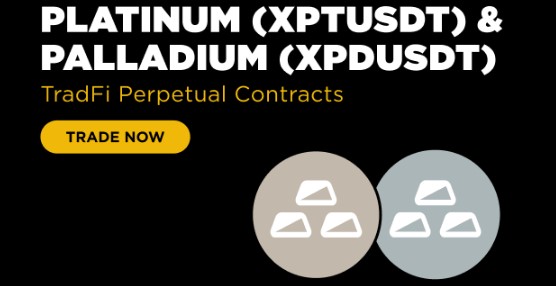
The trading begins on January 30, 2026, at 10:00 UTC for platinum and 10:15 UTC for palladium, where:
Settlement: USDT-based, no physical metal required
Leverage: Up to 100x
Minimum Trade: 0.001 XPT/XPD
Funding Fees: Settled every 8 hours
Trading Availability: 24/7 via Binance Futures
Trading Mode: Supports multi-asset mode
These new contracts give traders regulated access to precious metals with high liquidity and continuous market exposure, making it easier to diversify portfolios or manage industrial metal price risks.
Platinum and Palladium: Current Trends
The news of Binance perpetual listing comes at the time when both the metals are showing high volatility after rallying in January 2026.
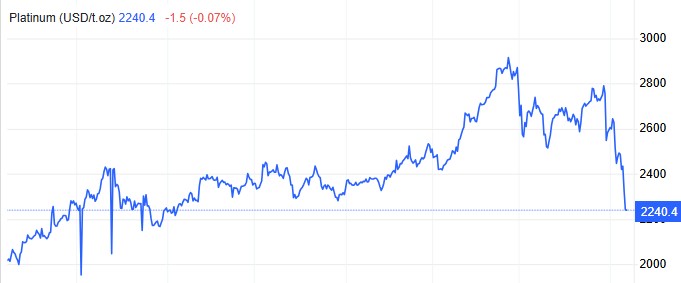
Platinum, widely used in catalytic converters, hydrogen fuel tech, electronics, and jewelry, spot price recently pulled back to $2,400–$2,500 per ounce. The value is currently down ~7–9% intraday from the record highs NEAR $2,880 reached on January 26.
On the other hand, Palladium, which is mostly used in automobile catalytic converters and industrial applications, is trading around $1,762–$1,770 per ounce. It is also down 12% from recent peaks of $2,100–$2,200.
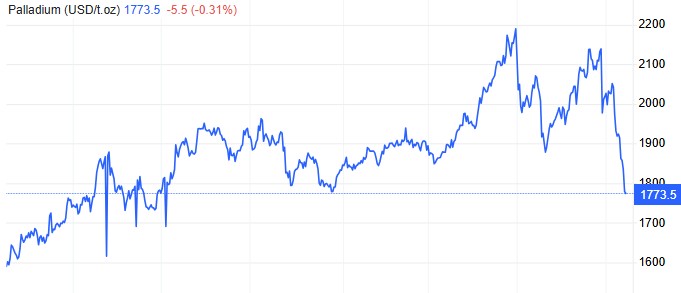
Although being down in today's market, both metals have seen massive yearly gains, platinum +140% and palladium +65%, driven by industrial demand, supply constraints, and renewed investor interest.
Traditional Assets on Crypto Exchanges
There is much news on how traditional markets are increasingly including crypto assets into their portfolio, but the recent trend of hard assets on crypto platforms is gathering more attention.
The increasing trend of precious metals’ addition on crypto exchanges presents the long-term demand and trust these assets have. Binance itself expands its portfolio after including Gold (XAUUSDT) and Silver (XAGUSDT) perps earlier this January. Other major crypto exchanges are also offering hard assets:
Coinbase: Gold, silver, platinum, and copper futures
Bybit: Gold and silver perps
MEXC: Gold and silver futures with up to 50x leverage
Gate.io: 24/7 gold and silver trading
Ostium Labs: Decentralized perpetuals for gold, silver, and others
The growth is driven by the investors who seek high-leveraged exposure along with trading flexibility without owning physical assets.
Why Perpetuals Instead of Spot Listings
Currently, the trading of metals is only available as perpetual futures because they allow easy, around-the-clock Leveraged trading and hedging without the need of physical maintenance. Spot metal trading would require physical delivery, custody, and insurance, which is more complex and costly for exchanges.
Spot listings may appear in the future if regulations allow physically backed products in the crypto ecosystem, but for now, perpetual futures offer flexibility, liquidity, and active market participation.
This article is for informational purposes only and not financial advice.
