Why Gold vs Bitcoin Trust is Shifting Amid El Salvador’s Massive Gold Purchase

El Salvador just made a power move—and it's rattling the foundations of traditional finance. The nation, already famous for adopting Bitcoin as legal tender, has now scooped up a massive haul of physical gold. This isn't just a diversification play; it's a statement that's forcing a global rethink of what 'safe' really means.
The New Hard Asset Arms Race
For centuries, gold sat unchallenged on the throne of value storage. Central banks hoarded it. Investors fled to it during crises. Then Bitcoin emerged, branding itself 'digital gold'—a decentralized, programmable, and borderless alternative. The two assets have been locked in a quiet war for investor trust. El Salvador's latest maneuver throws gasoline on that fire. By stacking both physical gold and Bitcoin on its balance sheet, the country is building a monetary shield against geopolitical uncertainty and currency debasement, openly questioning the old guard's playbook.
Trust is Flowing Down a New River
The shift isn't just philosophical; it's practical. Gold requires vaults, guards, and complex logistics to verify and trade. Bitcoin's trust is cryptographic, verified by a global network, and transferable anywhere with an internet connection. One represents trust in physical scarcity and institutional custody. The other represents trust in code, consensus, and individual sovereignty. El Salvador's dual bet highlights a growing sentiment: true security might not lie in choosing one over the other, but in understanding the unique armor each provides against different kinds of financial risk—inflation for Bitcoin, systemic crisis for gold. After all, traditional finance has always been great at managing risk until it's their own.
The real story here is the erosion of a monopoly. The trust that was once automatically bestowed upon gold and the traditional financial system is now being contested, divided, and redirected. El Salvador isn't just buying assets; it's voting with its treasury, and the ballot reads 'none of the above.' The era of a single store-of-value hegemon is over.
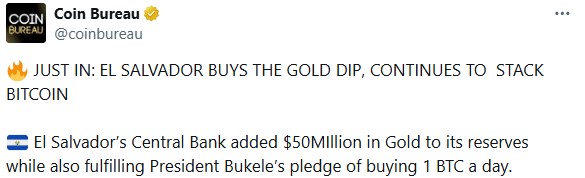
The recent purchase has again drawn global attention towards Gold vs Bitcoin narratives. As the country, famous for its strategic BTC accumulation and a long-term confidence in the asset, chooses bullion at the time when the digital asset's prices are sharply falling and bullion is gaining strength, starts debate.
However, as markets are frequently turning volatile, El Salvador is exploring other alternatives also while continuing its daily BTC buying plan, honoring President Nayib Bukele’s long-standing pledge of buying 1 BTC every day.
Gold Price Growth Attracts Investors Away From Crypto: Is It True?
The precious metal recently hit a record high NEAR $5,600 per ounce before falling to $5,200 on January 29. Prices dropped as much as 4–5% intraday due to profit-taking after a massive rally.
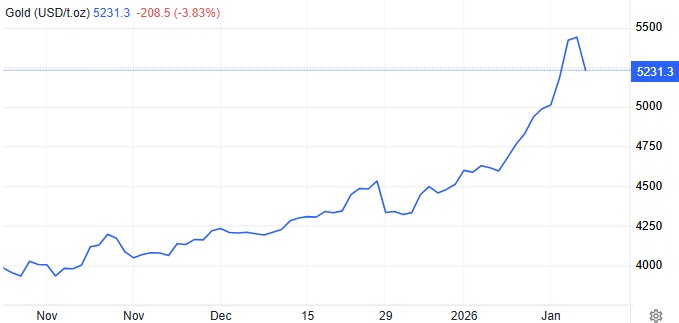
Even after the dip, the precious metal remained up over 20% on monthly and 86.2% on yearly basis, showing its strongest phase in decades.
El Salvador gold purchase reflects how traditional reserves still rely on hard assets as a trusted store of value. Even after the dip, central banks around the world are increasing gold holdings, and investors are following the same trend.
Key reasons the bullion is gaining trust include:
Long history as a store of value
Strong performance during inflation fears
Independence from digital systems
From here, traditional assets look to pull investors away from digital assets. But rallies of precious metals are not a single factor for this shifting, the continuous pressure on the crypto market accompanied the trend.
Bitcoin Price Dip Tests Investor Confidence
The digital coin dropped to the $82,000–$84,000 range, falling more than 7.3% in weekly and 21% in yearly comparison. This drop triggered increasing outflows from ETFs while many investors reduced crypto exposure as markets turned cautious.
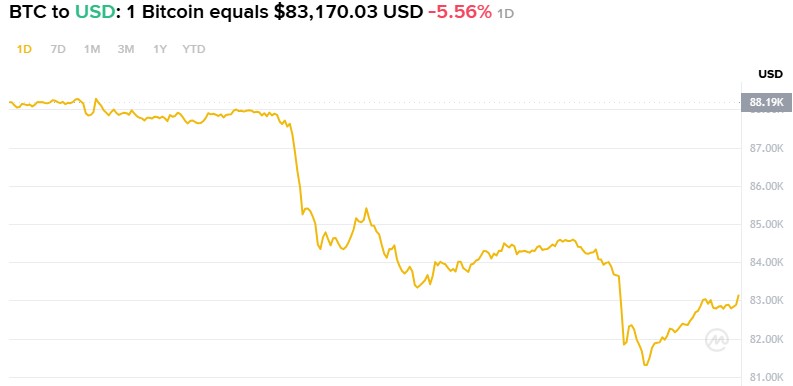
After hitting an all time high of $126K in October 2025, the asset is frequently failing to hold above 100K level and touching $80-90K ranges.
For some investors, this price dip weakened Bitcoin’s store-of-value narrative. However, this does not mean Bitcoin is failing, but it shows that trust in the coin is still price-sensitive, especially during risk-off market conditions.
El Salvador Still Balances Digital and Physical Asset Strategies
Despite recent gold-buying, El Salvador is firm on its BTC strategy. Treating the coin as a long-term reserve asset rather than an everyday payment tool, the Central American country continues to add 1 BTC per day under President Nayib Bukele’s strategy.
As of late January 2026, the country holds 7,547 BTC, valued at around $625 million.
President Bukele has repeatedly stated that the government has no plans to sell its Bitcoins holding, even during sharp market drops.
Alongside Bitcoins, the Central Bank’s recent purchase pushed national gold-reserves to over $360 million, showing a clear diversification strategy.
Final Audit
BTC’s recent dip has tested trust levels, while the metal's powerful rally has restored confidence among investors and nations alike. The gold vs Bitcoin debate is no longer theoretical, it is playing out in real time, with price action guiding trust.
For now, gold looks safer, while Bitcoin remains a long-term bet.
This article is for informational purposes only and should not be considered financial advice.
