Fidelity’s FIDD Stablecoin Charges into Ethereum: Digital Dollars Hit DeFi’s Main Stage

Wall Street meets Web3. Fidelity, the $4.9 trillion asset management titan, just dropped its own digital dollar onto the Ethereum blockchain. Move over, Tether and USDC—there's a new institutional-grade player in town.
The FIDD Invasion
FIDD isn't just another stablecoin. It's a direct bridge from traditional finance's fortress into the volatile, high-yield world of decentralized finance. This move bypasses the old guard, letting institutional capital flow directly into smart contracts, liquidity pools, and lending protocols. Think of it as a regulated on-ramp that cuts out three middlemen at once.
Why Ethereum? Why Now?
The network's deep liquidity and established infrastructure made it the obvious landing pad. Fidelity isn't experimenting on a sidechain; it's planting its flag on the mainnet. This signals a serious, long-term commitment to the ecosystem—not just a proof-of-concept. It’s a bet that the future of institutional asset management will be programmed.
The Ripple Effect
Expect a legitimacy tsunami. Other major asset managers watching from the sidelines now have a blueprint. FIDD’s arrival could trigger a rush of ‘TradFi’-branded stable assets, each vying for a slice of the trillion-dollar DeFi pie. Liquidity gets deeper, yields might compress, and the entire market matures overnight. Of course, it also brings the delightful paradox of using a centralized, audited token to power ‘decentralized’ finance—a cynical jab the crypto purists will love to hate.
The bottom line? The walls between finance old and new aren't just crumbling; Fidelity just drove a bulldozer through them. The race for your digital dollar is officially on, and the giants have entered the track.

The asset firm confirmed that both retail and institutional investors will be able to buy, redeem, and transfer FIDD directly through the native platforms. The rollout is expected to begin in early February 2026.
Currently there are two major stablecoins dominating in the market: USDT and USDC, and now with Fidelity Stablecoin announcement, markets are highly comparing them in context of the next leader.
Fidelity Stablecoin on Ethereum: What Makes It Special
The Fidelity stablecoin, FIDD, is a USD-pegged digital token built on the ethereum blockchain, one of the most efficient blockchains in today's market. Each token is backed 1:1 by U.S. dollars, cash equivalents, and short term U.S. Treasuries.
While there are many USD-backed stable tokens in the market, what makes this product special and attention gathering, which even led to the comparison with Tether’s USDT.
FIDD is under the management of Fidelity Digital Assets, National Association, a federal chartered trust bank approved by the U.S. Office of the Comptroller of the Currency (OCC), regulated banking authority.
In simple and short terms:
FIDD comes from a trusted, well-known financial firm
The issuer is legally approved by the U.S. government
It operates under strict banking rules and supervision
These all together contribute to make FIDD one of the most regulated stablecoins launched by a traditional financial institution.
How FIDD Compares With USDT and USDC
The stablecoin market is already large and competitive with both USD and non-USD coins adding to its portfolio. As of January 2026, the total stablecoins market value has crossed the $308 billion mark which was around $208.47 billion in January 2025, representing ~48 % yearly increase.
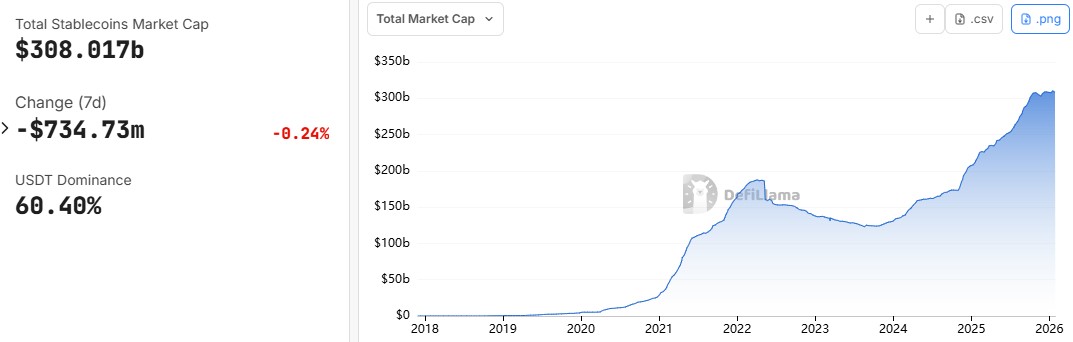
USDT and USDC remain as the major players of the space where USDT alone stands with 60.43% of the total market’s share. In the short term, FIDD vs USDT-USDC is unlikely to change market dominance. USDT has strong global liquidity with reputation, while USDC is deeply connected to DeFi and exchanges.
However, the firm’s trusted brand, strict regulation, and huge client base could help the new stable coin grow steadily, especially among institutions that already use its services.
Emerging Role of Ethereum in Stablecoins’ Developments
Ethereum network is emerging as the top choice for the stablecoins due to its fast, low-cost, and efficient infrastructure. The blockchain processed over $8 trillion in stablecoin transfers in Q4 2025, surpassing traditional finance benchmarks like SPY’s ~$3.4 trillion quarterly volume.
As for now, the total market of stablecoin on Ethereum chain stands at $160.5 billion with $886.74 million in trading volume as per DefiLlama.
Tom Lee, Fundstrat strategist, said FIDD launch proves major institutions trust Ethereum. Lee added that regulated stablecoins need security, liquidity, and constant uptime, areas where Ethereum already leads.

He believes this strengthens Ethereum’s role in secure, 24/7 tokenized finance.
Why Fidelity Stablecoin Launch Time Matters for Crypto in 2026
The asset giant already runs a strong crypto infrastructure, including custody services for digital assets and multiple institutional-grade platforms for trading and tokenized products. Launching an USD-pegged coin allows the organisation to MOVE money on-chain faster, cheaper, and 24/7.
As stablecoins continue to grow, 2026 could see more banks and asset managers follow the lead. For now, Fidelity’s move marks a clear milestone in mainstream crypto adoption and strengthens the case for regulated stablecoins in global finance.
This content is for informational purposes only and does not constitute financial, investment, or legal advice. Cryptocurrency carry risks; please do your own research before investing or using digital assets.
