Sharplink CEO Weighs In: Solana’s Speed vs. Security Showdown - Who Wins in 2026?

Solana's blistering transaction speeds are rewriting the blockchain rulebook—but at what cost? The network's high-performance architecture, capable of processing thousands of transactions per second, has made it a darling of developers and traders alike. Yet, whispers about network stability and past outages linger in the shadows, fueling a classic crypto conundrum.
The Trade-Off Exposed
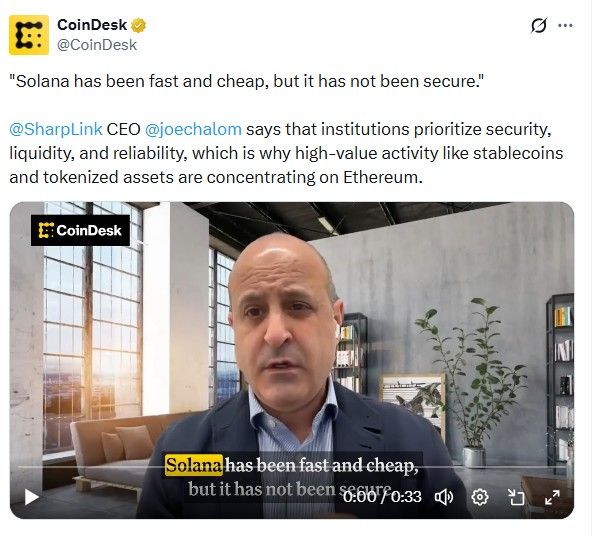
Sharplink's CEO cuts to the chase: raw speed demands architectural compromises. Solana's design philosophy prioritizes throughput, leveraging a unique proof-of-history consensus to sequence events rapidly. This bypasses the heavier, more deliberate validation processes of some rivals. It's a high-stakes gamble on scalability, betting that the network can secure itself through growth and decentralization over time.
Security in the Fast Lane
Critics argue you can't have it all—that robustness is sacrificed on the altar of low fees and high speed. Proponents fire back that Solana's security model is simply different, not deficient, evolving with its massive validator set. It's the financial world's age-old dilemma dressed in cryptographic clothing: the relentless pursuit of efficiency, often just a fancy word for cutting corners to make the numbers look good before the next earnings call.
The debate isn't just technical; it's foundational. As blockchain vies for mainstream finance, will the market ultimately value the quick dash or the fortified vault? Solana's path will test whether speed itself is the ultimate security in a digital asset race where being second is often worthless.
Source: X official
Why Chalom Questioned Solana’s Security Strengths
Statement of Sharplink CEO About solana comes from its past challenges, including historical bugs, network outages, and security-related events that raised concerns among developers. In earlier years, the network experienced multiple disruptions where transactions were halted or slowed, showing stress under heavy activity. There were also vulnerabilities discovered in smart contracts and third-party tools connected to the ecosystem that needed urgent patches. These incidents do not mean the ecosystem is unsafe by design, but they show that rapid growth created technical pressure. Compared to older chains, the ecosystem is still maturing. Chalom’s statement is relevant because institutions look at the stability history before trusting infrastructure. While the ecosystem has improved significantly, its past problems remain part of its reputation in the market today. They influence investor confidence and risk perception globally now.
Experts Explain Platform’s Unique Security Profile
Security experts note that the blockchain’s architecture creates a different safety profile compared to slower blockchains. Faster processing means a narrower window to catch and reject malicious behavior, which can increase complexity. This does not automatically make the blockchain insecure, but it increases the difficulty of maintaining strong protection. High-speed networks require advanced monitoring systems and rapid response teams. The blockchain’s design focuses on performance, so security must constantly evolve alongside it. Many analysts agree that the platform is not weak, but it is different. The risks are more technical and demand careful handling. Chalom’s statement fits this view because he highlighted the tradeoff between speed and safety, not total failure. It encourages balance, upgrades, and stronger validation systems for long term trust and adoption by institutions worldwide.
Market Impact and Solana’s Future Direction
Statement of Sharplink CEO About Solana may create short-term caution among institutional investors, but it also pushes Solana to strengthen its security framework. The ecosystem is already working on better validator coordination, improved testing tools, and stronger bug bounty programs. Developers are adding advanced monitoring systems and faster patch deployment methods. Community perception remains balanced because many users still trust the platform's innovation and growth. Some see this criticism as constructive rather than damaging. In the future, the blockchain is expected to invest more in audits, infrastructure resilience, and security education. These steps can improve confidence and attract larger firms. While the statement may cause temporary hesitation, it is unlikely to damage the platform's long-term valuation. Growth remains strong as adoption and ecosystem development continue steadily over time.
