CAKE Token Enters Deflation Era as PancakeSwap Burns Through Supply

PancakeSwap just flipped the script—turning its native CAKE token from inflationary to deflationary overnight.
The Mechanics Behind the Burn
No complex economics here. The platform is taking a portion of its transaction fees and sending them straight to a burn address—permanently removing tokens from circulation. It's a supply shock strategy, pure and simple.
Why This Move Matters
Scarcity drives value. By systematically reducing the total supply, PancakeSwap is betting that basic economic principles will push CAKE's price higher over time. It's a direct challenge to the 'print-and-pray' model still favored by some legacy projects—and a few traditional central banks, for that matter.
The Market's Verdict
Early reaction has been bullish. The announcement triggered a notable uptick in trading volume and price action. Traders are clearly betting that a shrinking supply, coupled with steady demand from the platform's massive user base, creates a powerful upward pressure.
A New Playbook for DeFi?
PancakeSwap's aggressive tokenomics shift could set a new standard. In an industry often criticized for excessive token issuance, a credible deflationary model is a rare and powerful signal. It suggests the project is prioritizing long-term holder value over short-term treasury gains. Whether this becomes the norm or remains a bold exception depends on one thing: if the numbers keep adding up for investors.

From a token economics standpoint, reducing hard cap availability improves predictability and supports stronger long-term valuation metrics.
So, as the total circulating cap is now shrinked, how does it support traders and the CAKE price?
Supply Cut Signals Deflation-First Tokenomics Shift
As per PancakeSwap’s official announcement, the platform first put the proposal in front of its community, and let the users decide whether supply should be reduced or not by using their token power. The result has recently come out and shows a strong alignment, where more than 1.67 million CAKE tokens were used in favor of the proposal, with zero votes in against.
With this, the total supply of the exchange’s native coin is now reduced from 450 million to 400 million. The change was executed immediately after the vote.
A Long Strategic Plan to Empower the Network
The current supply reduction is a part of the PancakeSwap’s Tokenomics 3.0 upgrade which was launched in early April 2025. The upgrade initiative aimed to make the CAKE token model a simplified one along with increasing deflationary pressure. Regular emissions were shortened by 40%, from around 40,000 tokens to approximately 22,250, with saved emissions redirected to token burns.
In 2025 alone, PancakeSwap dropped over 31 million tokens from its circulation, calculating an 8.19% net burn. By mitigating the coin's maximum quantity, the network further increases scarcity by limiting future token creation over the time.
Along with scarcity, governance infrastructure was also simplified under the Tokenomics 3.0 upgrade. Voting rights follow a one-CAKE one-VOTE structure, escaping lockups and complex systems such as veCAKE. This change provides users more flexibility while keeping governance transparent.
How CAKE Price Reacted So Far?
Following the announcement, the coin traded around $2.0, down 2.46% in the past 24 hours with a 26.32% increase in daily trading volume. The sharp price decline is seen as a result of broader crypto market down over the fear of Trump tariffs news and the weakening technical indicators.
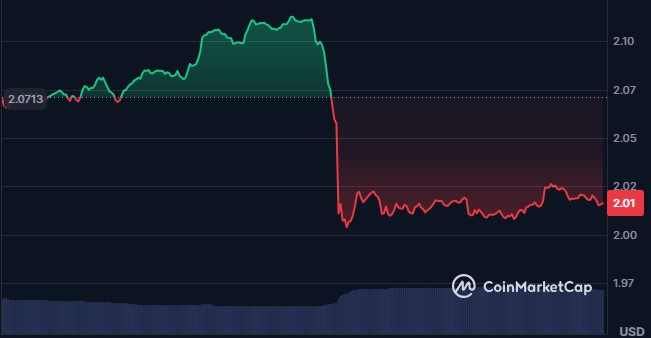
However, market participants largely view the MOVE as supportive for long-term value rather than a short-term price spike.
Let’s Summarize
On putting together, the reduction of the token's maximum supply underscores the platform’s shift toward a clear, more tighter and matured DeFi infrastructure. While current market sentiments continue to influence price moves, the update empowers the platform's foundation for sustainable growth as decentralized networks evolve.
This article is for informational purposes only and does not constitute financial advice. Do your own research before investing.
