Pakistan’s $1 Billion Stablecoin Deal With WLFI Signals Major Payments Revolution

Forget SWIFT delays and correspondent banking headaches—Pakistan just placed a billion-dollar bet on a blockchain-powered future.
The Stablecoin Settlement Gambit
This isn't a pilot program or a proof-of-concept. It's a live, operational shift for moving value across borders. The deal leverages a USD-pegged stablecoin to settle transactions, effectively creating a parallel payments rail that operates 24/7. No more waiting for New York to open or for a holiday to pass. The transaction finality shifts from days to minutes.
Why This Cuts Through the Noise
Nations have dabbled in digital assets before, but a sovereign state adopting a stablecoin for a transaction of this scale is a different beast entirely. It bypasses the traditional financial plumbing, offering a glimpse into a system where central bank digital currencies (CBDCs) might one day interact directly with private, regulated stablecoin networks. The efficiency argument is becoming too loud to ignore—even for traditional finance stalwarts.
The Ripple Effect for Global Finance
Watch for other emerging economies with hefty remittance inflows or complex trade corridors to take note. The model provides a template: reduce FX volatility exposure for businesses, slash settlement costs, and potentially improve financial inclusion. Of course, the old-guard banks will call it risky right up until they launch their own competing digital asset divisions—a classic case of 'if you can't beat 'em, join 'em, but charge a hefty fee for the privilege.'
Pakistan's move is more than a single deal. It's a signal flare, illuminating a path where national treasuries and blockchain protocols start to tango. The music's just beginning.
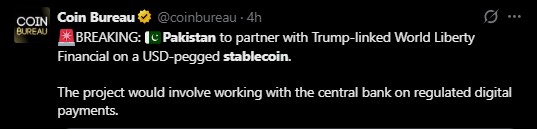
On January 14, 2026, Pakistan’s Virtual Asset Regulatory Authority confirmed a memorandum of understanding (MoU) with SC Financial Technologies, described as an affiliate of World Liberty Financial. This marks one of the first publicly known partnerships between World Liberty Financial and a sovereign nation.
With this, the agreement opens technical discussions on the Pak's USD1 stablecoin working within the country’s regulated payment system.
Pakistan USD1 Stablecoin and Cross-Border Payment Plans
Under the MoU, SC Financial Technologies will work with Pak’s central bank to explore the integration of the USD1 stablecoin into a regulated virtual payments framework. The USD1 token is a fully dollar-backed stablecoin designed for global payments and cross-border settlement.
Officials clarified that this is not a full rollout. Instead, it is an exploratory step aimed at understanding new digital payment models. If adopted in the future, the stablecoin could operate alongside Pak’s planned central bank virtual currency, often referred to as the digital rupee.

The announcement came during a visit by Zach Witkoff, CEO of World Liberty Financial and SC Financial Technologies, who met senior Pakistani officials to discuss digital payments, foreign exchange processes, and settlement systems.
Why the Pakistan USD1 Stablecoin Matters?
The country’s economic condition, although gradually stabilizing, faces years of stress. Some areas like GDP growth improved to 3.0–3.7%, inflation cooled to around 4–6% from earlier highs, and recovering of foreign reserves signal some ease, but not a relaxing phase.
Challenges still remain with high energy cost, taxes, and job creation, underscoring a cautious optimism.
In this situation, a country which heavily relies on remittances by generating over $30 billion annually, this deal matters a lot to keep its economic status leveled. Traditional transfer methods are often slow and costly. Stablecoins like USD1 could reduce charges, make transactions fast, and enhance transparency.
Increasing Numbers: Pakistan Crypto Adoption
As of January 2026, Pak remains one of the world’s top crypto-adopting countries at the user level, lifted by potential remittance needs, digital exploration at grass-root, and long-standing P2P trading activity.
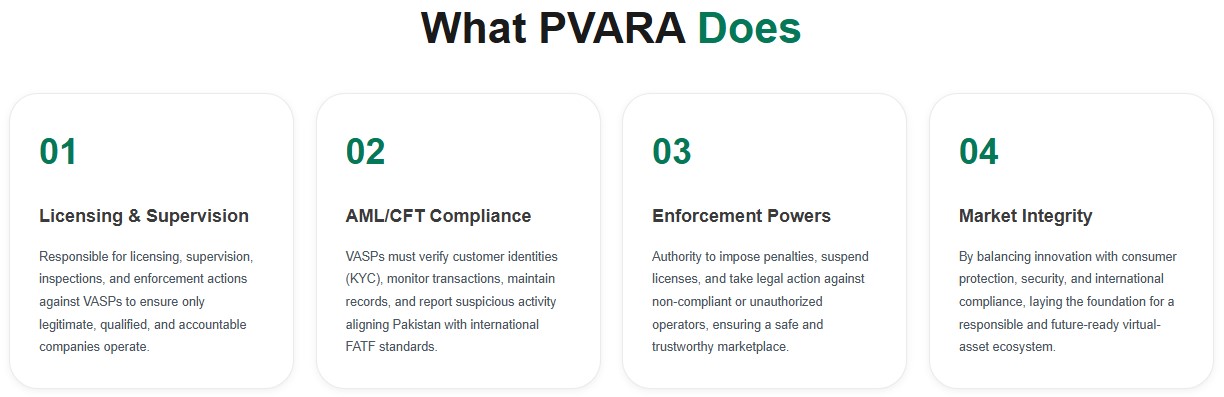
The government, on its level, also brought clarity to the sector with the formation of the Pakistan Virtual Asset Regulatory Authority (PVARA) and Cryptocurrency Council.
Finance Minister Muhammad Aurangzeb
Finance Minister Muhammad Aurangzeb said the country aims to stand ahead by working with trusted global players while ensuring innovation aligns with regulation, stability, and national interest.
Let’s Summarize
Stablecoin markets are potentially surging as the global leaders and institutions are exploring their role as a better payment and monetary tool. Following the same stance, Pak is also planning to integrate the fixed value pegged digital coins into its economy to strengthen cross-border payment channels with reduced costs.
The article does not constitute any financial-investment advice, it is for informational purposes only. Readers should conduct their own research before making decisions.
