Hong Kong Crypto Insurance Rules: How Risk Asset Law Could Transform Digital Finance

Hong Kong's financial regulators just dropped a blueprint that could reshape crypto's entire risk landscape.
Risk Asset Law isn't just another compliance checkbox—it's a framework designed to force institutional-grade protection onto volatile digital assets. The proposed rules demand crypto exchanges and custodians secure insurance that matches the real-world value of holdings. No more vague promises or self-insurance loopholes.
The Protection Mandate
Forget the wild west. The draft legislation mandates concrete coverage for client assets against theft, loss, and operational failure. It targets the core vulnerabilities that have plagued the industry: exchange hacks and custodian collapses. The law essentially tells platforms: if you can't insure it properly, you shouldn't hold it.
Institutional Floodgates
This move does one thing brilliantly—it builds a bridge for traditional capital. Pension funds and asset managers have been sidelined, not by skepticism alone, but by a glaring lack of insured custodial solutions. By legislating insurance standards, Hong Kong isn't just protecting retail investors; it's constructing the plumbing for billions in institutional money waiting on the sidelines. It turns crypto from a speculative bet into a bankable asset class.
A New Competitive Reality
Compliance costs will skyrocket, immediately separating serious players from the rest. Smaller exchanges might buckle under the premium burden, leading to rapid consolidation. The survivors will boast balance sheets fortified by legitimate, audited policies—a marketing goldmine for attracting wary whales. Expect a land grab among global insurers to underwrite this new, massive market.
The final irony? The very regulators often accused of stifling innovation are about to force the crypto industry to grow up by adopting the oldest trick in the finance book: buying a decent insurance policy. Sometimes maturity looks less like rebellion and more like reading the fine print.

As the global regulators define cryptocurrencies more distinctly, and add it as a part of traditional money systems, could this cautious MOVE become a blueprint for mass institutional adoption; citing more stability?
What are the new Hong Kong Crypto Insurance Rules?
Under the proposed framework, the central Insurance Authority (IA) would impose a 100% risk charge on crypto investments. In simple terms, if an insurer invests in assets like Bitcoin or Ether, it must set aside the same amount of money in capital, treating digital coins as a high-risk asset.
At the same time, in contrast, stablecoins get easier treatment than regular cryptocoins. If a stablecoin is regulated in Hong Kong, regulators WOULD judge its risk based on the fiat currency it is linked to, such as the U.S. dollar or Euro. This means stablecoins are seen as less risky than assets like Bitcoin.
Why Does It Matters?
In-land development works as a main force behind the proposal. The new Hong Kong crypto Insurance rules guide insurers’ money toward government-backed infrastructure projects, such as public development plans. This helps support long-term economic growth.
Because cryptocurrency is still seen as risky, only financially strong insurers with solid balance sheets and a higher ability to handle risk would likely be allowed to take part in cryptocurrencies investments.
Rest, with neutral balance sheets, will directly FLOW into the native investment infrastructures – less risky and contributing to the nation.
Timing Insulates The Sentiments
The new rules come at the time when the power assets are trading in a fragile balance between caution and selective optimism. Markets are still watchful, with the Fear & Greed Index at 29/100 showing over seven months of worry. Today, prices ROSE slightly – 0.4% in 24 hours and 3.86% over 30 days, driven by big investors and real-world projects.
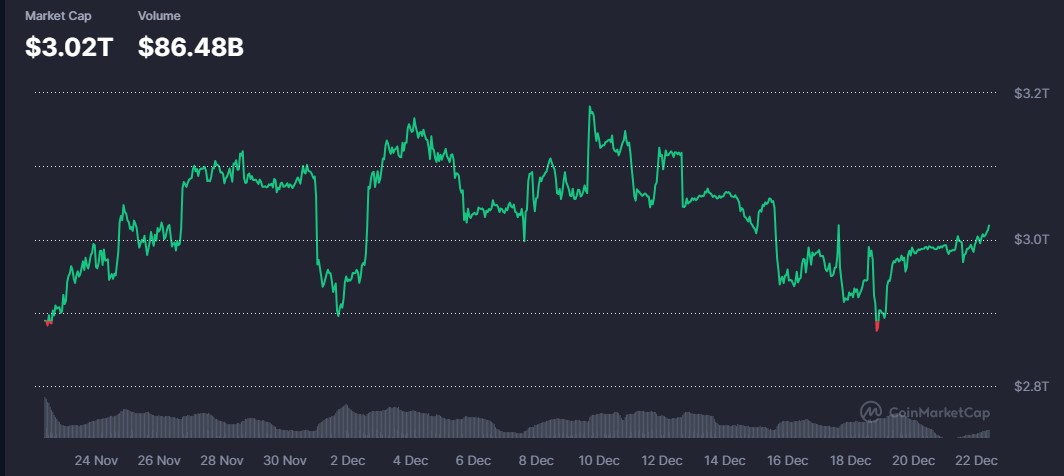
Bitcoin is also correcting on $89,565, after touching the monthly lows of $84K, while ethereum is at $3,034 up 1.2% even after facing 3.6% down on a weekly basis.

The recent gains are the result of big investors and developments. Metaplanet’s Bitcoin-backed shares draw institutional interest, while Ethereum projects like Taiko x Avalon Labs build new finance tools. These help market stability.
However, events like MicroStrategy bitcoin sales, U.S. inflation January data, MSCI ruling, along with Brazil’s new digital asset rules, and Fed’s June meeting could change the market direction.
What’s Next? Hong Kong Crypto Future
The Hong Kong Crypto Insurance move speeds up its efforts to become a major digital asset hub in the region.
Authorities have already set up licensing rules for cryptocurrency exchanges and are moving forward with plans to regulate stablecoin issuers.
In November, the Securities and Futures Commission announced new steps to improve trading liquidity for licensed crypto platforms, including giving them access to global order books.
The draft rules are not final and can still change. The insurance Authority plans to hold a public consultation from February to April, allowing feedback before sending the proposal for lawmakers to review. The regulator said it started reviewing its risk-based capital system earlier this year to better support the insurance industry and Hong Kong’s overall economy.
