Pi Network Unleashes Testnet DEX with AMM Liquidity in Major Protocol Update

Pi Network just flipped the switch on its most significant infrastructure upgrade yet—a fully functional testnet Decentralized Exchange powered by Automated Market Maker liquidity.
The Mechanics of a Mobile-First DEX
This isn't just another blockchain experiment. The testnet DEX introduces a native AMM model, allowing simulated liquidity pools to form directly within the Pi ecosystem. It cuts out traditional order books, letting algorithmic pricing do the heavy lifting for token swaps. The move bypasses the need for centralized intermediaries entirely, pushing Pi closer to its vision of a self-sustaining digital economy run by its tens of millions of engaged users.
A Stress Test for Mainnet Economics
Deploying on testnet is a deliberate, calculated risk. It lets developers and the community trial the DEX's core functions—pool creation, token swapping, liquidity provisioning—without real financial stakes. Think of it as a live-fire drill for the protocol's economic engine, working out kinks in transaction speed, slippage, and incentive models before real value hits the chain. It's a necessary step that most projects gloss over in their rush to market, often with disastrous results.
Why This Update Actually Matters
For a project often dismissed for its lengthy development phase, this is a tangible pivot. A functional DEX is the cornerstone of any serious Layer-1 ecosystem. It provides the essential plumbing for a future where Pi could facilitate everything from NFT marketplaces to DeFi protocols. This testnet launch signals the core team is finally building the complex, interoperable tools required to transition from a closed network to an open, utility-driven blockchain. It’s a quiet but powerful rebuttal to the skeptics.
The update strategically positions Pi Network not as a mere digital token, but as a burgeoning ecosystem with its own internal market dynamics. While Wall Street still puzzles over Bitcoin ETFs, projects like Pi are building the actual rails for the next generation of finance—proving once again that real innovation often happens far from the traditional trading floors and their quarterly myopia.
Pi Network Latest Update
Pi Network has unveiled a significant change in the Testnet Decentralized Exchange (DEX) and Automated Market Maker (AMM) liquidity pool functionalities.
These improvements are aimed at making it easier to use, more understandable, and more transparent, and align tokens with the actual utility generation and the real-life use of Pi.
The DEX and AMM tools were first released on the Pi Testnet to allow Pioneers and developers to experiment with decentralized finance (DeFi).
According to initial usage statistics, testing, and Pioneer feedback, Network has optimized these tools to be more onboarding and financial literacy-friendly and useful in the real world.
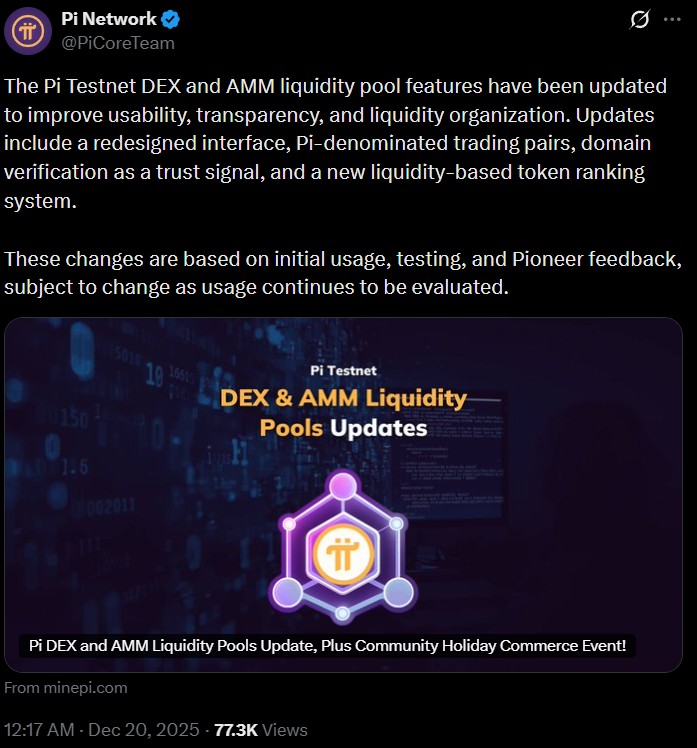
Source: Official X Account
Redesigned Interface Improves DeFi Accessibility
The redesigned interface of the DEX and the AMM is one of the most obvious features of the Pi Network latest update. This enhanced design will allow Pioneers to explore liquidity pools, learn the trading mechanics, and engage with DeFi features more comfortably.
In order to enhance usability, Pi Network has also added video tutorials on how the DEX and AMM operate. Such modifications make the entry to the system easier and demystify the notions of DeFi, which supports the mission of Pi as an inclusive and accessible crypto user.
Pi-Denominated Trading Pairs Enhance Liquidity Efficiency
The major structural adjustment of this update is that it is now trading in Pi-denominated pairs. The coin is now the common base asset of the DEX, which brings together liquidity into fewer and more active pools rather than fragmented and thin markets.
This organization is based on best practices in existing blockchain ecosystems. Though it does not generate new liquidity, it helps to make the existing liquidity more efficient as more people join it. The tokens will have prices that are easier to interpret because all assets will be valued against Pi.
Decreased slippage
Price volatility
Increased resistance to manipulation
Higher reliability of the price discovery with the rise in trading volumes.
The Network has made it clear that it is an experimental approach that could continue to develop in the Testnet phase.
Domain Verification and Liquidity-Based Token Rankings Boost Trust
The issuers of tokens are now required to peg their tokens with verified domain names, and the Pioneers can now determine whether a project has an issuer-controlled webpage. Although this is not a sign of legitimacy itself, it gives more indicators of the possible misrepresentation.
Moreover, the DEX now ranks tokens by liquidity and not market capitalization. This system is measured in Test-Pi and focuses on the commitment of real capital rather than on price measures that can be manipulated. Liquidity-based rankings, unlike market cap, are much more expensive to artificially inflate and automatically update with changes in liquidity.
Final Wrap-Up
The PI coin is the latest update that enhances its Testnet DeFi ecosystem by enhancing trust signals, and making it user-friendly, another step towards practical and inclusive crypto adoption on a global scale.
Disclaimer: This is not financial advice. Please DYOR before investing. CoinGabbar is not responsible for any financial losses. Crypto assets are highly volatile, and you can lose your entire investment.
