XRP Regulated Listing: The Historic Shift Rocking U.S. Markets

Forget the wild west. The sheriff just walked into the crypto saloon.
The first regulated U.S. listing of XRP isn't just another ticker on a screen—it's a seismic crack in the foundation of American finance. This move cuts through years of regulatory fog, bypassing the usual gatekeepers and handing a digital asset the keys to the traditional kingdom.
From Courtroom Battles to Main Street
The path here was anything but smooth. Legal skirmishes defined the journey, creating a cloud of uncertainty that kept major institutions on the sidelines. Now, that cloud has a silver lining with a regulator's stamp of approval.
This listing flips the script. It doesn't ask for permission to exist within the old system; it demands the system adapt. Liquidity pools shift. Risk models get rewritten overnight. For traders, it transforms a speculative bet into a compliance-approved asset—changing the entire calculus of a portfolio.
The Ripple Effect Beyond the Price Chart
Watch the dominoes fall. Other digital assets once labeled 'securities' are now re-examining their playbooks. Exchange executives are scrambling to update their legal frameworks, while Wall Street veterans are forced to acknowledge an asset they spent years dismissing.
The real victory isn't in a price pump—it's in precedent. It proves a blockchain-native token can meet the stringent, often archaic, rules of traditional finance. It’s a blueprint, and every major player is now copying it.
Of course, the old guard on Wall Street will call it a fad—right before they launch their own digital asset desk. The final, cynical truth? Finance never embraces change until it's forced to, and even then, it finds a way to charge a fee for it.
This isn't an ending. It's a starting gun. The race to bridge two financial worlds just got real, and the finish line is a completely new market structure. Buckle up.
Does the XRP Regulated Listing Alter Market Access?
Bitnomial’s move to launch the first CFTC-regulated U.S. spot market for XRP sets a new operational standard. The framework places the asset under one federal regulator for spot, futures, perpetuals, and options. This set up is an indication of a structured environment to traders who need accountability. The question arising among market participants is now whether this move accelerates institutional participation, which is a frequent topic across crypto market news and regulatory debates.
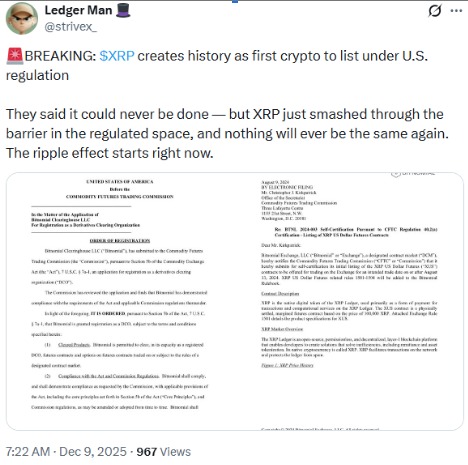
The approval as trading collateral adds another structural layer. Institutions can use this asset in margin portfolios, similar to Treasuries or stablecoins. This function strengthens landscape flexibility and offers a strategic option for firms that analyze collateral efficiency. The compliant trading and collateral status combine to give a strong base to long-term participation. Analysts reviewing digital asset news highlight that this digital token now meets criteria often required for cross-market strategies.
How Does This Listing Influence U.S. Market Structure?
The XRP regulated listing reduces years of uncertainty and places the asset inside established financial processes.This change prompts banks, funds, and trading firms to review compliance barriers that previously blocked exposure. The development is also of interest in networks monitoring the latest cryptocurrency news, with regulated access being a frequent topic.
Regulated spot trading improves price discovery and offers a better execution process. Futures and options present risk-management avenues, which institutions use in assessing long-term exposure. This multidimensional structure increases confidence among firms that monitor crypto market news for regulatory direction. The arrangement also broadens liquidity potential because participants can consolidate strategies within a unified federal framework.
The status of the token as approved collateral strengthens functional utility. This transition shifts the asset out of the speculative use and enhances the operational functions in the structured portfolios. It brings controlled stability which traders watch in evaluating standards of new coin listing and institutional flows.
The wider implication is that the ecosystem is still continuing to align digital assets with the traditional oversight. The XRP compliant listing shows how compliance-based access can affect price perception. With the news circulating across the news outlets, observers can evaluate whether this model can FORM the basis of future regulatory approvals.
Conclusion
The XRP regulated listing represents a structural turning point for the U.S. digital asset sector. Having more regulatory clarity, now the asset works within a transparent and rule-based environment facilitating institutional adoption and sustained participation.
