Bitcoin’s Volatility Craters to October 2023 Lows—Is the Calm Before the Storm?

Bitcoin just flatlined harder than a Wall Street trader's moral compass. For the first time since October 2023, the crypto king's price swings have evaporated—leaving markets eerily quiet.
The silence is deafening
No wild 10% daily swings. No panic-selling memes. Just... stability. The kind that makes hedge funds nervously check their algorithms for errors.
What's behind the great volatility drought?
Institutional money? ETF approvals finally doing their job? Or just the market catching its breath before the next explosive move? (Spoiler: It's always the last one.)
Meanwhile, traditional finance bros are 'discovering' Bitcoin's store-of-value narrative—right on schedule, about 15 years late to the party.
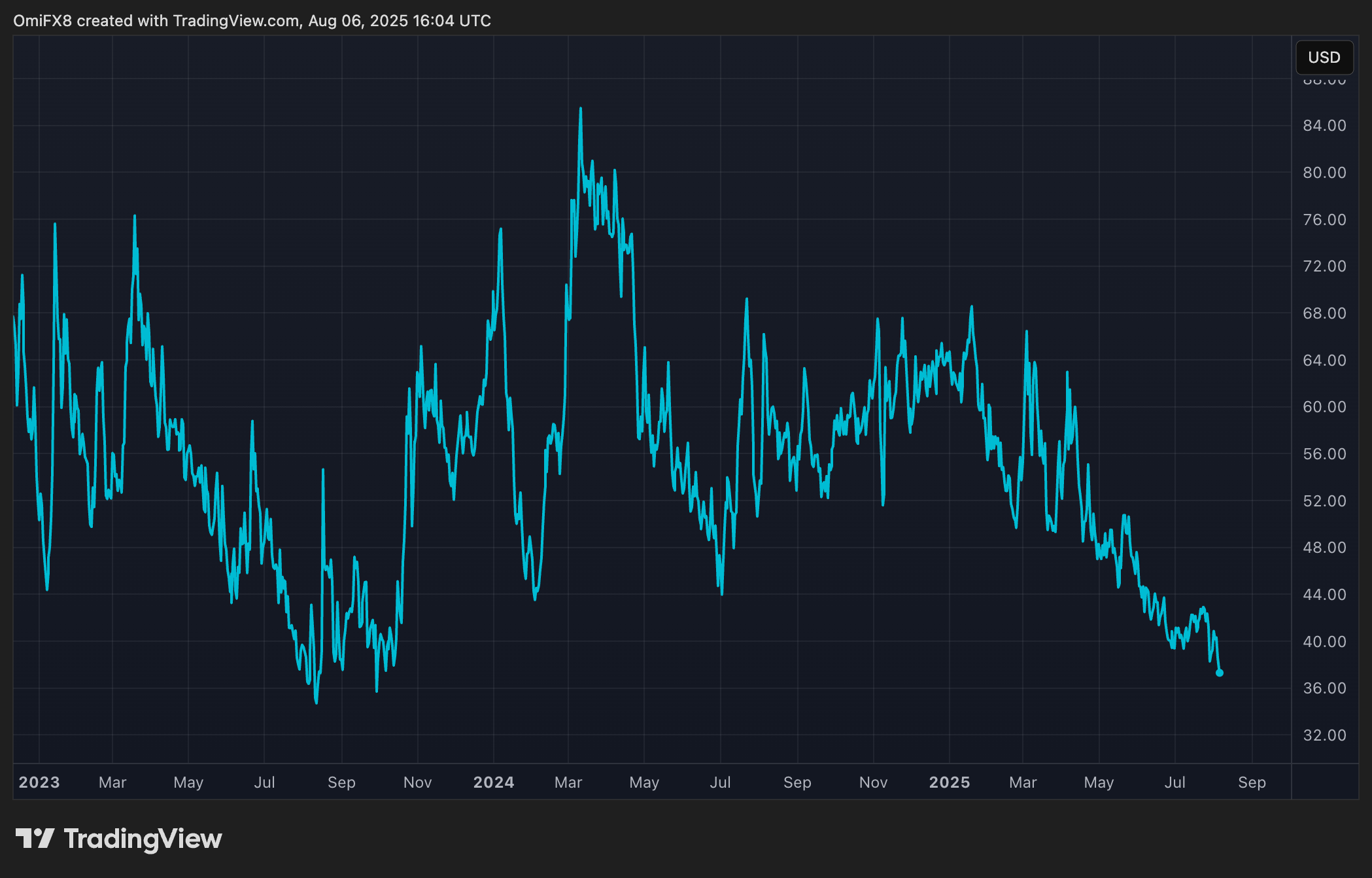
The same thing can be said about stocks, where the VIX index has reversed Friday's spike from 17 to 21. The VIX measures the 30-day implied volatility in the S&P 500.
BTC mirrors stock market volatility patterns
BTC's implied volatility has been in a months-long downtrend, moving in the opposite direction of the cryptocurrency's price, which has surged from $70,000 to over $110,000 since November.
The negative correlation marks a profound shift in bitcoin's market dynamics. Historically, BTC's volatility and its spot price moved in tandem, with volatility rising in both bull and bear markets.
The change in this spot-volatility correlation is attributed, in part, to the growing popularity of structured products that involve the writing (selling) of out-of-the-money call options, analysts told CoinDesk.
This new dynamic suggests that Bitcoin is increasingly mirroring patterns on Wall Street, where implied volatility often dwindles during steady bull runs.
Bitcoin's 'Low Volatility' Rally From $70K to $118K: A Tale of Transition From Wild West to Wall Street-Like Dynamics
