Bitcoin Quantum Threat Looms — New BIP-361 Proposal Creates Emergency Lock for Vulnerable Coins

A stark warning from leading Bitcoin developers: quantum computing now poses a credible threat to early Bitcoin addresses, potentially exposing billions in assets. The newly proposed BIP-361 standard introduces a critical three-phase defense, with a final 'last-resort' recovery mechanism using zero-knowledge proofs to protect users who miss upgrade deadlines but retain their seed phrases.
Satoshi’s Fortune At The Center Of It All
About 1.7 million BTC sits in old-style addresses known as P2PK — the kind used in Bitcoin’s earliest days. Those addresses expose public keys directly, making them vulnerable once quantum computing reaches sufficient power.
Satoshi Nakamoto’s stash alone is valued at roughly $74 billion at current prices. According to the proposal’s authors, if a bad actor gained quantum access to those coins, the damage to Bitcoin’s value and credibility could be severe.
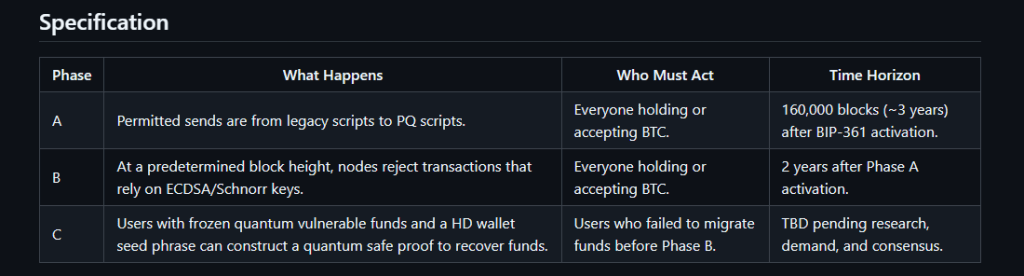
BIP-361 builds on BIP-360, released in February, which introduced a new quantum-resistant address format called pay-to-Merkle-root, or P2MR. That earlier proposal protects new coins. BIP-361 tackles what BIP-360 left unresolved — the roughly 34% of Bitcoin’s total supply still sitting in vulnerable addresses.
The plan unfolds in stages. Three years after activation, sending BTC to old-style addresses would no longer be allowed. Two years after that, old-format signatures would be invalidated entirely.
Any coins that haven’t been moved by then would be frozen. The third phase — the rescue window — gives late movers a technical route to reclaim funds using proof of seed ownership.
The Community Response Has Been Blunt
The proposal landed hard among Bitcoin’s most vocal voices. Bitcoin Magazine’s editor rejected it outright. TFTC founder Marty Bent called it “laughable.” Metaplanet’s head of business development put the contradiction plainly: “We have to steal people’s money to prevent their money from being stolen.”
The authors anticipated the backlash. Based on their own framing, the freeze isn’t meant as punishment — it’s described as a defense against a worse outcome. Frozen coins, they argue, slightly increase the value of everyone else’s holdings. Quantum-stolen coins do the opposite.
This quantum proposal is highly authoritarian and confiscatory, but of course, it’s from Lopp.
There is no good rationale for forcing the upgrade and rendering old spends invalid. Upgrade should be 100% voluntary. pic.twitter.com/tQvJVgdPRY
— Cato The Elder (@CatoTheElder17) April 14, 2026
Protocol developer Mark Erhardt shared the proposal on X, where pushback came quickly. Critics called it “highly authoritarian and confiscatory” and questioned whether any deadline could justify making existing Bitcoin unspendable by its rightful owners. Lopp had not responded to requests for comment at the time of publication.
Whether BIP-361 moves forward depends on a consensus process that has historically resisted changes this significant. For now, it remains a draft — and a flashpoint.
Featured image from PostQuantum, chart from TradingView

Log in to Reply
Log in to comment your thoughtsComments
Related Articles
|Square
Get the BTCC app to start your crypto journey
Get started today Scan to join our 100M+ users