A breakthrough proposal could shield Bitcoin from future quantum attacks without altering its core protocol, potentially saving the network from a costly and disruptive emergency upgrade. StarkWare's Avihu Levy unveiled 'Quantum Safe Bitcoin' (QSB), a scheme designed to make BTC transfers resistant to even large-scale quantum computers running Shor's algorithm, addressing one of crypto's most significant long-term security threats.
A Workaround Inside Bitcoin’s Existing Rules
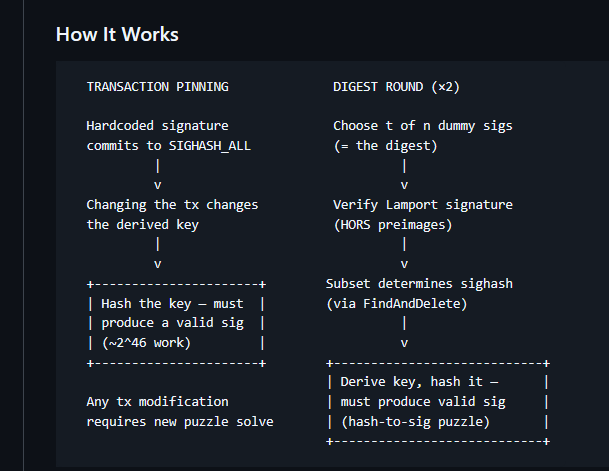
Levy’s plan stays within the crypto’s current legacy script limits and does not require a soft fork. Instead of relying on elliptic curve math, QSB swaps in a hash-to-signature puzzle.
In simple terms, the sender must find an input whose hash output happens to look like a valid ECDSA signature, a process that depends on brute-force work rather than the kind of math quantum computers are expected to break.
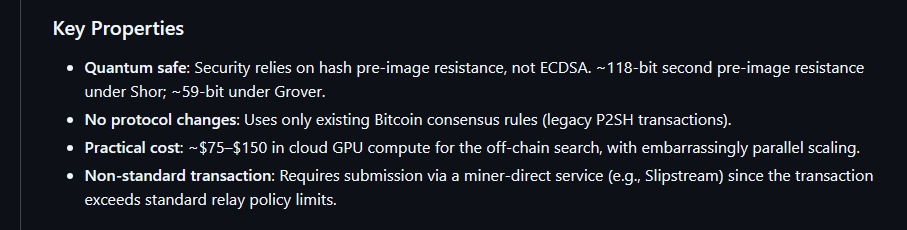
That makes the scheme unusual. It does not try to rebuild Bitcoin from the ground up. It tries to bolt on a narrow shield using rules that already exist.
The researchers describe it as a temporary answer while the bigger question of its long-term quantum defense remains unsettled.

Praise, Pushback And A Narrow Use Case
StarkWare CEO Eli Ben-Sasson called the work “huge” and said it essentially makes Bitcoin quantum-safe today. But not everyone agrees with that framing.
Bitcoin ESG specialist Daniel Batten said the claim goes too far because the paper does not address exposed public keys or dormant wallets.
He pointed to an estimated 1.7 million BTC sitting in early P2PK addresses that could be vulnerable if a quantum computer becomes powerful enough to crack them.
The new scheme also comes with a sharp limit on who might use it. According to the proposal, it is more complex than a standard BTC transaction and only makes sense for large transfers. The reported compute cost makes it a poor fit for routine payments.
THIS IS HUGE. Bitcoin is Quantum-Safe TODAY.
Even if a quantum computer appeared, one that breaks the conventional Bitcion signatures, it shows a practical way to create safe Bitcoin transactions. WITH NO CHANGE TO BITCOIN PROTOCOL!!! https://t.co/ireGc3ai7W
— Eli Ben-Sasson | Starknet.io (@EliBenSasson) April 9, 2026
A Temporary Fix, Not The Final Answer
The debate around quantum risk has already split the Bitcoin community. Some argue for leaving Bitcoin unchanged to preserve its original design.
Others want vulnerable coins frozen or burned. A separate group wants the protocol upgraded to support quantum-safe signatures.

Levy’s proposal lands in the middle of that fight, giving users a last-resort option while skipping the need for network-wide consensus.
The researchers still say protocol-level changes are the better long-term path. They also acknowledged that the QSB approach is non-standard, does not scale to all users, and does not cover use cases such as the Lightning Network.
The timing of the paper matters too. Google published research in March that added fresh pressure to the debate, and Lightning Labs chief technology officer Olaoluwa Osuntokun followed with a quantum fallback prototype on Wednesday.
Featured image from Pixabay, chart from TradingView
Articles on this site are sourced from public networks or curated by AI for informational purposes only and do not represent BTCC’s views. Original rights belong to the respective authors. For copyright concerns, please contact
[email protected]. BTCC assumes no liability for the accuracy, timeliness, or completeness of this information, and disclaims all liability arising from reliance on such content. This content is for reference only and should not be taken as investment, legal, or commercial advice.



Log in to Reply
Log in to comment your thoughtsComments