
Bitcoin Supersplit Review: Is It a Scam?
Bitcoin is no longer just a fringe experiment; it is be…
2026-04-08
A critical macro indicator is flashing a stark warning against premature bearish calls. The Bitcoin PMI remains below levels seen at every previous true cycle peak, contradicting widespread speculation that the market has topped out. This divergence suggests current volatility represents a consolidation phase rather than a completed top, with structural room for further rallies despite divided sentiment.
The PMI is a monthly economic indicator that measures the level of activity across both the manufacturing and services sectors. The PMI may seem disconnected from the Bitcoin price, but the foundation of this analysis comes down to a simple historical pattern with the two metrics. BTC has never printed a true all-time high at any point when the PMI was below 50, and that has held consistently across every past cycle.
As shown in the chart below, each red-shaded zone represents extended periods where PMI was under the 50 threshold. These zones have consistently coincided with phases of consolidation and early trend development in the BTC price. On the other hand, major Bitcoin price tops have always formed after PMI breaks above 50 and enters expansion territory.
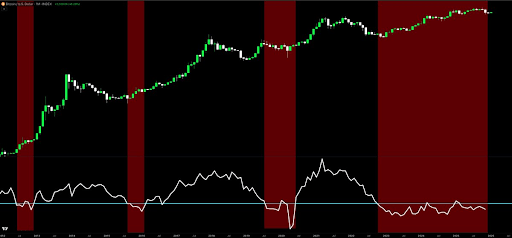
What makes the current cycle stand out is how long Bitcoin has been trading with the PMI indicator below 50. Even during the July to October 2025 period, when the Bitcoin price climbed to new highs and printed strong rallies, the PMI stayed below 50. This creates a disconnect between the current price action and a long-standing signal.
At the time of writing, Bitcoin is trading at $69,043, which places it about 45% below its all-time high of $126,080 on October 6, 2025. There have been various reasons to believe that the Bitcoin price has already reached a peak for this cycle.
These theories rely heavily on price-based signals and changes in sentiment, but the PMI model introduces a much larger context based on the activity in the manufacturing and services sectors.
According to a crypto analyst with the pseudonym Crypto Tice on the social media platform X, the people calling this the top are making the same mistake they made in 2019 and 2020.
In that sense, what many are calling a top may instead be a lengthy accumulation period. If historical trends continue, the real cycle peak would only come once PMI moves above 50.
The Bitcoin-PMI chart above also shows how previous sub-50 periods ended. Each time, Bitcoin transitioned from these zones into stronger bullish phases once liquidity conditions improved. Those who interpreted the consolidation as a top ended up missing the best part of the rallies.



Log in to Reply
Log in to comment your thoughtsComments