Bitcoin Mining Difficulty Stagnates While Hashrate Flatlines—What’s Next for the Network?

Bitcoin's mining difficulty just refused to budge. Again. The network's self-correcting mechanism hit pause, leaving the difficulty adjustment flat for the latest epoch. It's a rare moment of equilibrium in a system built for relentless change.
Hashrate Hits a Plateau
The computing power securing the blockchain isn't surging forward—it's moving sideways. Miners aren't aggressively plugging in new rigs, but they're not unplugging en masse either. This stalemate in hashrate growth is the direct cause of the static difficulty. The network only recalibrates when miner activity significantly deviates from the 10-minute block target. Right now, it's eerily on track.
A Calm Before the Storm?
This sideways action is more than a technical footnote. It signals a potential cooling-off period in the capital-intensive arms race of mining. Maybe efficiency gains are maxing out, or energy markets are giving miners pause. Perhaps it's just everyone catching their breath—and recalculating their spreadsheets—before the next halving event looms larger on the horizon.
For traders glued to price charts, this might seem like backend noise. But for the network's health, it's a vital sign. A stable hashrate suggests a mature, less volatile mining ecosystem... or it hints that profit margins are so thin that not even a Wall Street analyst could find them with a magnifying glass. This isn't a breakdown; it's a breather. And in Bitcoin's world, a breather usually means something big is being prepared.
Bitcoin Difficulty Has Only Seen A Change Of 0.45% In The New Adjustment
The Bitcoin “Difficulty” refers to a metric built into the blockchain that controls how hard the miners would find it to mine a block on the network right now. This indicator’s value automatically changes about every two weeks based on network conditions.
Satoshi wrote in one simple rule for the chain to follow: bring block production rate to a consistent value of 10 minutes per block. Whenever miners produce blocks in an interval faster than this, the network raises its Difficulty just enough to slow them back down to it. Similarly, BTC eases things up instead if miners are slower than expected.
The latest Difficulty adjustment has just occurred on the Bitcoin network. This event, however, didn’t lead to any notable changes in the metric, with its value going up by just 0.45%.
Below is a chart from CoinWarz that shows how the recent Difficulty adjustments have looked for the cryptocurrency.
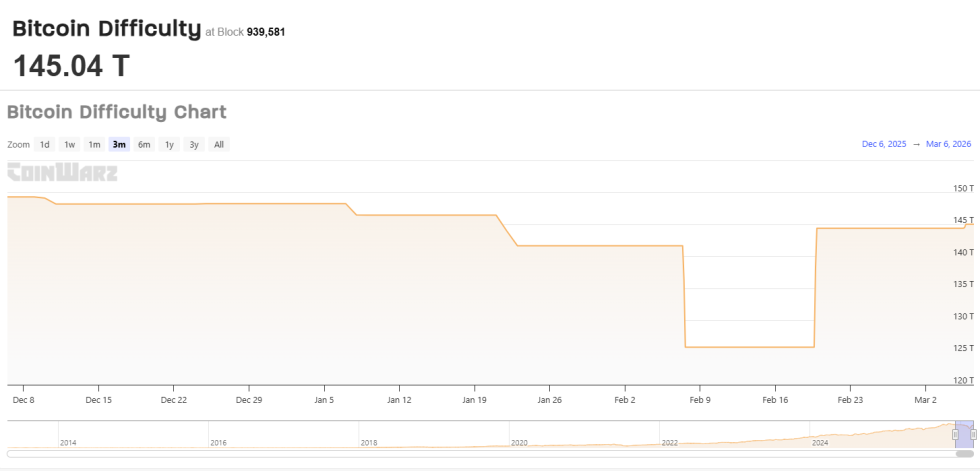
From the graph, it’s visible that the Bitcoin Difficulty saw a huge decline two adjustments ago. The reason behind this aggressive drawdown in the indicator lied in special circumstances in the United States: the snow storm of late January.
Miners become faster or slower at their task when they change their computing power, collectively known as the network Hashrate. This metric saw a huge drop following the onset of the snow storm; miners were forced to curtail their power in order to ease pressure on the nation’s electricity grid, which was facing disruptions due to the extreme weather event. The resulting network slowdown is what forced the Difficulty decrease.
Since this event was extraordinary and lasted only shortly, it didn’t take long for the Hashrate to bounce back. Here is a chart from Blockchain.com that shows the trajectory that the 7-day average value of the indicator has followed recently:
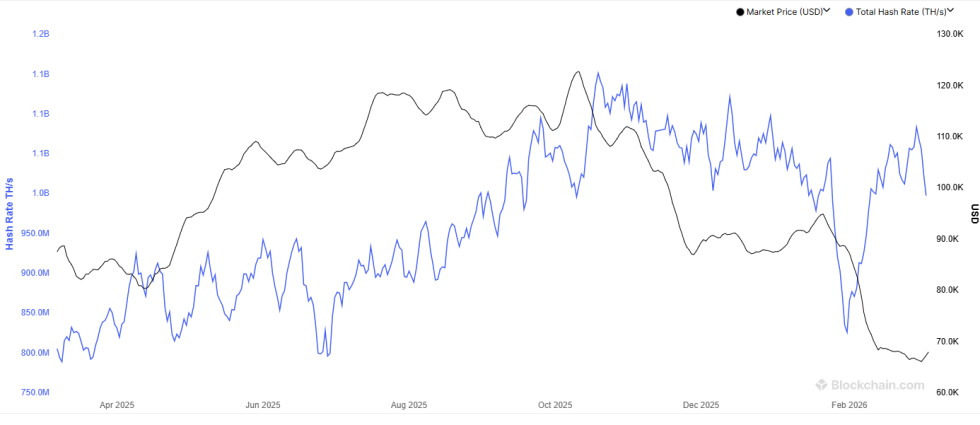
The quick recovery in the Bitcoin Hashrate led into a Difficulty increase that corrected the earlier sharp drawdown. Since the rebound in the indicator, however, its value has taken to sideways movement, suggesting miners are neither expanding nor decommissioning.
This flat trajectory in the Hashrate is why the Difficulty also mostly remained unchanged during the latest adjustment.
BTC Price
Bitcoin broke above the $70,000 level earlier this week, but the asset has now seen a drop back below it as its price is now trading around $68,300.
